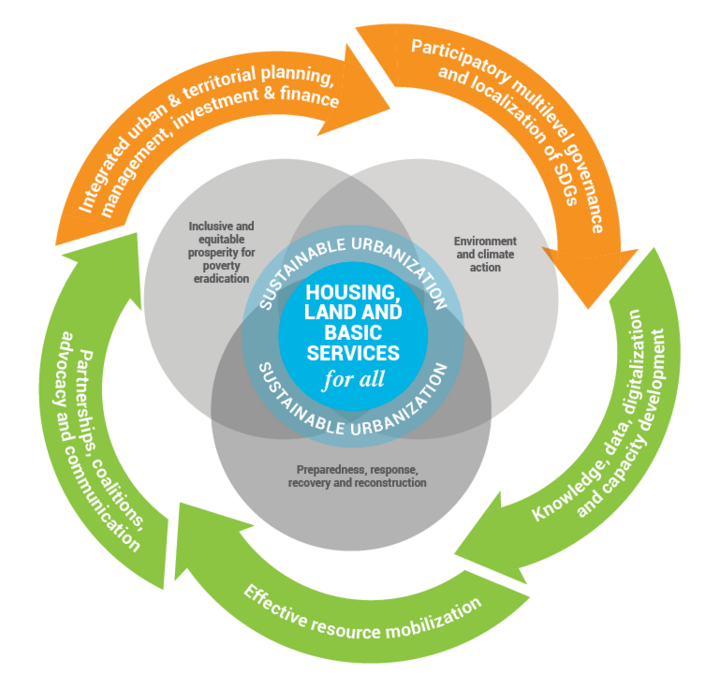
Adequate housing is more than a roof over one’s head. It is a foundation for health, education, dignity, safety and social inclusion, and a prerequisite for people to fully participate in social and economic life.
Without access to adequate housing, many of the goals of the 2030 Agenda for Sustainable Development remain out of reach.
Addressing the global housing crisis, alongside challenges related to poverty, climate change and humanitarian crises, is therefore essential to ensuring that cities and human settlements are sustainable, equitable and resilient.
UN-Habitat aims to transform lives by expanding access to adequate housing, land and basic services, particularly for people in vulnerable situations, while addressing the interconnected challenges facing cities and human settlements.
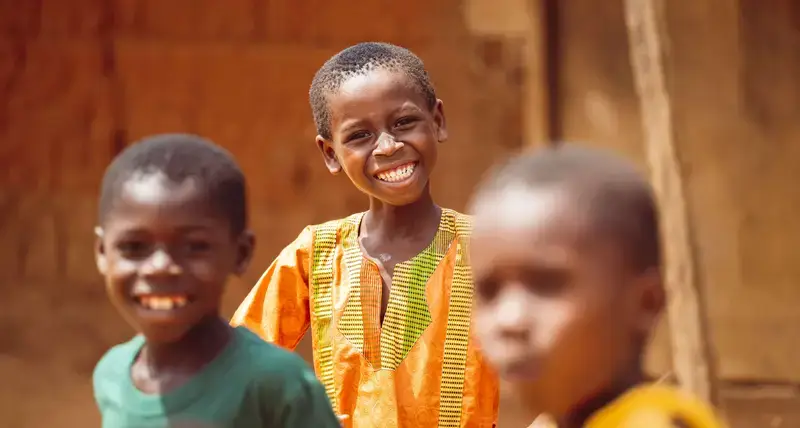
IMPACT AREA 1
Equitable and inclusive prosperity
Equitable and inclusive prosperity for poverty eradication
Well-planned and well-managed urbanization is fundamental to fostering inclusive growth, reducing inequalities, and eradicating poverty in cities and human settlements. This impact area focuses on equitable access to adequate housing, land and basic services, inclusive urban planning, and sustainable infrastructure to expand opportunities, support decent livelihoods, advance gender equality, and improve living conditions, particularly for people in vulnerable situations.

IMPACT AREA 2
Environment and climate action
Environment and climate action
Urbanization, housing, and environmental systems are central to both the causes and impacts of climate change in cities and human settlements. This impact area focuses on people-centred urban and land-use planning, adequate housing, resilient infrastructure, and nature-based solutions to support mitigation, adaptation, and resilience, particularly for people in vulnerable situations.
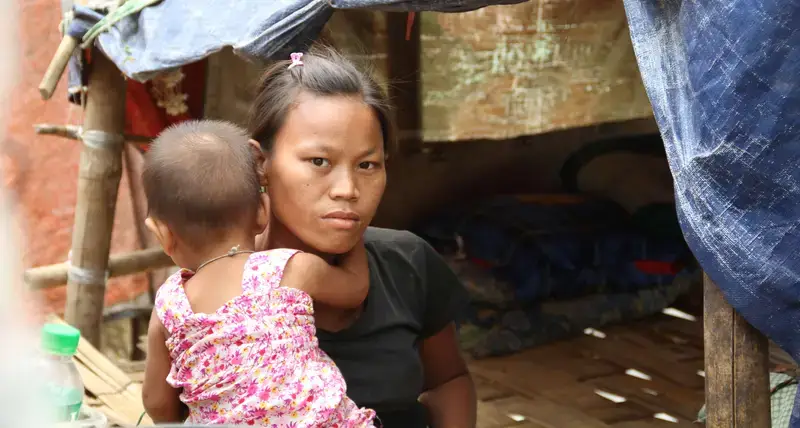
IMPACT AREA 3
Preparedness, response, and recovery
Preparedness, response, recovery and reconstruction
Converging crises, including disasters, conflict and displacement, have complex and compounding impacts on cities, human settlements and their communities. This impact area focuses on risk assessment and foresight, integrated humanitarian–development responses, and access to adequate housing, land and basic services to strengthen preparedness, support recovery and reconstruction, and build resilience, particularly for those most affected.
Together with partners, UN-Habitat works to ensure everyone, everywhere has access to adequate housing, land and basic services.

Act
Design and implement policies and programmes with expert advice and global standards

Advocate
Raise awareness, amplify voices and shape policy debates

Share
Scale up proven practices and innovative urban solutions

Learn
Build skills through capacity development, knowledge exchange and peer learning

Partner
Mobilize resources and coordinate efforts for greater impact

Track
Use data and evidence to monitor trends and guide decision-making
The UN-Habitat Strategic Plan 2026–2029 was adopted at the resumed second session of the United Nations Habitat Assembly, which also highlighted progress made under the resolution on adequate housing for all that led to the establishment of the Open-Ended Intergovernmental Working Group on Adequate Housing for All.