Cities, being home to more than half of the world’s population, consume 60% to 80% of the world’s energy resources and produce 70% of the world’s anthropogenic carbon dioxide emissions. Hence, cities must play a major role in improving energy efficiency, using resources more carefully, transforming urban energy systems, enhancing energy security and national prosperity - while reducing greenhouse gas emissions.
Sub-Saharan Africa countries – Zimbabwe included – are facing a huge social housing deficit estimated at 160 million homes. This number will reach 230 million homes if business as usual continues. There is need for mass production of affordable and sustainable housing to address the social housing crisis. The housing crisis is also an opportunity to address the climate change through promotion of carbon neutral building materials.
Addressing these issues, the programme “Harare Sustainable City Initiatives: Promoting Carbon Neutral Urban Basic Services and Energy Efficient Built Environment”, aims to provide better living condition to Harare citizens by increasing and improving their access to sustainable waste to wealth services, clean energy provisions and promoting energy and resource efficiency in Zimbabwe’s built environment.
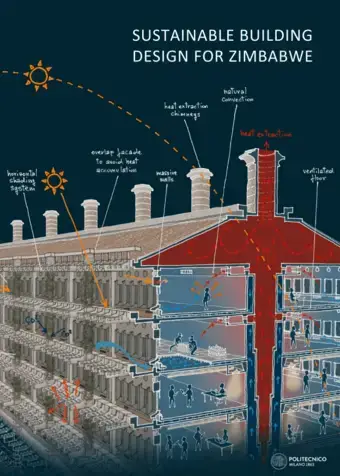
In order to promote energy-conscious building design and energy demand management, as well as to respond to the growing energy needs in Zimbabwe, UN-Habitat developed a handbook on design and construction of sustainable buildings focusing on the different climatic zones within the country. The guidebook provides users with guidelines on low carbon local building materials, energy and resource efficient strategies, building retrofitting, and architectural designing of new energy efficient buildings to achieve net zero carbon emission by minimizing energy consumption and maximizing indoor thermal comfort.
 Compartir