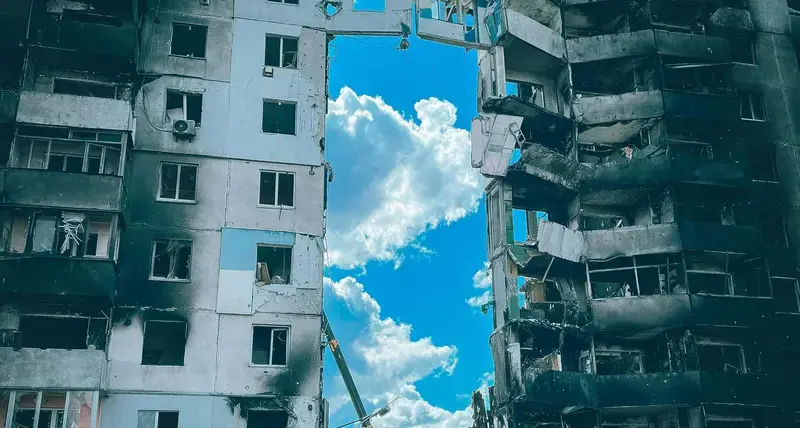
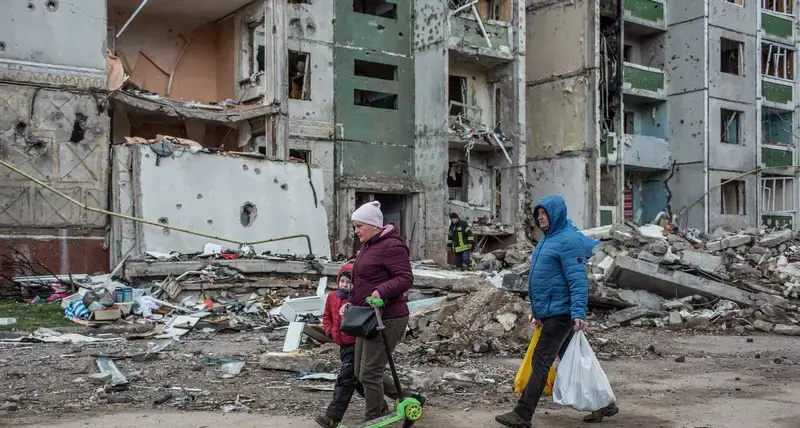
UN-Habitat has been working in Ukraine since December 2022 to support sustainable urban recovery and reconstruction. Our work focuses on helping Ukrainian cities rebuild stronger, more inclusive, and resilient communities following the unprecedented destruction caused by the ongoing war. UN-Habitat supports the Government of Ukraine's commitment to "Build Back Better" through evidence-based urban planning, policy development, capacity development, and digital transformation that not only restores what was lost but creates livable and sustainable communities for all in Ukraine.
UN-Habitat programmes and projects range from spatial planning at local, regional, and national levels to policy advice on housing, land, and urban development; capacity development for local authorities; digital transformation and smart-city solutions; public space design supporting social cohesion; and knowledge production on urban issues for better-informed interventions.
Responding to requests from national and local authorities, UN-Habitat is also expanding recovery planning support to municipalities near the frontline, where needs are most acute and institutional capacity is most stretched.
Impact
Challenges
Beyond physical destruction, Ukraine faces complex interconnected challenges. The demographic crisis, marked by displacement, depopulation, and an ageing population, is eroding both the labour force and local tax bases. Institutional capacity gaps strain local governments as they manage emergency response whilst preparing medium to long-term recovery strategies — constraints that are most acute in frontline hromadas, where planning must proceed under continuing uncertainty and incomplete data. Much of Ukraine’s housing stock is deteriorating Soviet-era construction, whilst infrastructure systems for water, sanitation, energy, and solid waste were fragmented before the war and now face severe operational challenges. Widespread land contamination, debris, and environmental hazards threaten long-term resilience. There is also a critical shortage of trained urban planners and recovery professionals.
Ukraine's recovery unfolds in an exceptionally complex environment where humanitarian response, reconstruction, and systemic reforms, including European Union accession, must advance simultaneously.
- Municipal service recovery needs: USD 7.4 billion
- Municipal service damages: USD 3.1 billion
- Housing stock damages: 13% affecting more than 3 million households
Total recovery and reconstruction needs: USD 587.7 billion over the next decade (2026–2035).
Source: RDNA5 report (World Bank, Government of Ukraine, European Union and United Nations, February 2026), Table 1 (p.16) and Key Highlights of Impacts (p.15).
Our vision
Our mission
Key projects
Donors and partners
UN-Habitat is grateful to our technical and financial partners for their trust in our technical capacity and their continuous support for improving the lives of people in Ukraine.
Donors: Germany (BMZ), UNICEF, Slovak Republic
Municipal partners: Kryvyi Rih (Dnipropetrovsk region), Kamianets-Podilskyi (Khmelnytskyi region), Borodianka, Irpin, Kyiv, Makariv (Kyiv region); Stryi, Drohobych, Truskavets (Lviv region); Myrhorod, Opishnia (Poltava region), Zaporizhzhia (Zaporizhzhia region).
Technical partners: Ministry for Communities, Territories and Internally Displaced Persons, Ministry for Recovery, Infrastructure and Transport*, Restart, Ro3kvit, Urban Reform, Impact Initiatives, UNITAC, Kyiv School of Economics, Kharkiv School of Architecture, Agency for Legislative Initiatives, Association of Ukrainian Universities, CEDOS, Global Water Operators’ Partnerships Alliance (GWOPA), People in Need/Housing Institute.
*Both ministries succeed the former Ministry for Development of Communities and Territories, split in July 2026.