Peer Review of the Implementation of UN-Habitat's Medium-term Strategic and Institutional Plan (2008-2013)
By its decision 21/2 of 20 April 2007, the Governing Council (GC) of the United Nations Human Settlements Programme (UN-Habitat) adopted the Medium-term Strategic and Institutional Plan (MTSIP) for 2008/2013. In the same decision the GC requested Executive Director of UN-Habitat to establish a peer-review process for the Plan. The present report is the final report on the results of the peer review. It reviews progress made in improving UN-Habitat strategies, programmes, organizational structures and procedures and gives recommendations for improving the implementation of MTSIP.
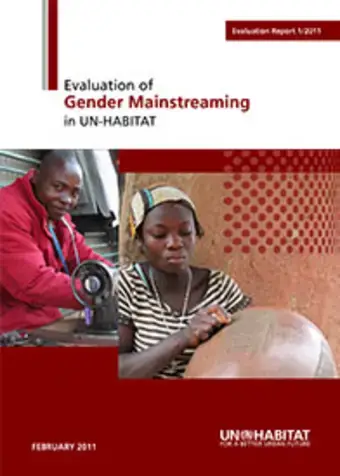
The objectives of the evaluation are to assess UN-HABITAT's efforts in mainstreaming gender across its programmes and policies, and the appropriateness of its institutional arrangements and strategic partnerships for the promotion of gender equality in human settlements.
In addition to the accountability objective, the purpose of the evaluation is to generate lessons to inform decisions about how institutional arrangements for gender mainstreaming and related strategic partnerships can be improved.The following Summary sets out the findings of the Evaluation with regard to the achievements and challenges of gender mainstreaming in UN-HABITAT, before presenting a summary of recommendations and next steps.
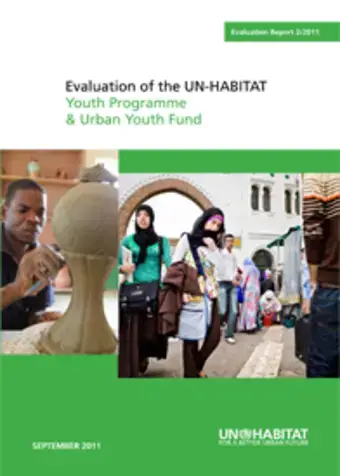
The evaluation of the UN-Habitat Youth Programme was mandated by UN-Habitat Governing Council resolution 21/6, which, among other things, requested the Executive Director to establish the Opportunities Fund for Urban Youth-led Development, and undertake an evaluation of the operation of the special fund and to submit a report thereon to the Governing Council at its twenty-third session in April 2011.
The main objectives of the evaluation were to:
Assess the relevance of the work carried out by UN-Habitat with urban youth
To review the integration of youth issues in the normative and operational work of UN-Habitat
To evaluate the operations of the Urban Youth Fund
To review the normative and operational performance of the youth empowerment initiatives of UN-Habitat
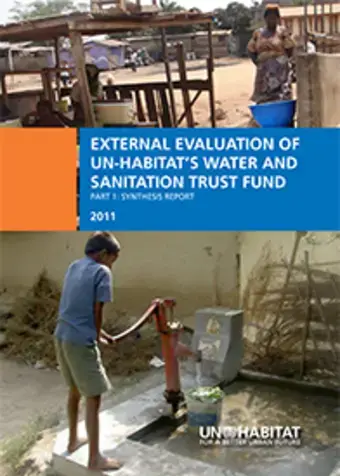
During the Water and Sanitation Trust Fund's Advisory Board meeting in 2010, the Government of Norway announced its intention to undertake an external evaluation of its support to the Trust Fund. Subsequently, the Governments of Norway, Spain and the Netherlands, in collaboration with UN-Habitat, decided to jointly undertake the evaluation.
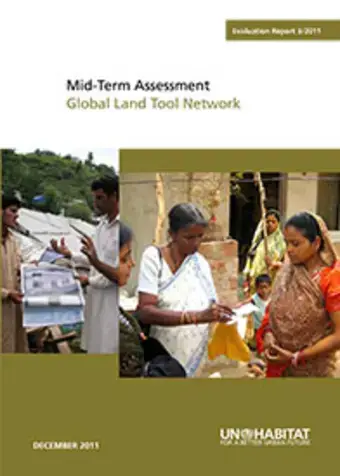
A mid-term evaluation of the Global Land Tool Network (GLTN) was carried out to inform the planning and decision-making of the second phase of GLTN. The GLTN was launched in June 2006 with the goal of contributing to poverty alleviation and the Millennium Development Goals through land reform, improved land management and security of tenure.
The Network is supported by a project implemented by UN-Habitat and funded by the Swedish International Development Cooperation Agency (SIDA) and the Government of Norway. The evaluation found that the GLTN had made impressive progress in achieving its expected outcomes, given its limited staff base and the short time in which funding has been available to implement activities. Further efforts are now required to reach national governments and those designing land projects.
This document is an internal Nepal country impact study of initiatives supported by UN-HABITAT’s Water and Sanitation Trust Fund (WSTF) undertaken by a team of international consultants. The objective of the WSTF is to bring in new investment and ideas, expand service coverage for poor urban dwellers, and help build momentum for achieving the MDGs.
The objectives and envisaged outcomes of the Country Support Strategy (CSS) of the Water for Asian Cities (WAsC) in Nepal (2008-2012) are by and large similar to those of WSTF
This document is an internal Kenya country impact study of initiatives supported by UN-HABITAT’s Water and Sanitation Trust Fund (WSTF) undertaken by a team of international consultants. The objective of the WSTF, established in 2003, was to bring in new investment and ideas, expand service coverage for poor urban dwellers and help build momentum for achieving the MDGs.
Its Strategic Plan for the 2008 – 2012 envisions three key outcomes:
• Increased institutional capacity in partner countries for pro-poor water and sanitation initiatives and policies with focus on gender equity, renewable energy and efficiency and environmental sustainability
• Increased flow of investment into water and sanitation sector catalysed by WSTF interventions
• Improved MDG monitoring mechanisms in place in partner countries, with improved benchmarking of water and sanitation service providers
 Share
Share