Download
Gender-and-Prosperity-of-Citie
Share
Number of pages
102
Publication date
2013
Publisher
UN-HABITAT

Gender and Prosperity of Cities, State of Women in Cities 2012/2013

There are two main standpoints that propagate the benefits of urbanisation. One is that cities are associated with opportunities for wealth generation. Concomitant to this is the idea that urban women supposedly enjoy greater social, economic, political opportunities and freedoms than their rural counterparts. However, the notable gender gaps in labour and employment, decent work, pay, tenure rights, access to and accumulation of assets, personal security and safety and representation in formal structures of urban governance show that women are often the last to benefit from the prosperity of cities. The State of Women in Cities 2012/2013 Report focuses on Gender and the Prosperity of Cities.

The Report examines the gender dimensions of the defining characteristics of a prosperous city- productivity, infrastructure development, quality of life, equity and social inclusion and environmental sustainability. It provides a conceptual framework for understanding the relationship between gender and prosperity and also reviews policies and institutional frameworks relevant for mainstreaming gender concerns in cities.


Gender mainstreaming a priority for UN-Habitat

UN-Habitat and several key stakeholders recently held a five day meeting on gender mainstreaming and capacity building workshop in Kisumu, Kenya.

The meeting brought together UN-Women, Association of Local Government Authorities of Kenya, Joint Programme on Gender Equality and Women's Empowerment (JPgewe) together with five countries representatives participating in the Lake Victoria Water Supply and Sanitation Programme  which are Rwanda, Burundi, Uganda, Tanzania, and Kenya.

Share
Download
Gender-Mainstreaming-Impact-St
Share
Number of pages
94
Publication date
2011
Publisher
UN-HABITAT

Gender Mainstreaming Impact Study, Document 04

This impact assessment identifies how the water and sanitation initiatives implemented under the Water Sanitation and Infrastructure Branch of UN-HABITAT, have strategically mainstreamed gender aspects in its various initiatives and to identify achievements and impact, challenges, lessons learned and provide recommendations.This gender thematic study is one out three impact studies supported by the WSTF. The other two are Kenya and Nepal Country Impact Assessments. Together these three constitute the first in a series, intended to assist the WSIB in its future plans for regular assessments of its WATSAN initiatives during the coming five years. The study has looked at global, regional and country activities. The country programmes reviewed are implemented in Ethiopia, Ghana,Kenya and Nigeria in Africa; India,LaoPDR, Nepal and Vietnam in Asia and Nicaragua in the Latin America and Caribbean region


Download
Gender
Share
Number of pages
111
Publication date
2011
Publisher
UN-HABITAT

Evaluation of Gender Mainstreaming in UN-HABITAT

The objectives of the evaluation are to assess UN-HABITAT's efforts in mainstreaming gender across its programmes and policies, and the appropriateness of its institutional arrangements and strategic partnerships for the promotion of gender equality in human settlements.

In addition to the accountability objective, the purpose of the evaluation is to generate lessons to inform decisions about how institutional arrangements for gender mainstreaming and related strategic partnerships can be improved.The following Summary sets out the findings of the Evaluation with regard to the achievements and challenges of gender mainstreaming in UN-HABITAT, before presenting a summary of recommendations and next steps.


Download
Gender-in-Local-Government-–
Share
Number of pages
161
Publication date
2008
Publisher
UN-Habitat

Gender in Local Government – A sourcebook for Trainers

Local governments are increasingly realizing the importance and benefits of addressing gender equality and equity in their decision making, policies, programmes and services. Many are rising to the challenge.

This source book is intended to help improve understanding of the problems involved. It is designed as a companion to other UN-HABITAT training tools, providing local government trainers with the background and tested training methods they need to strengthen the gender dimension in their day-to-day training activities. The source book may also be used as a stand-alone tool, introducing local government policy-making and project implementation.


Download
Gender-in-Local-Government-A-S
Share
Number of pages
150
Publication date
2008
Publisher
UN-Habitat

Gender in Local Government: A Sourcebook for Trainers

Good local governance cannot exist without giving due attention to gender equality and women’s empowerment. UN-HABITAT has therefore made great efforts to mainstream gender both internally and in its work with partners. The Training and Capacity Building Branch has recently published a number of training tools which aim to increase the capacity of local governments in such areas as local governance, management, local economic development and financial management.

A strong gender dimension has been incorporated into these tools and ongoing training activities to further support UN-Habitat’s gender policy. Despite these efforts, many training institutes are inadequately equipped to provide training on gender issues in local government and in fully integrating the gender dimension in their day-to-day courses. This tool, ‘Gender Equality and Equity: A Sourcebook for Local Government Training’, is designed to assist training institutions in mainstreaming gender concerns in local government capacity building activities and in human settlements training activities conducted by Habitat Agenda partners.


Download
How to Set Up and Manage a Tow
Share
Number of pages
55
Publication date
2008
Publisher
UN-Habitat

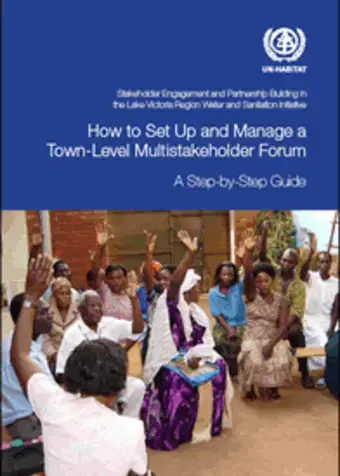
How to Set Up and Manage a Town-Level Multistakeholder Forum: A Step-by-Step Guide

There is no one best way to set up and manage a town-level multi-stakeholder forum. The composition of the multi-stakeholder forum and issues to be addressed will differ from one town to another. This Step-by-Step Guide has been developed with the understanding that one-size-does-not-fit-all. The users of the Guide are, therefore, encouraged to be flexible in developing multi-stakeholder partnerships in line with their local needs and resources.

A substantial part of the Guide is based on UN-HABITAT’s own learning and experiences gained in the first phase of the Lake Victoria Region Water and Sanitation Initiative. Current thinking on multi-stakeholder partnerships and the experiences and practices of other development partners are also used to illustrate some points.

Download
Land-Registration-in-Ethiopia-
Share
Number of pages
28
Publication date
2008
Publisher
UN-Habitat

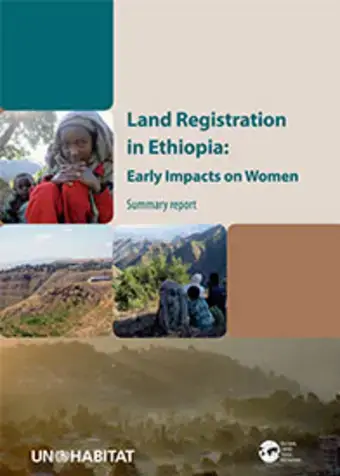
Land Registration in Ethiopia: Early Impacts on Women

This publication from the Global Land Tool Network (GLTN) belongs to a series of research reports examining the changing landscape of land tenure security in developing countries. The intent is to provide up-to-date information to land professionals and policy-makers working in the land sector and to raise awareness on what is being done at the country level.

This study focuses on how Ethiopian land law has been implemented in practice. In particular, it examines how the position of women, in cases of divorce or death of their husbands, may have changed and whether the new laws have impacts on the empowerment of women. Gender impacts are also captured by comparing the situation of female-headed househoulds. This report is an abridged version of the full research paper available on the GLTN website.


Download
Gender-Mainstreaming-in-Local-
Share
Number of pages
139
Publication date
2008
Publisher
UN-Habitat

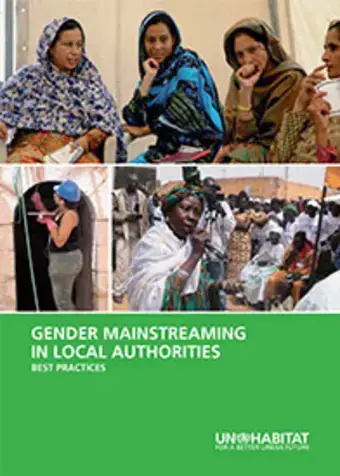
Gender Mainstreaming in Local Authorities - Best Practices

Since the 1980s, there has been growing recognition of the need to ensure women's equal access to urban public spaces. Many initiatives to mainstream gender by local governments have been documented. Some are comprehensive and are based on supportive policies.

Others are ad hoc and address specific issues, sometimes due to crises. Whatever the context, the initiatives provide lessons that other can learn from. this book documents such initiatives.


Download
Law,-Land-Tenure-and-Gender-Re
Share
Number of pages
108
Publication date
2006
Publisher
UN-Habitat

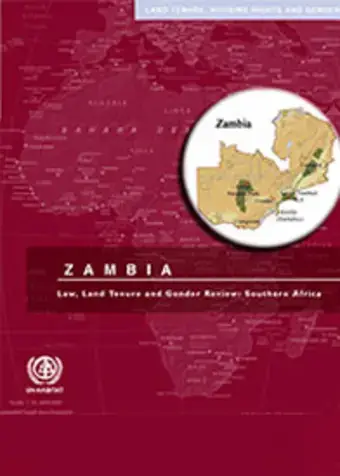
Law, Land Tenure and Gender Review: Southern Africa (Zambia)

This report was commissioned by UN-Habitat to review the laws and land tenure of a selected number of southern African countries. It involved the appointment of country specialists who researched and produced country chapters for their respective countries namely, Lesotho, Mozambique, Namibia and Zambia.

A regional expert was appointed to produce a regional overview to serve as a source document for the country reports, as well as provide overall coordination of the project. The project was carried out over a period of roughly one year, which began in March 2004.