The Evaluation Report highlights key achievements on issues such as relevance, effectiveness, efficiency and sustainability, among others, and in doing so, guide future programming within the country towards better programme implementation alongside partners in the country. Relationship between HQ, Regional and Country offices is also addressed, detailing evaluation of five key projects from 2012 to 2016.
The evaluation assesses UN-Habitat’s progress towards the Plan’s strategic result, the extent to which the UN system reforms have affected the implementation of the Strategic Plan, the effectiveness of UN-Habitat in implementing the Strategic Plan at regional and country level, and the quality of UN-Habitat’s work, working under Delivering as One principles, the extent to which cross-cutting issues (human rights, gender equality, youth and climate change) are effectively integrated in design and implementation, the effectiveness and coherence of UN-Habitat, as a matrix organization, in delivering and achieving integrated approaches towards urbanization, and the changes and elements of continuity since the adoption of the Strategic Plan. In addition, the evaluation considers the extent to which UN-Habitat contributes to transformative change in relation to its strategic result, and assesses performance based on standard evaluation of relevance, effectiveness, efficiency, impact and sustainability.
United Nations Human Settlements Programme (UN-Habitat) Dashboard Group: Norm setting and development 2014-2015
The purpose of the OIOS Evaluation Dashboard is to provide an assessment of the evaluation function in each of the entities under United Nations Secretariat, including UN-Habitat. This report was released in June 2017 and covers the biennium 2014-2015. UN-Habitat scored well on all key parameters of the evaluation framework. In terms of resources, UN-Habitat recorded an increase in its M&E budget but a decrease in the percentage of M&E budget as a percentage of the total programme budget. Overall report quality is good. Gender and human rights are better integrated while the quality of recommendations have decreased in the sample of evaluation reports assessed.
The assessment report of UN-Habitat was released and published by the MOPAN Secretariat. The assessment examines the period 2014 to mid-2016 and covers all key aspects of UN-Habitat functioning at strategic, operational, relationship and performance management levels and whether the agency achieve results that are relevant and sustainable in an efficient way.
The report provides insightful information about the rapid growth of ROAS and the value it has provided in extending the technical cooperation of UN-Habitat amongst the Arab States in its relatively short time of existence. It notes the effectiveness in establishing a high- level constituency of regional partners as an indispensable cornerstone for fulfilling its mandate; the accomplishment of finalising concurrently the ROAS Regional Strategy and League of Arab States Housing and Urbanisation Strategy technically supported by ROAS, with the alignment of both to the Sustainable Development Agenda 2030 and New Urban Agenda; ROAS’ positive collaboration with Headquarters; the challenges of transitioning to the UMOJA administrative set-up, and the challenges of operating under civil strife affecting a significant number of countries within the ROAS mandate.
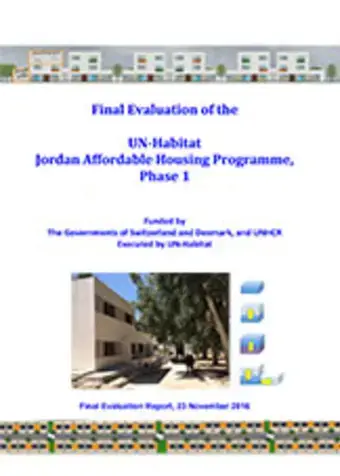
Final Evaluation of the UN-Habitat Jordan Affordable Housing Programme, Phase 1, November 2016
The purpose of the Jordan Affordable Housing Programme (JAH Programme) evaluation is to provide UN-Habitat, its partners and donors a forward-looking assessment of UN-Habitat’s operational capacity, experience, achievements and challenges in the implementation of the programme. Focus was on assessing relevance, efficiency, effectiveness, impact outlook and sustainability as well as integrating of crosscutting issues of environment, gender, youth and human rights, draw lessons learned and make recommendations for a second phase.
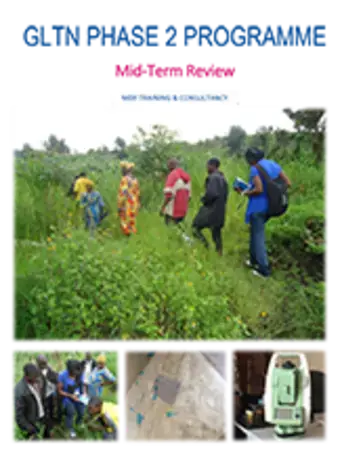
Mid-term Review of the Global Land Tool Network Phase 2 Programme, October 2016
This Mid Term Review (MTR) report is meant to establish the progress made in the implementation of the Global Land Tool Network (GLTN) Phase 2 Programme (2012-2017), covering the period of 2012-2015. The GLTN, a unit within UN-Habitat, is a partner-network of over seventy international institutions. It is established in 2006 and works to promote secure land and property rights for all, through the development of pro-poor and gender sensitive land tools. The GLTN’s Programme objective is to ensure that international organisations, UN-Habitat staff and related land Programmes including targeted national and local governments, are better able to improve tenure security of the urban and rural poor.
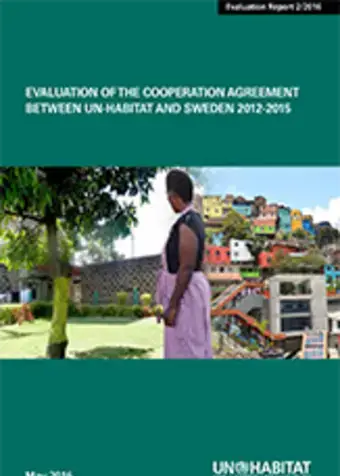
This evaluation of the 2012-2015 agreement between the Swedish International Development Cooperation Agency (Sida) and UN-Habitat was welcomed by the donor for providing an assessment of results achieved and performance of 19 UN-Habitat projects supported through the agreement. The majority, about 74 per cent of the Sida funded projects were rated with ‘highly satisfactory’ or ‘satisfactory’ performance. Projects that paid attention to internal collaboration and monitoring effectiveness were found to be generally more successful than those that did not.
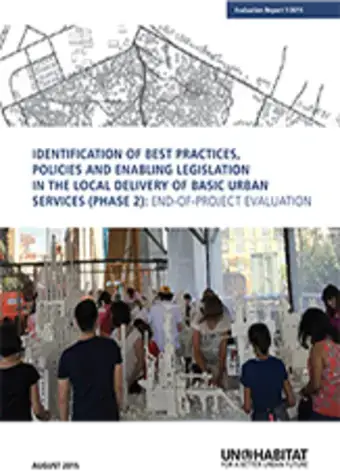
End-of-Project Evaluation: Identification of Best Practices, Policies and Enabling Legislation in the Local Delivery of Basic Urban Services (Phase 2) 1/2015
The ‘Best Practices’ project supported local and national governments in Cuba, El Salvador, Colombia, Ecuador, Uruguay and Mozambique pursued through supporting decentralization processes and national urban policies, technical assistance for local government urban planning policies, decentralized city-to-city cooperation for municipal planning, and strategic and institutional support to Habitat III’s preparatory process. The evaluation took place approximately one year following the project’s finalization allowing for a more reliable assessment of post-project sustainability. There are indications of sustainability in two of the municipal alliances and at least one of the municipal initiatives, which is being replicated.
Through the Open UN-Habitat web portal, which is part of the open UN-Habitat Transparency Initiative, UN-Habitat is able to show donors, partners and the public where and with whom the agency is working, the decisions taken, as well as the funding and reporting related to each project implemented or supported by UN-Habitat. The evaluation found the initiative timely and highly relevant. Evaluation survey respondents and interviewees see the Open UN-Habitat Transparency initiative as supportive to the needs of donors, partners, beneficiaries and UN-Habitat staff and supporting UN-Habitat’s reputation in development aid transparency. Several organizations are using the Open UN-Habitat website platform, including UNESCO, the Dutch Ministry of Foreign Affairs, and Open Aid.
 Share
Share