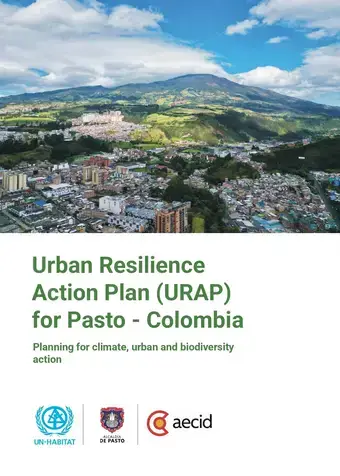
The Urban Resilience Action Plan (URAP) for Pasto provides a structured roadmap to strengthen the city’s capacity to address climate risks, urban vulnerabilities, and biodiversity loss. Building on the findings of the Multilayered Vulnerability Assessment (MVA), the URAP identifies priority actions focused on the most exposed areas of the city, including the Guachucal and Membrillo-Guaico watersheds and the El Potrerillo market, a critical hub for local livelihoods and food security.
The plan proposes practical, community-driven, and financially viable interventions organized around three strategic themes: waste management and circular economy, water resource conservation and management, and environmental monitoring and risk reduction. These actions include improved waste separation and valorization systems, nature-based solutions to reduce flood and erosion risks, hydraulic and drainage infrastructure upgrades, real-time air-quality monitoring, and community capacity building for climate and disaster preparedness.
Aligned with Colombia’s NDCs, the National Adaptation Plan, and the Municipal Development Plan of Pasto 2024–2027, the URAP connects global frameworks with local priorities to advance inclusive, sustainable, and climate-resilient urban development. The plan emphasizes the role of local institutions, universities, community organizations, informal workers, and market actors in shaping and sustaining long-term resilience.
By turning evidence into action, the URAP offers a comprehensive foundation for mobilizing investments, strengthening adaptive capacity, and supporting the wellbeing of the city’s most vulnerable communities. It positions Pasto as a leading example of integrated, community-centered urban resilience planning in Colombia.
 Share
Share