Accountability
"Accountability”, is a core value of the United Nations. Paragraph 8 of the General Assembly Resolution, (A/RES/64/259), defines accountability as
“The obligation of the Secretariat and its staff members to be answerable for all decisions made and actions taken by them, and to be responsible for honouring their commitments, without qualification or exception.”
In accordance with this Resolution, UN-Habitat, as part of the United Nations Secretariat, has the duty to uphold the principle that all its personnel must be answerable for their decisions and actions. This obligation means acting with the values of integrity, respecting human rights, upholding ethical standards, and honouring commitments without exception.
UN-Habitat remains committed to ensuring good governance, aligning with the relevant good practices and fostering an environment that promotes accountability and transparency across the organization and guaranteeing that UN‐Habitat’s operations are carried out effectively, responsibly and with commitment to continual improvement.
Key Resources:
- UN-Habitat Programme Accountability Framework, establishes the principles, roles and responsibilities that promotes a culture of accountability across the organization. All personnel are expected to discharge their duties and functions in accordance with the principles set down in this Framework.
- A/RES/64/259 - Towards an accountability system in the United Nations Secretariat
Accountability and Reporting Mechanisms
As a programme of the United Nations Secretariat, UN-Habitat is committed to upholding the highest standards of efficiency, competence, and integrity. Our comprehensive accountability system provides a range of independent and confidential channels through which all UN-Habitat personnel, partners, vendors, beneficiaries, and project-affected communities to report misconduct, seek advice, or resolve grievances or dispute.
UN-Habitat’s governance framework integrates independent UN-wide oversight bodies with project-specific redress pathways:
An overview:
- Investigation & Reporting Wrongdoing: The Office of Internal Oversight Services (OIOS) serves as the UN Secretariat’s central authority for receiving reports on fraud, systemic mismanagement, or serious misconduct involving UN-Habitat personnel or third-party vendors contracted by UN-Habitat.
- Ethics & Whistleblower Protection: The UN Ethics Office is responsible for handling ethical financial disclosures, provides confidential advice on conflicts of interest, employment-related questions, promoting ethics, and administers the protection against retaliation for reporting misconduct.
- Environmental, Social & Project Safeguards: Under UN-Habitat's Environmental and Social Safeguards System (ESSS), project-affected stakeholders, local communities, and field workers have access to dedicated email to unhabitat.esss@un.org; or by letter or by hand delivery to the UN-Habitat Headquarters in Nairobi, Kenya or any UN-Habitat Office to log concerns regarding human rights, social equity, or environmental impacts. The office contact details are available at https://unhabitat.org/contact
- Systemic Reviews: The Joint Inspection Unit (JIU) conducts independent, system-wide evaluations and inspections to improve the management and overall administrative efficiency of UN-Habitat.
- The UN Internal Justice System: Employment-related disputes follow a dual-track framework. Personnel can opt for informal mediation through the UN Ombudsman, or formal legal recourse via management evaluation, leading to the UN Dispute Tribunal (UNDT) and the UN Appeals Tribunal (UNAT). The UN Office of Administration of Justice (OAJ) is an independent office, based in New York, responsible for the overall coordination of the formal complaints of the UN’s internal justice system.
On an annual basis, UN-Habitat reports on the status of activities, complaints, and cases to the Executive Board redacting confidential information. For more information, see the last report on Ethics and OIOS activities as of November 2025 and Protection of Sexual Harassment and Abuse as of April 2026
- Report on the Activities of the Office of Internal Oversight Services and the Ethics Office and related UN-Habitat Activities
- Action by UN-Habitat to strengthen protection against sexual or any other type of exploitation and abuse and against sexual harassment in the workplace
For general legal questions or concerns, contact UN-Habitat Legal Office, unhabitat-legaloffice@un.org
Investigation & Reporting Wrongdoing
UN-Habitat takes all reports of possible wrongdoing seriously.
The Office of Internal Oversight Services (OIOS) is the internal oversight body of the United Nations (UN). The Office assists the Secretary-General in fulfilling his oversight responsibilities in respect of the resources and staff of the Organization through the provision of audit, investigation, inspection and evaluation services.
Wrongdoing that may be reported to OIOS include:
- Fraud and Corruption (for example, misrepresentation, forgery, or false certification in connection with any official claim or benefit, theft, embezzlement, solicitation/acceptance of bribes, extortion, and/or smuggling). For more information see the United Nations Secretariat Information Circular on Anti-Fraud and Anti-Corruption for mishandling of contract obligations and relations with third parties leading to loss of property or assets, or generating liabilities for the Organization
- Conflict of Interest, such as failure to disclose an interest or relationship with a third party who might benefit from a decision in which the staff member takes part
- Allegations of sexual abuse and sexual exploitation as defined in ST/SGB/2003/13
- Allegations of sexual harassment as defined in ST/SGB/2019/8
- Allegations of racism, racial bias, and discrimination based on race, ethnic origin or nationality as defined in ST/SGB/2019/8
- Unauthorized outside activities, procurement violations, misuse of ICT resources, misuse of funding to implementing partners, and other violations of UN regulations, rules and administrative issuances
Reporting Wrongdoing
You can report wrongdoings to one of the following offices authorized to receive complaints:
- Office of Internal Oversight Services, Report Wrongdoing | OFFICE OF INTERNAL OVERSIGHT SERVICES using the following form https://oios.un.org/en/report-wrongdoing
- The “responsible official” in UN-Habitat as defined under Section 2 of ST/AI/2017/1 which is the head of department or office of the subject staff member, for any other staff members; unhabitat-executive-director@un.org
- The Conduct and Discipline Focal Point, based in the Legal Office, who supports the Executive Director on matters relating to prohibited conduct prohibited conduct discipline falling under ST/SGB/2019/8, Addressing discrimination, harassment, including sexual harassment, and abuse of authority. unhabitat-legaloffice@un.org
Ethics and Whistleblower Protection
In accordance with UN Secretariat’s governance arrangements, ethics-related functions are mandated by the UN Ethics Office.
UN-Habitat’s Legal Office has dedicated ethics focal points who coordinate and support the implementation of ethics, conduct, integrity and accountability frameworks released by the UN Ethics Office. The Conduct and Discipline Focal Point works closely with the Office of the Executive Director, (OED) and HR Liaison Office to ensure that all staff are aware on matters related to the work of the UN Ethics Office and trained on its application in their line of work.
The UN Ethics Office provides:
- Ethics Advice
- Protection Against Retaliation
- Financial Disclosure
- Ethics Training
For further information contact the UN Ethics Office
Ethics Helpline: available on iSeek (for UN personnel) or E-mail:ethicsoffice@un.org
- Ethics Advice
The ethics advice may be provided by the UN Ethics Office for the following situations
- Outside activities
- Employment-related questions
- Financial interests
- Pre-appointment reviews for senior appointments
- Honours, decorations, favours and gifts
- Institutional integrity matters
- Procurement ethics
- Due diligence and risk assessment process
- Other conflicts of interest
For ethics questions and concerns contact the UN Ethics Office
Ethics Helpline: available on iSeek (for UN personnel) or E-mail:ethicsoffice@un.org
- Protection Against Retaliation
The UN Ethics Office also provides confidential advice on ethical issues and review requests for protection against retaliation for reporting of misconduct.
The UN’s protection against retaliation policy, ST/SGB/2017/2/Rev.1, (“the policy”) is to ensure that the Organization functions in an open, transparent and fair manner and enhances protection for those who report misconduct (any violation of the Organization’s rules and regulations by staff members), wrongdoing (by any person that is harmful to the interests, operation or governance of the United Nations), or cooperate with duly authorized audits and investigations.
The reports and cooperation are considered “protected activities” under the policy. In order to receive protection, any report should be made to the UN Ethics Office, (Protection Against Retaliation), as soon as possible, in good faith and within six (6) months of becoming aware of the retaliation.
“Retaliation” means any direct or indirect detrimental action that adversely affects your employment or working conditions, where such action has been recommended, threatened or taken for the purpose of punishing, intimidating or injuring you because you engaged in a protected activity
For retaliation complaints fill in this form and contact the UN Ethics Office
Ethics Helpline: available on iSeek or E-mail:ethicsoffice@un.org
- Financial Disclosure
UN Financial Disclosure Programme (UNFDP), administered by the UN Ethics Office, is designed to identify, resolve and mitigate conflict of interest risks arising from staff members’ personal financial assets, liabilities, investments, and outside activities.
ST/SGB/2006/6 on financial disclosure and declaration of interest statements outlines the obligations and scope of staff members to file financial disclosure statement or declaration of interest statements.
In support of the UN Ethics Office, the Legal Unit, which serves as the focal point for ethics matters, works in close collaboration with UN-Habitat’s Corporate Management Division (CMD) to submit the list of UN-Habitat participants to the UNFDP required to complete an annual disclosure.
How to file a Conflict of Interest case: See UN Ethics Office Financial Disclosure
Links to the statements of those senior UN officials who have elected to participate in the Voluntary Public Disclosure initiative available at Public Disclosure | United Nations Secretary-General.
For UNFDP questions or concerns, contact the UN Ethics Office
Helpline: available on iSeek or email:ethicsoffice@un.org
For UN-Habitat’s list of UNFDP participants, contact UN-Habitat Legal Office, unhabitat-legaloffice@un.org
- Ethics Training
In early 2013, the UN Ethics Office (Leadership Dialogue) launched the United Nations Leadership Dialogue that required all UN Secretariat entities to hold annual discussions with their teams on: (i) the ethical challenges we encounter in our day-to-day work; (ii) where to seek guidance on ethical matters; and (iii) our roles as United Nations personnel in addressing ethical dilemmas.
The United Nations Leadership Dialogue discussion is facilitated by the Legal Office who shares information on the sessions on an annual basis.
The UN Ethics Office (Leadership Dialogue) that provides an overview of the Leadership Dialogue, documents and leadership dialogue documents from previous years and frequently asked questions (FAQs)
For Leadership Dialogue questions or concerns contact UN-Habitat Legal Office, unhabitat-legaloffice@un.org
Environmental, Social & Project Safeguards
UN-Habitat applies environmental and social safeguards to the implementation of all its projects and programmes. These efforts are guided by UN-Habitat’s Environmental and Social Safeguards System (ESSS).
More information is available here: https://unhabitat.org/environmental-and-social-safeguards-system-version-3-esss-31
Environmental and social concerns, risks, grievances, issues, or complaints, related to the implementation of UN-Habitat projects or programmes, can be submitted by email to unhabitat.esss@un.org; or by letter or by hand delivery to the UN-Habitat Headquarters in Nairobi, Kenya or any UN-Habitat Office. The office contact details are available at https://unhabitat.org/contact
Grievances are handled by dedicated staff independently of the project or programme concerned, are communicated anonymized and in accordance with due process. Personal information provided in connection with a grievance is treated confidentially and protected, as appropriate, to safeguard complainants and other affected persons against potential reprisals or retaliation.
Every concern is taken seriously and will be appropriately reviewed and followed up upon submission.
Systemic Reviews
The Joint Inspection Unit (JIU) is the only independent external oversight body of the United Nations system mandated to conduct evaluations, inspections and investigations system-wide.
Its mandate is to look at cross-cutting issues and to act as an agent for change across the United Nations system. JIU works to secure management and administrative efficiency and to promote greater coordination both between UN agencies and with other internal and external oversight bodies.
In its reports and notes, the Unit identifies best practices, proposes benchmarks and facilitates information-sharing throughout the organizations of the UN system that have adopted its Statute.
The Unit operates with respect to the legislative organs and the secretariats of those specialized agencies and other international organizations, within the United Nations system, that have accepted its Statute. These entities are often referred to as the JIU participating organizations. JIU has a total of 28 participating organizations as of 2018, of which UN-Habitat is one of them, that play a crucial role in how the Unit functions.
Further information is available here including the reports pertinent to UN-Habitat: https://www.unjiu.org/
Internal Justice system
As part of the UN System, UN-Habitat is governed by a United Nations-wide internal justice system, which works through parallel informal and formal pathways.
Informal resolution uses confidential dialogue and mediation via the UN Ombudsman and Mediation Services (UNOMS).
Formal recourse requires a management evaluation, followed by binding rulings from the UN Dispute Tribunal and appeals to the UN Appeals Tribunal.
Informal System
- UN Ombudsman and Mediation Services (UNOMS): Acts as a confidential, neutral first step for dialogue, negotiation, or professional mediation.
- Flexibility: Parties retain high control over outcomes, resolving conflicts quickly without formal legal records.
- Dual Track: Informal discussions can run concurrently while formal steps take place.
Formal System
- Management Evaluation: A mandatory internal review of a contested administrative decision before filing a case BEFORE THE un Dispute Tribunal (skipped only for direct disciplinary measures or specific technical body advice).
- UN Dispute Tribunal (UNDT): The independent first-instance court with registries in New York, Geneva, and Nairobi that conducts hearings and issues binding judgments.
- UN Appeals Tribunal (UNAT): The final appellate body that reviews appeals against UNDT judgments from either staff or the administration.
Support and Legal Assistance
- Office of Staff Legal Assistance (OSLA): Provides legal advice and representation before the UNDT and UNAT to staff members and former staff and representatives o deceased or incapacitated staff members who wish to appeal an adverse administrative decision or who are subject to disciplinary action.
- OSLA is independent, and the advice it offers is confidential.
- OSLA does not charge any fees for its services.
More information: https://www.un.org/en/internaljustice/overview/resolving-disputes-formally.shtml
Definitions, Policies and Procedures
UN‑Habitat’s policies and procedures provide the foundation for transparent, accountable, and effective programme delivery across the organization. They outline clear operational standards, guide decision‑making, and ensure consistency in how projects are planned, implemented, and monitored. These frameworks strengthen risk management, promote ethical conduct, and support compliance with UN‑wide requirements. UN‑Habitat’s policies and procedures help staff and partners operate efficiently while safeguarding resources and maximizing impact. They also facilitate coordination, enhance institutional learning, and ensure that programmes are delivered in a way that is inclusive, and aligned with the agency’s global mandate for sustainable urban development.
Social inclusion
UN-Habitat promotes inclusive development and recovery assistance and targets vulnerable groups in society who find themselves marginalized – the urban and disaster stricken poor, and especially women and young people. The Gender Mainstreaming Unit of UN-Habitat strives to broaden gender equality and women’s rights into all of UN-Habitat’s activities by supporting and strengthening gender awareness. Through our programmes youth are encouraged to be active partners empowered to play a role of leadership. The agency works with the government, local authorities, non-governmental organizations, youth groups, governments and municipalities to promote better opportunities for those living on the margins of society.
Cross-cutting themes
UN‑Habitat’s policies and procedures on cross‑cutting themes ensure that gender equality, human rights, climate resilience, and youth empowerment are systematically integrated across all programmes and operations. These frameworks guide staff in applying standardized tools, assessments, and quality checks that embed inclusive, sustainable, and rights‑based practices. By establishing clear requirements for mainstreaming cross‑cutting priorities, UN‑Habitat promotes coherent action, strengthens accountability, and supports partners in addressing the complex social, economic, and environmental dimensions of urban development. Through consistent application of these procedures, the organization enhances the impact, equity, and sustainability of its interventions, ensuring that no one is left behind.
Relevant Definitions
Independence
United Nations personnel shall maintain their independence and shall not seek or receive instructions from any Government or from any other person or entity external to the United Nations and shall refrain from any action which might reflect negatively on their position as United Nations personnel responsible only to the United Nations.
Loyalty
Loyalty to the purposes, values and principles of the United Nations is a fundamental obligation of all United Nations personnel. They shall be loyal to the United Nations and shall, at all times, discharge their functions and regulate their conduct with the interests of the United Nations only in view.
Impartiality
United Nations personnel, in the performance of their official duties, shall always act with impartiality, objectivity and professionalism. They shall ensure that expression of personal views and convictions does not compromise or appear to compromise the performance of their official duties or the interests of the United Nations. They shall not act in a way that unjustifiably could lead to actual or perceived preferential treatment for or against particular individuals, groups or interests.
Integrity
United Nations personnel shall maintain the highest standards of integrity, including honesty, truthfulness, fairness and incorruptibility, in all matters affecting their official duties and the interests of the United Nations.
Accountability
United Nations personnel shall be accountable for the proper discharge of their functions and for their decisions and actions. In fulfilling their official duties and responsibilities, United Nations personnel shall make decisions in the interests of the United Nations. They shall submit themselves to scrutiny as required by their position.
Respect for human rights
United Nations personnel shall fully respect the human rights, dignity and worth of all persons and shall act with understanding, tolerance, sensitivity and respect for diversity and without discrimination of any kind.
Protection from Sexual Exploitation and Abuse (PSEA)
Sexual exploitation and abuse (SEA), constitutes a profound violation of trust that communities place in the United Nations including UN-Habitat and its partners as it undermines the United Nations core values and severely erodes the credibility and effectiveness of our mission. Above all, it causes devastating and often, lifelong harm to survivors.
As part of the UN Secretariat, UN-Habitat maintains a strict zero-tolerance policy for preventing and addressing sexual exploitation and abuse (PSEA), anchored in ST/SGB/2003/13 on Special Measures for Protection from Sexual Exploitation and Abuse, which sets the foundational standards across the UN system, informs UN-Habitat’s internal SEA policies, and defines clear obligations for all personnel regarding conduct, reporting and accountability.
These safeguards are integrated across UN-Habitat’s programmes and operations including mainstreaming PSEA consideration into programme/project designs, strengthening due diligence, risk assessment and monitoring of implementing partners, ensuring that community engagement processes provide accessible and appropriate information on rights and reporting mechanisms and supporting survivor‑centered referral pathways through UN-Habitat country teams. Together, these measures reinforce UN-Habitat’s commitment to accountability, uphold the dignity and rights of affected persons and help ensure that all UN-Habitat activities are carried out in an environment that protects every individual from the risk of SEA.
For any PSEA guidance and/or support, contact the global PSEA focal point at the UN-Habitat Legal Office at unhabitat-legaloffice@un.org
Media files

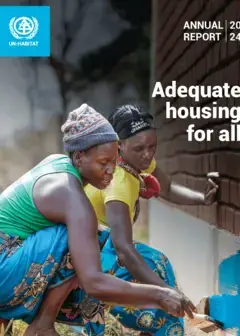
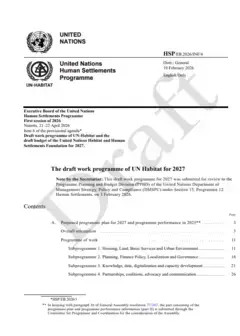
Evaluation Reports
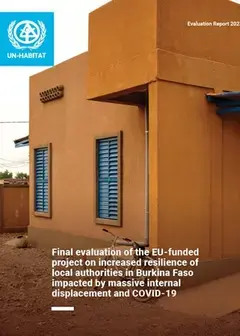
Transparency
UN‐Habitat is committed in making available reliable and timely information about existing conditions, decisions and actions relating to the activities of the organization, in an accessible, visible and understandable fashion. UN-Habitat has taken various steps towards ensuring transparency in the decision making and management such as:
Financial management accountability and transparency
UN‐Habitat launched several administrative and financial management policies and procedures with the aim to further enhance accountability and transparency in financial management: a Cost Allocation and Recovery Policy (June 2012), Project Based Management Policy (November 2012), Approved Spending Level mechanisms (2012) and a decentralization of delegations of authority to regional offices down to country offices.
UN‐Habitat open aid movement
On September 2012 UN‐Habitat became the third UN agency to start publishing data to the International Aid Transparency Initiative (IATI) an important step for a more open and transparent organization.
International Public Sector Accounting Standards (IPSAS)
UN‐Habitat adopted IPSAS as at 1 January 2014. The implementation of IPSAS, which aligned UN‐Habitat reporting to international best practices, will (i) enhance transparency and accountability, (ii) improved decision making, resulting from more detailed financial information, (iii) improved consistency and comparability of financial statements and (iv) allow access to more comprehensive information on costs.
Institutionalization of result‐based management (RBM)
Building on the work already done by UN‐Habitat with regard to policy development, training and tools, RBM is further being strengthened to further instil a strong organisational culture focused on results with regard to all pillars of results based management including planning, monitoring and evaluation at strategic, programme and project level.
Implementation of an Enterprise Risk Management (ERM)
UN‐Habitat established in 2012, a risk identification matrix as part of the standard project template that each project leader is required to complete on the inception of every project, including mitigation strategies for medium, high and critical risks.