For more than three decades, Mako Mohamed Mohamud Hassan lived with the fear that the place she called home could collapse at any time. At 67, she now has a permanent home where she feels safer, can move around more freely and look ahead with greater confidence.
Mako spent many years in Boqolka Buush (100 Bush) settlement in Bosaso, Somalia, living in a traditional buul shelter made from wooden branches, plastic sheets and scraps of cloth. As a person with disability, she depended on neighbours to carry her to safety whenever strong winds or heavy rains threatened the fragile structure.
“The biggest difference between the permanent house and the buul shelter is security and protection from the weather. During floods or strong winds, the buul shelter could easily be damaged,” Mako said.
That changed when she moved to a new settlement in Gribble, on the outskirts of Bosaso, through the Saameynta Joint Programme. Implemented by UN-Habitat in partnership with the International Organization for Migration (IOM), the United Nations Development Programme (UNDP) and the Government of Somalia, the programme brings together housing, basic services and accessible infrastructure to support displaced people.
“For us, this project is about more than building houses. It is about creating durable solutions where families can live in climate-resilient and inclusive spaces and have greater security over their land without the constant risk of eviction,” said Sophos Sophianos, UN-Habitat project manager. “Ultimately, it is about giving people a safe and dignified place to rebuild their lives.”
From displacement to a safer home
Mako was born in Mogadishu in 1959 and fled the city after the outbreak of civil war following the collapse of Somalia’s central government in 1991. Together with relatives, she sought refuge in Bosaso, hoping to rebuild her life away from conflict and insecurity.
Instead, displacement brought years of uncertainty. In Boqolka Buush, Mako and her relatives lived with limited access to basic services in a shelter that offered little protection from Bosaso’s intense heat, strong coastal winds and heavy rains.
“We used to live together in a buul shelter. We were never comfortable there,” she said.
Today, Mako is among 245 internally displaced people living in the new Gribble Settlement, where 30 houses have been constructed. Each house has a 1,000-litre water storage tank, helping residents store water at home, while trees planted around the homes and in communal areas provide shade and help improve the surrounding environment.
Residents also have access to a shaded community centre for meetings and social activities, as well as a children’s playground that provides a safe space for play and early childhood development.
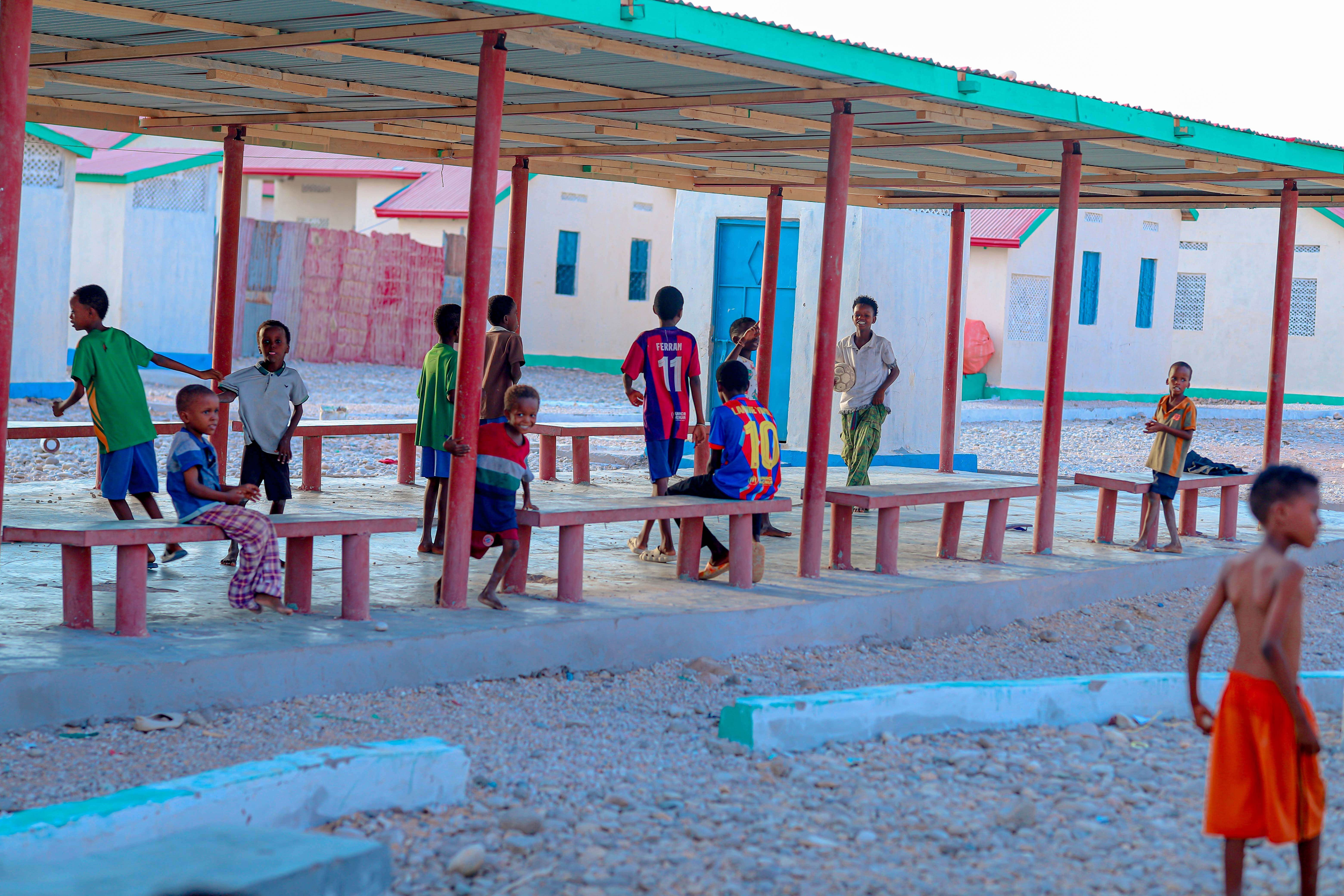
Children play at the shaded community centre in Gribble Settlement. UN-Habitat advocates for the inclusion of safe, accessible and inclusive public spaces as an integral part of settlement planning and design. © UN-Habitat
A home designed for inclusion
For Mako, the change is about more than having a stronger roof over her head. Being able to move around her home and the settlement independently is an important part of feeling at home.
The settlement incorporates accessible housing layouts, pathways and ramps to support persons with disabilities, older people and others with limited mobility. Seventeen residents also received assistive devices, including wheelchairs and crutches, to support their mobility and independence. Mako received a wheelchair.
Before moving to Gribble, Mako relied on neighbours to carry her during emergencies. Now, accessible features and mobility support give her greater independence and reduce her reliance on others during emergencies.
The project also created opportunities for residents to participate in site clearance and construction. Five residents – four women and one man – completed certified construction skills training, giving them practical skills that can support their livelihoods beyond the life of the project.
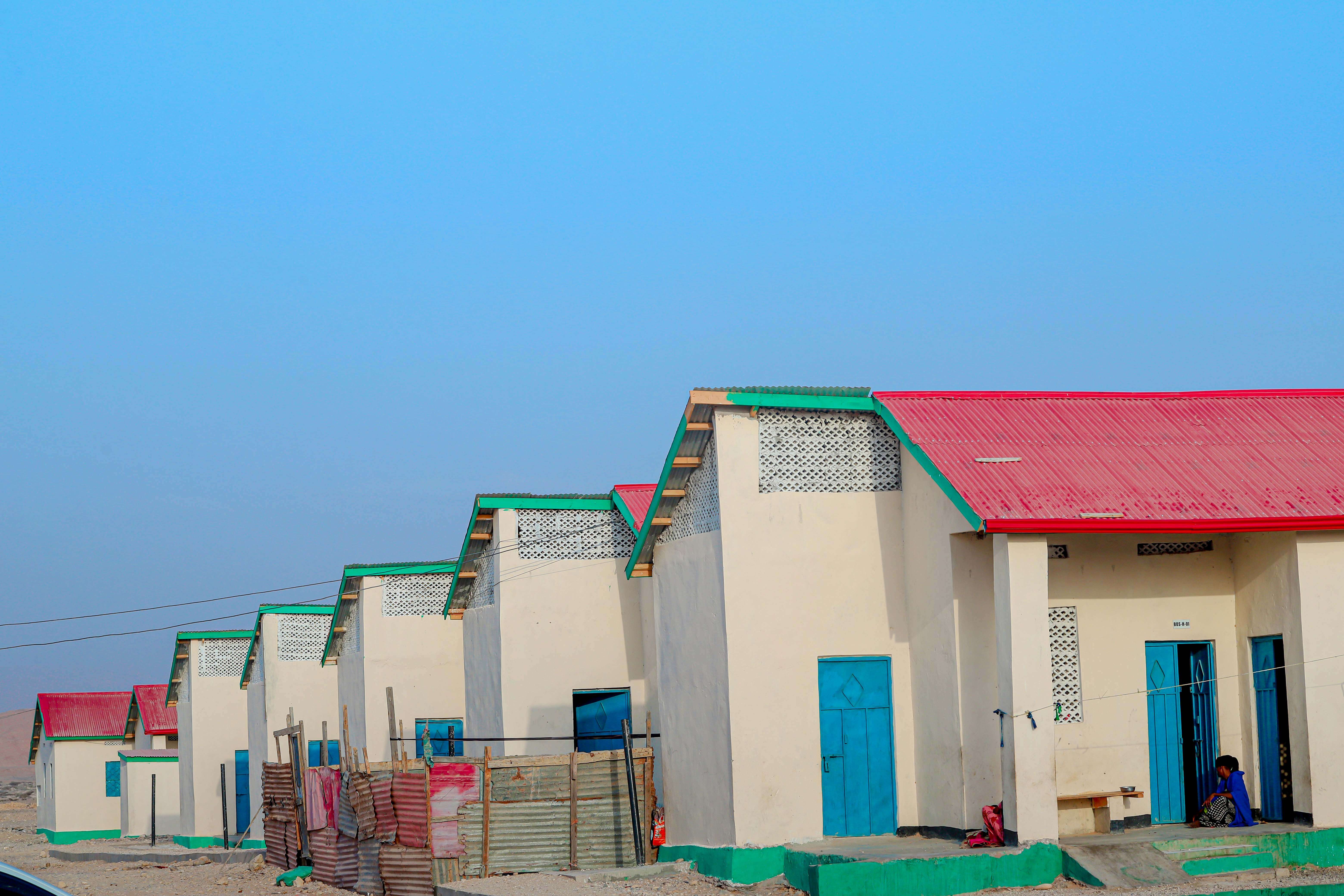
A section of the newly constructed, climate-resilient permanent houses for internally displaced persons in Gribble Settlement, Bosaso, Somalia. © UN-Habitat
A new beginning
Together, these integrated solutions show how the Saameynta Joint Programme goes beyond providing emergency shelter. The Gribble Settlement plan helped guide the development of a community where housing, basic services, accessibility, communal spaces and livelihood opportunities come together to support lasting solutions for displaced people.
For Mako, the impact is personal and tangible: a durable home, access to water, improved mobility and greater security over where she lives. After more than three decades of displacement, she can look ahead without the same fear that once came with every storm.
“Now I feel safe,” Mako says.
Cover photo: Mako Mohamud, whose newly acquired wheelchair has improved her mobility and independence, poses outside her permanent home in Gribble Settlement. © UN-Habitat