Every morning, the city of Tomohon, in Indonesia, wakes up and produces 51.6 tons of waste. For years, most of it has ended up in a landfill that was never built to cope. But in West Tomohon, one man is quietly rewriting that story.
Jemmy Makasala is a community facilitator who believes that nothing should ever truly go to waste. He is turning food scraps into fertilizer and eco-enzyme, and is leading a growing movement to reduce, reuse, and recycle waste in Tomohon.
UN-Habitat met him during the interventions done under the ASEAN Sustainable Urbanisation Strategy (ASUS) Project – Phase II. Together with the community and city officials, UN-Habitat is working to support the city of Tomohon in improving its waste management system, and Jemmy is among those actively seeking solutions to the problems that affect him and the entire city.
A neighbourhood leading change
It was a clear afternoon in West Tomohon when Jemmy Makasala made his way through the neighbourhood, stopping to check in on residents along the route he knew by heart. As a local community facilitator, Jemmy has spent years working alongside the people of this district, and on this particular afternoon, someone called him out from their garden, asking him to take a look at their plants.
Jemmy obliged, as he always does, offering practical advice on caring for the garden in Tomohon’s famously fertile volcanic soil. But his eyes were also drawn to something sitting quietly beside the front door: a composting bag.
"We have around 60 composting bags in this district," Jemmy explains, gesturing along the street. "Each one is placed about 100 meters apart. This way, every resident can easily access a bag to dispose of their organic waste."
It is a modest number, but in a city dealing with 51.6 tons of daily waste, nearly 70 per cent of it is organic. A composting bag placed at the right distance from someone’s front door can represent an important step in how the community relates to what it discards.
When waste outpaces the system
Tomohon is a growing city of 205,448 inhabitants located in the heart of Minahasa lands, North Sulawesi Province, Indonesia. Like many urban centres across the country, its growth has brought opportunity but also waste. For years, that waste has piled up faster than the waste management system was designed to handle.
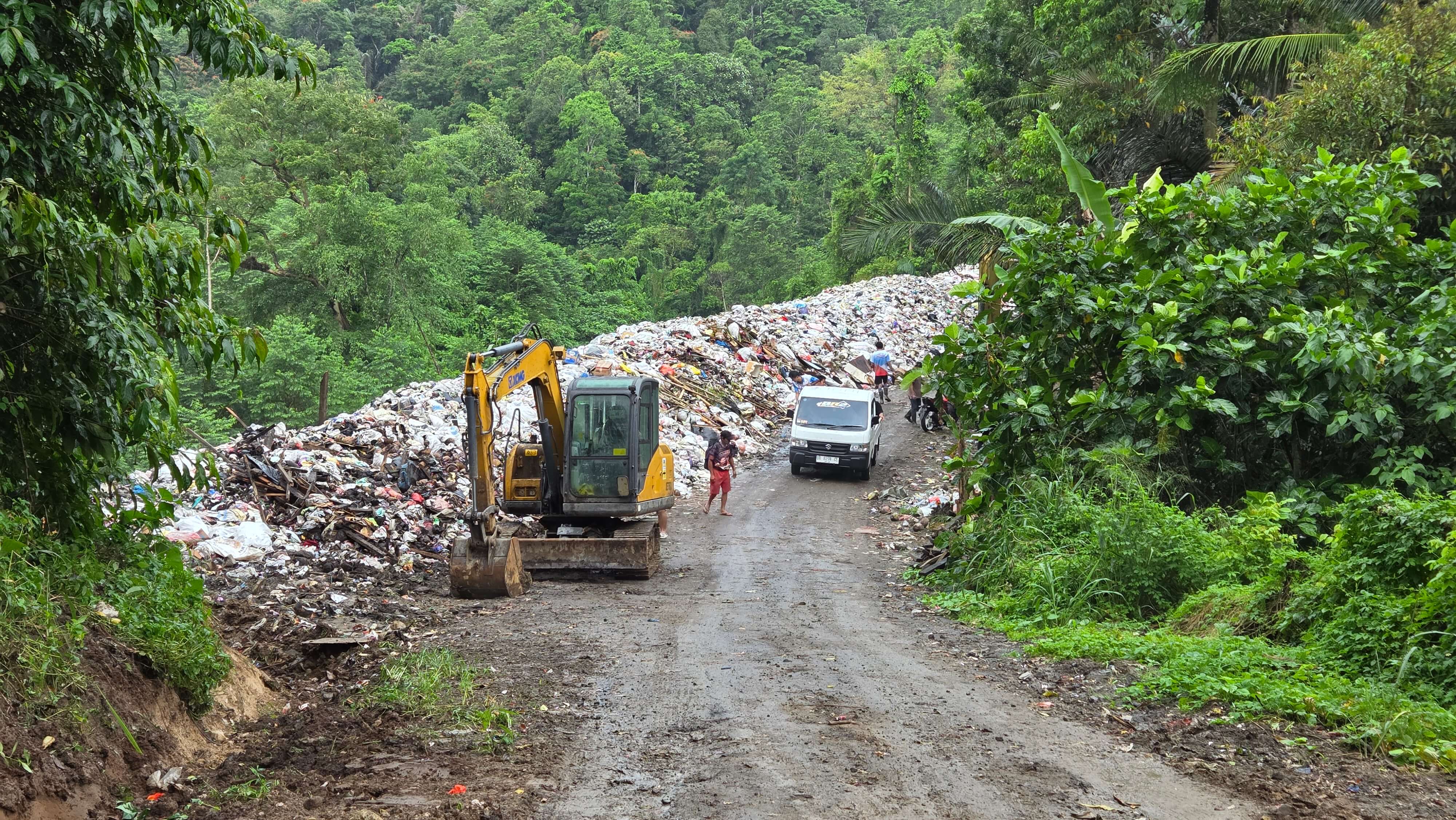
Tara-Tara landfill, Tomohon’s main waste disposal site, is struggling to manage increasing volume of waste with limited machinery and capacity. © Mula Pralampita Nursetianti
For the families living closest to Tomohon’s main landfill, called Tara-Tara, the waste management crisis is a lived experience. It is the smell that drifts through their windows. It is the worry about what seeps into the water their children drink. It is the quiet resignation of a system that wasn’t built with them in mind.
The landfill is struggling to keep pace. Leachate bleeds into nearby water sources. Uncontrolled decomposition sends methane into the atmosphere. The Mayor, Mr. Caroll Senduk, has seen the picture clearly. "The city of Tomohon faced five main challenges on waste management," he says, pointing to limited cross-sectoral coordination, disconnected stakeholders, a lack of framework for integrated waste management, unreliable data, and a gap between best practices and formal systems.
Bringing the city together for dialogue and solutions
Through the ASEAN Sustainable Urbanisation Strategy (ASUS) Project – Phase II, UN-Habitat works with cities like Tomohon to develop integrated, community-centred approaches to urban issues, including waste. In Tomohon, that has meant going beyond technical fixes to tackle the human and institutional systems behind them.
UN-Habitat brought together 70 city officials, residents, and technical experts in Tomohon, not just to discuss the problem but to confront it honestly and together. A roadmap emerged, leading to the development of a joint technical proposal to scale what is already working on the ground: Tomohon’s Integrated Organic Waste Processing Facility (PPSOT).
People like Jemmy are the actors of change. Jemmy is currently overseeing the PPSOT in West Tomohon, a place where the logic of waste is turned on its head.
Transforming waste into something valuable
Inside the PPSOT facility, organic waste is transformed into eco-enzyme and liquid fertilizer. The eco-enzyme, Jemmy explains, is surprisingly versatile: it can be used as a natural fertilizer to make vegetables grow larger. The organic waste can also be transformed into a disinfectant and even used as an ingredient in soap production. The facility also sits alongside a demonstration farm, where food scraps become compost, where compost enriches the soil, and where the soil produces food again: a small but living loop of circular economy in practice.
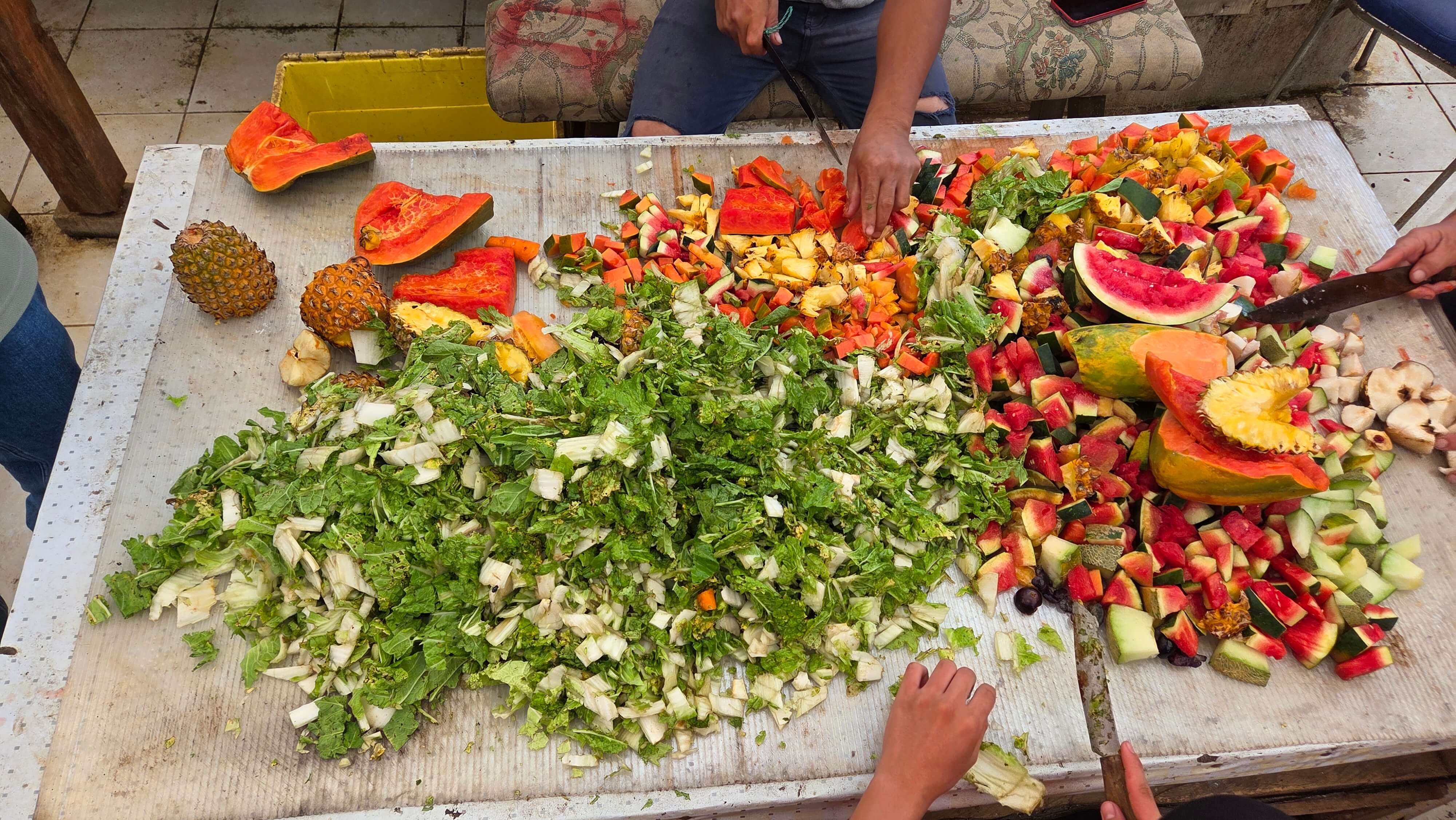
PPSOT crews chopping vegetable waste to process it into eco-enzyme. © Mula Pralampita Nursetianti
“I’m still experimenting with eco-enzyme. We provide it free of charge to anyone who wishes to use it. We’ve even sprayed it at the landfill to help reduce odours, a temporary measure to limit air pollution,” says Jemmy.
The initiative has real promise. But Jemmy is candid about its current limits. The facility can process only a small fraction of the organic waste generated in the district, and market waste has not yet been integrated. Due to limited container capacity for chopped organic waste, the PPSOT currently operates only once every three days. And building public participation remains a challenge in itself.
"I refuse to use the word ‘waste’,” Jemmy adds, "because nothing should go to waste; everything can be repurposed."
Jemmy sees a future where more containers, more composting points, and more community involvement would mean less waste reaching the landfill.
A city reimagining its future
The ambition is not simply a cleaner Tomohon. It is a more connected one, where the people of the city are not bystanders to change. Where a resident calling out to Jemmy about their garden plants is also someone who thinks twice before leaving vegetable scraps by the roadside. Where the smell from the landfill becomes a memory, not a daily fact of life.
“If everyone in this community could manage their own waste, we would significantly reduce the pressure on the landfill, and perhaps even achieve a true zero-waste community,” concludes a resident of West Tomohon District.
Cover photo: Jemmy Makasala. © Mula Pralampita Nursetianti