Nairobi, 13 April 2026 – Africa faces a housing deficit of over 51 million units – projected to reach 130 million by 2030. Behind this figure lies a deeper reality: more than one billion people live in informal settlements globally, many in rapidly growing African cities. These are not just statistics; they reflect one of the defining urban challenges of our time – and a call to action that shaped discussions at the Second Africa Urban Forum (AUF), held last week in Nairobi.
Over three days, nearly 8,000 delegates came together with a shared purpose: to move from dialogue to implementation. What emerged was a unified continental voice – positioning Africa not as a recipient of solutions, but as a driver of global urban transformation through South-South cooperation.
For Anacláudia Rossbach, Executive Director of UN-Habitat, the Forum marked a turning point. “When Africa chooses to speak with one voice, the world has no choice but to listen,” she said at the closing ceremony. Ms. Rossbach stressed that with only a few years left to deliver the 2030 Agenda for Sustainable Development, urgent action is needed to move from commitments to implementation. Housing and informal settlements are central to Sustainable Development Goal 11 and all other SDGs – and must be understood not only as shelter, but as essential infrastructure underpinning access to education, health, water and sanitation, and inclusive development.
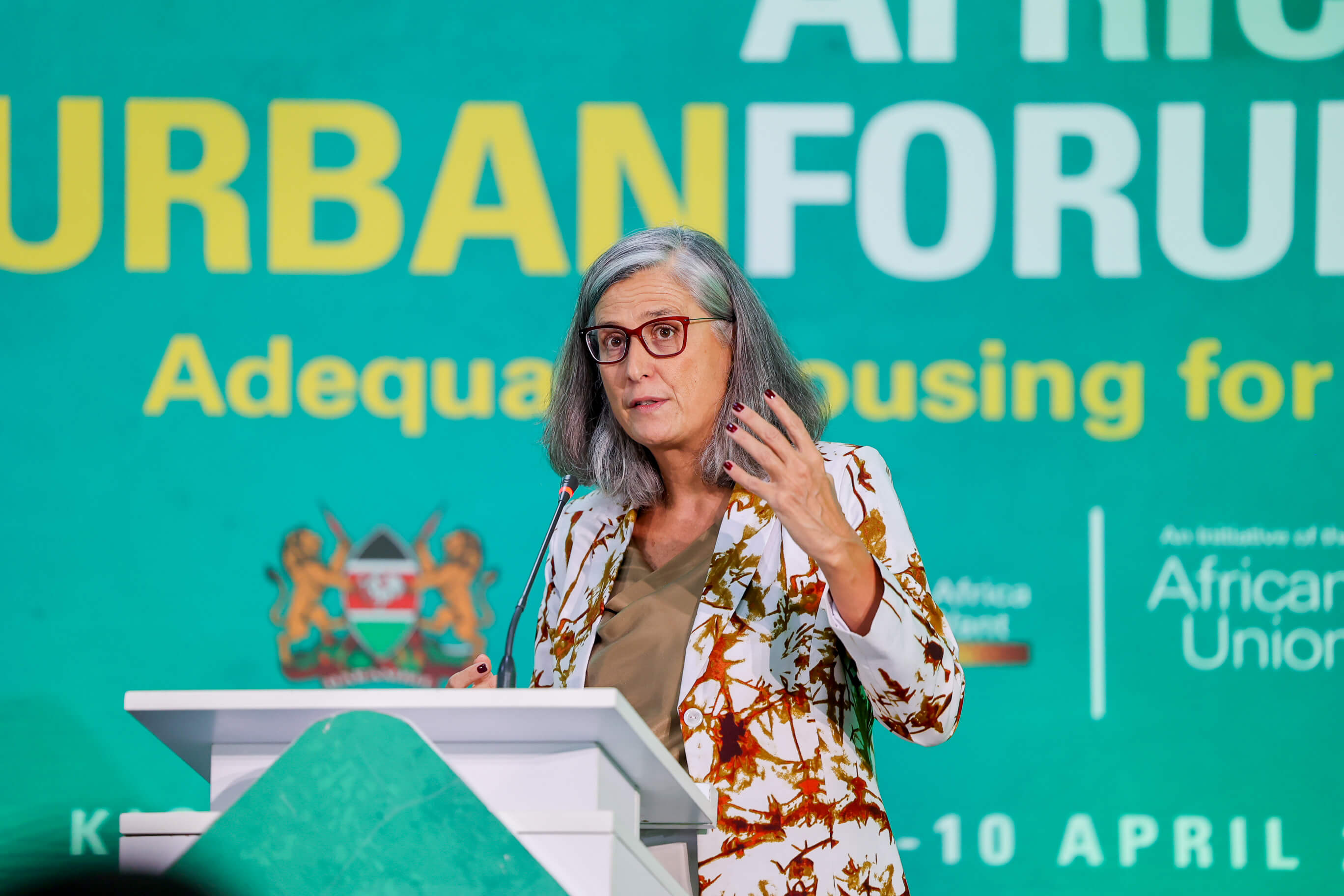
© UN-Habitat/Peter Ndolo
At the heart of the Forum’s outcomes is the recognition that housing is not merely shelter – it is an economic infrastructure. This underpins the Africa Affordable Housing Compact, a multi-stakeholder platform designed to accelerate affordable housing delivery at scale. By bringing together governments, private sector developers, financial institutions, international organizations and innovative stakeholders, the Housing Compact aims to mobilize innovative financing, reduce investment risks, and support bankable housing solutions tailored to diverse national and local contexts.
Complementing this is the Nairobi Declaration, a continental commitment by African Union Member States to take time-bound, action-oriented steps toward sustainable urbanization. It prioritizes land reforms, integrated housing policies and strengthened urban planning systems, while embedding housing into national development and fiscal frameworks. It also calls for prioritizing informal settlements and advancing climate-resilient urban development.
As noted by Moses Vilakati, AU Commissioner for Agriculture, Rural Development, Blue Economy and Sustainable Environment, Africa is generating home-grown solutions with global relevance. From housing finance innovation to land and planning reforms, these approaches can support other regions facing similar urbanization pressures and strengthen South-South cooperation.

© UN-Habitat/Peter Ndolo
The Africa Urban Forum outcomes will directly inform discussions at the World Urban Forum (WUF13) in Baku, Azerbaijan, in May 2026. The Nairobi Declaration will guide Africa’s unified position, while the Housing Compact will support implementation through partnerships and investment. Importantly, the Nairobi Declaration will contribute to the formulation of the Baku Call to Action, ensuring Africa’s priorities are reflected in global commitments on housing systems and land reform.
At WUF13, African delegations will help shape global discussions, including pathways to strengthen housing finance and implement the New Urban Agenda and SDG 11 review processes.
From Nairobi to Baku, the message is clear: Africa is not waiting for solutions – it is building them, shaping global frameworks, and redefining the future of sustainable urban development.
Cover photo: © UN-Habitat/Peter Ndolo