"Everything I learn is to save my life, my family's, and my community's"
When floods struck the Cuiabá Valley in Petrópolis in 2008, Cristina do Rosário was seven months pregnant. Within days of the disaster, she lost her baby and temporarily lost the use of her legs. The tragedy would mark her life, but it would also shape her determination to help her community prepare for future disasters.
Cristina has lived for 34 years in Itaipava, a district of Petrópolis in Brazil’s mountainous region of Rio de Janeiro state. Born and raised in the municipality, she works at a local public school, is a mother of three, and has become a key figure in mobilizing the community around disaster risk prevention.
Although the area is known for its high-end residential developments, it has also experienced increasingly severe climate events in recent years, leaving lasting marks on the territory and its residents. The Cuiabá Valley is one of the 13 communities most vulnerable to extreme climate events in Petrópolis.
A life-changing tragedy
In February 2008, Cristina and her husband tried to protect their belongings as floodwaters rose. “We had hooks in the living room. We passed ropes behind the sofa, suspended it, and threw things on top. It had always rained a lot, reaching up to a meter of water. We would dry the walls and repaint. But 2008 was the first tragedy of a much larger proportion that happened in the region,” she recalls.
When Cristina reached the living room door, the water was already up to her waist and rising rapidly. Realizing there was no time left, she told her husband to abandon everything and leave. Neighbours helped remove her from the house due to her pregnancy and the strength of the current.
The region was severely affected by landslides that buried homes and caused significant loss of life and property. Access to the area was difficult because of mud and debris.
About ten days after the disaster, Cristina lost the baby. The trauma also caused her to temporarily lose the use of her legs, and she began using a wheelchair.
Recovery inspired by a newborn
That same week, an 18-year-old pregnant neighbour, Daniela Beatriz Maciel, woke up to find her house flooded and went into labour. Soon after, Ana Beatriz Maciel was born. Unsure how to soothe her newborn, the young mother turned to someone who had always supported the community in difficult times: Cristina.
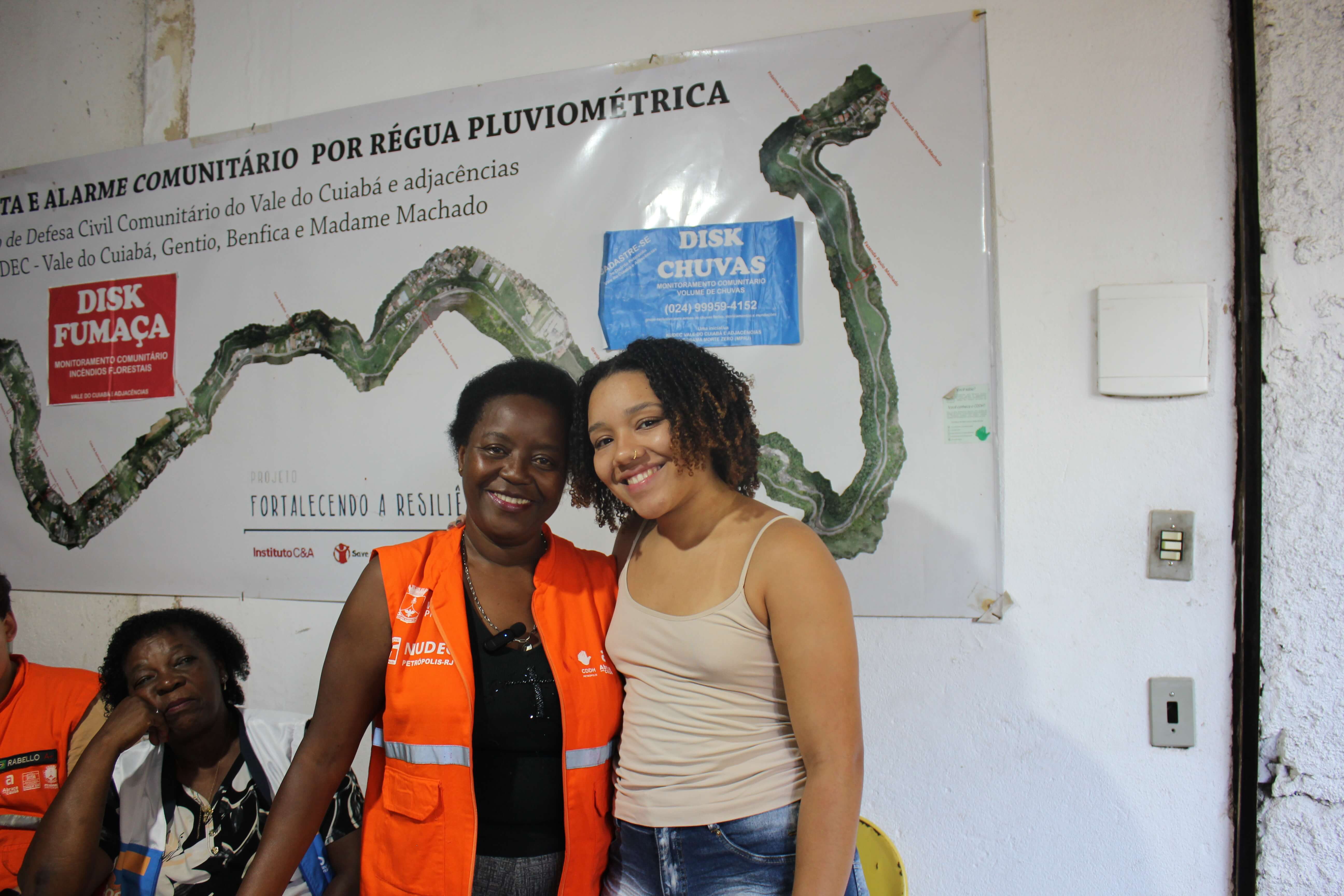
Cristina Rosário with Ana Beatriz Maciel Chaves, whom she considers like a daughter, at the Cuiabá Valley NUDEC in Petrópolis, a hub for community disaster preparedness. © UN-Habitat/Livia Freire
The baby, who would only calm down in Cristina’s arms, soon became part of her life.
“It was Ana Beatriz who got me out of the wheelchair. I still remember her little arms around my shoulder when her mother placed her in my lap. Within four days, I walked again. I took the little clothes I had received to wash and kept thinking about her – she had nothing. She used to call me mom,” she recalls.
At that time, a support network among women in the community had already begun to take shape. Ana Beatriz’s mother relied on Cristina’s support, and through that bond she found the courage to start over and help strengthen the network – which would later become the Cuiabá Valley NUDEC, now formed by 14 women.
From survivor to community leader
After recovering from the 2008 floods and inspired by her bond with Ana Beatriz, Cristina decided to build her knowledge and skills in disaster preparedness. She enrolled in training at the State University of Rio de Janeiro (UERJ) and, after three and a half years, became a socio-environmental field monitor.
In 2011, the Serrana Region was once again hit by heavy rains, leading to one of the country’s largest disasters. The tragedy strengthened Cristina’s determination to be better prepared for risk situations and reinforced the need for community-based disaster preparedness.
Through this process, Community-Based Civil Defense Groups (NUDECs) were created to mobilize, organize, and train residents in disaster prevention, promoting information sharing, preparedness, and rapid response during emergencies.
In 2012, Cristina supported the creation of the Cuiabá Valley NUDEC, which continues to operate today on her property.
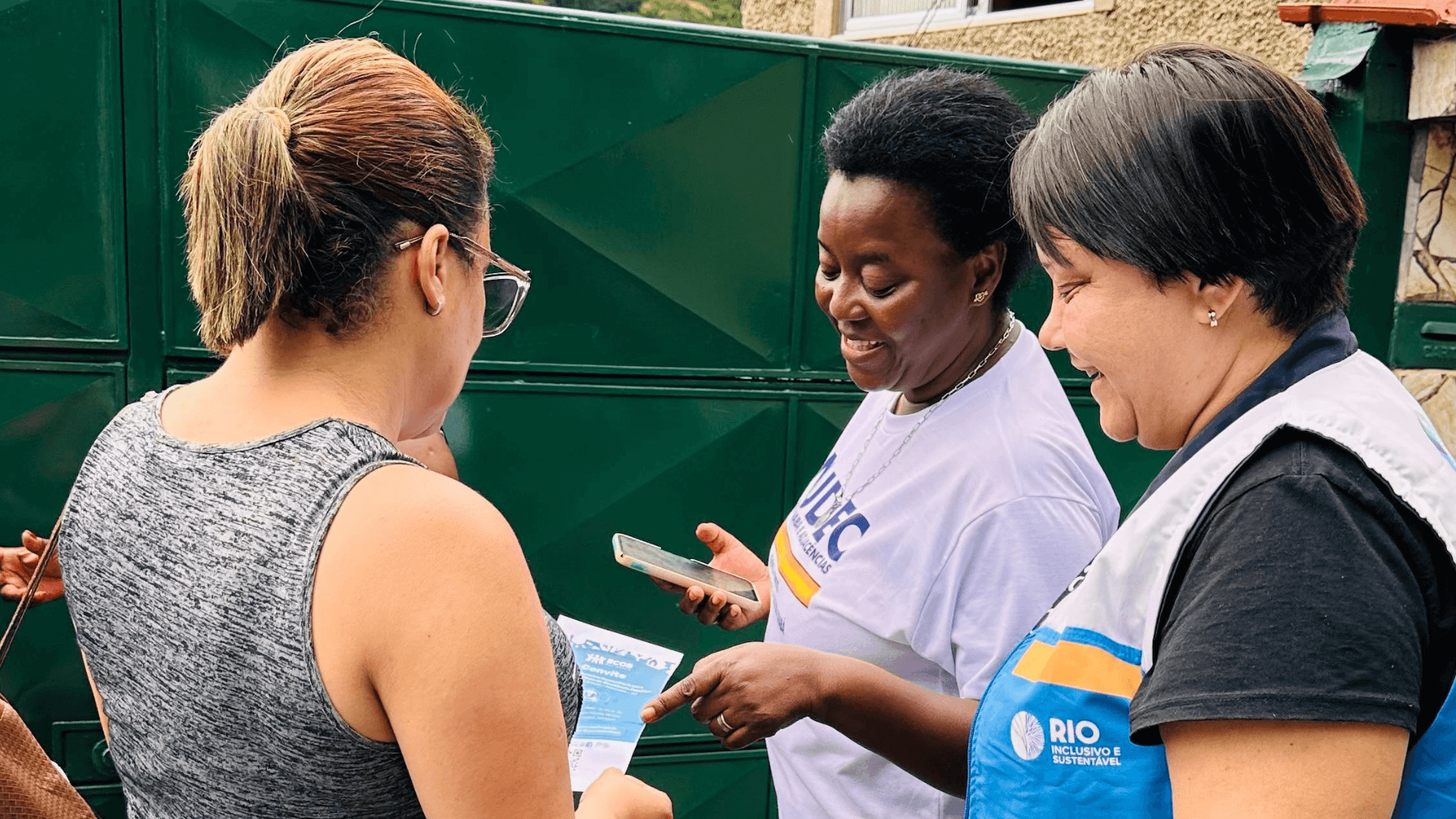
Cristina Rosário and Cláudia Avelar Moura, Training Supervisor, invite residents to participate in ECOS Petrópolis workshops organized with support from UN-Habitat. © UN-Habitat/Juliana Ribeiro
“After the courses and training with Civil Defense, I realized I was almost a fatal victim for not knowing what to do. I was here, inside my house, where the NUDEC operates today, worried about my material goods. Since 2008, resilience has been part of who I am,” Cristina says.
At first, she questioned whether she would be able to handle the responsibility.
“Today I see the importance of my work. We are always doing training, and everything I learn is to save my life, my family's, and my community’s. That’s why I say this knowledge is so important. I’ve lived here for 34 years and always suffered with the tragedies of floods, but I didn’t know what to do. Today. I know,” she affirms.
Today, Cristina coordinates the Vale do Cuiabá NUDEC and works with residents to strengthen disaster preparedness in one of Petrópolis’ most vulnerable areas. Her leadership is supported by UN-Habitat initiatives that promote community-based disaster risk reduction and climate resilience.
Strengthening community preparedness
In 2025, the Cuiabá Valley became one of the territories covered by the RJ Resiliente initiative, a partnership between UN-Habitat and the State Government of Rio de Janeiro, through the State Secretariat for Environment and Sustainability.
The initiative promotes awareness-raising and community mobilization focused on disaster risk prevention, helping strengthen urban and climate resilience.
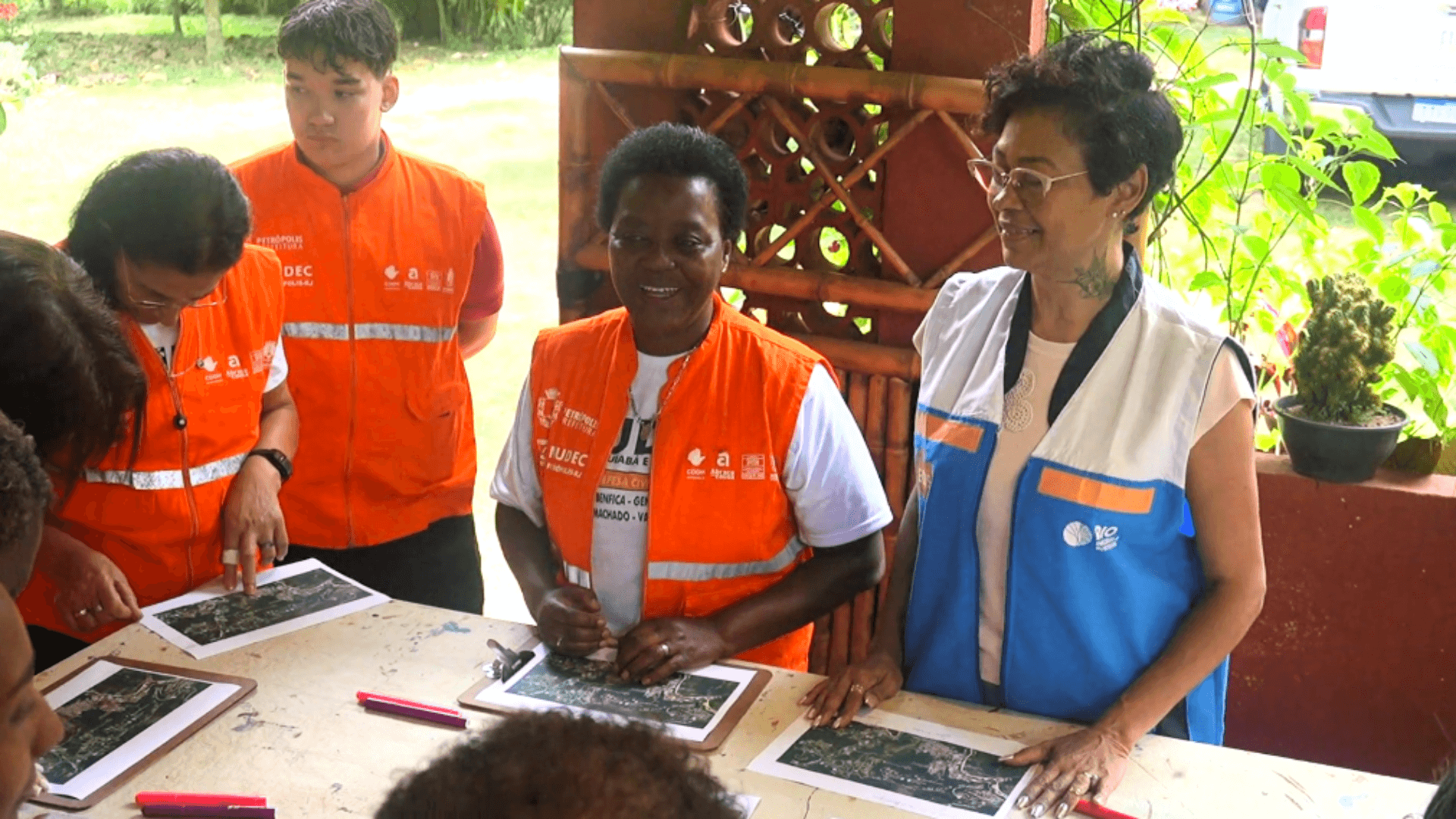
Cristina Rosário, Pedro Rabello, Ana Maria Paranhos, and Rosilane Alves, ECOS Petrópolis Coordinator, during RJ Resiliente workshops supported by UN-Habitat and the State Government of Rio de Janeiro. © UN-Habitat/Juliana Ribeiro
RJ Resiliente builds on the work of NUDEC representatives like Cristina, who already have deep knowledge of the territory and the strategies promoted through Civil Defense training. The initiative strengthens the work already being carried out locally by expanding access to prevention activities for more residents.
As coordinator, Cristina helped promote workshops in Vale do Cuiabá through the community network. She participates actively in meetings and contributes to implementing methodologies adapted to the local reality.
The workshops, held in the 13 communities most vulnerable to extreme events in the municipality, cover basic concepts of disaster risk, climate monitoring, mapping of vulnerable areas, and the identification of safe evacuation routes. Community members also learn how to build simple, low-cost sensors – such as rain gauges and wind monitors – to help identify risk situations and support decisions about when to move to designated safe areas.
“In Brazil we have no culture of disaster risk prevention. Communities need education; it is necessary to bring more knowledge to the community, know when to leave, seek safe points, and interpret alerts and sirens.”
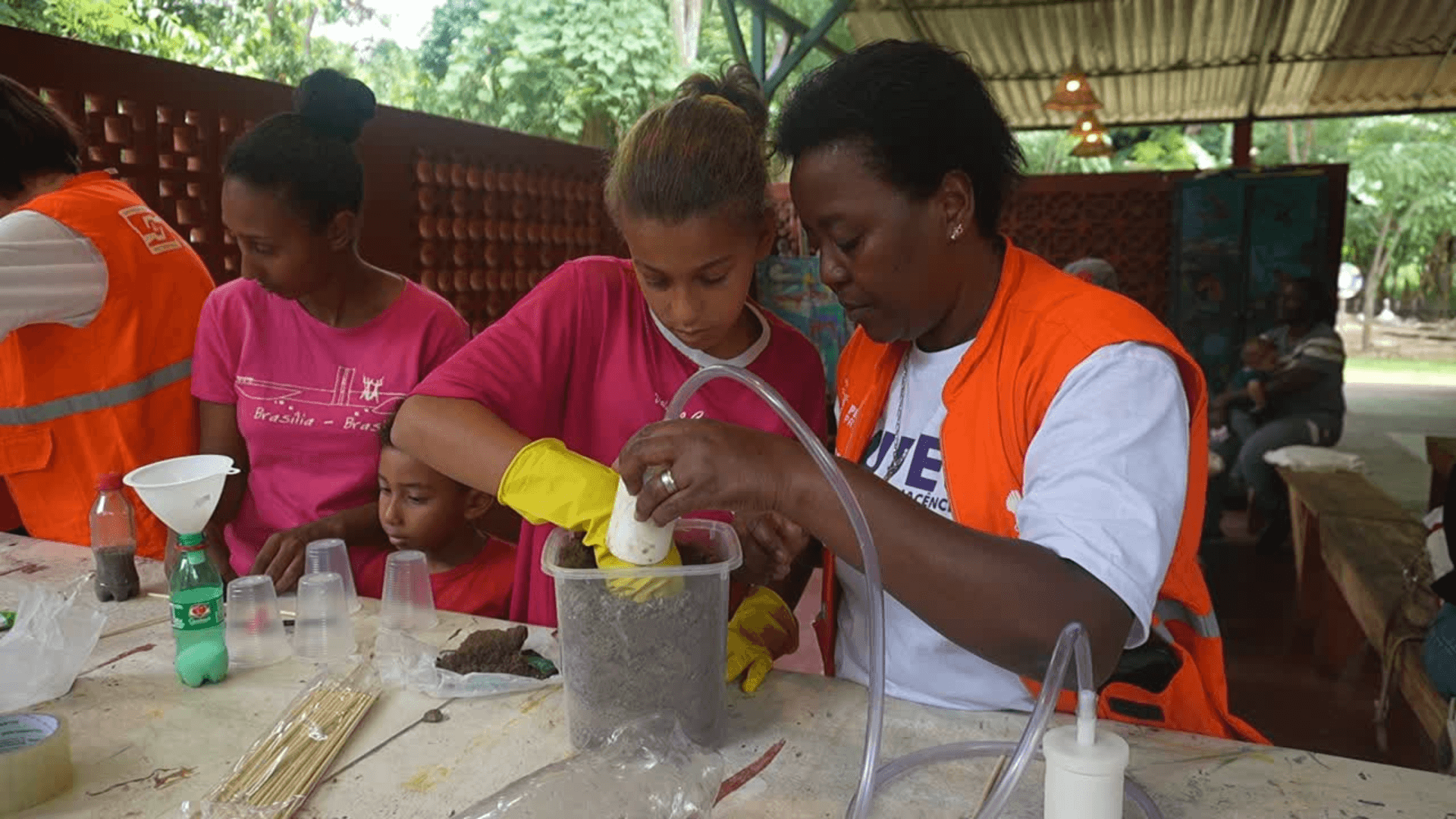
Cristina Rosário guides young people and residents in assembling homemade sensors during community mobilization workshops supported by UN-Habitat. © UN-Habitat/Juliana Ribeiro
Women at the forefront of resilience
Support for NUDEC is only one part of the work led by the women of the Cuiabá Valley. In total, 14 women are involved in the group, along with Cristina’s husband and son, and volunteer Pedro Rabello, who created the first NUDEC website.
Cristina says that difficulties and prejudice did not stop her from pursuing knowledge and taking on leadership roles.
“We talk a lot about the public authorities, but what is my role in this? When I seek knowledge and know what to do, I empower myself,” she says.
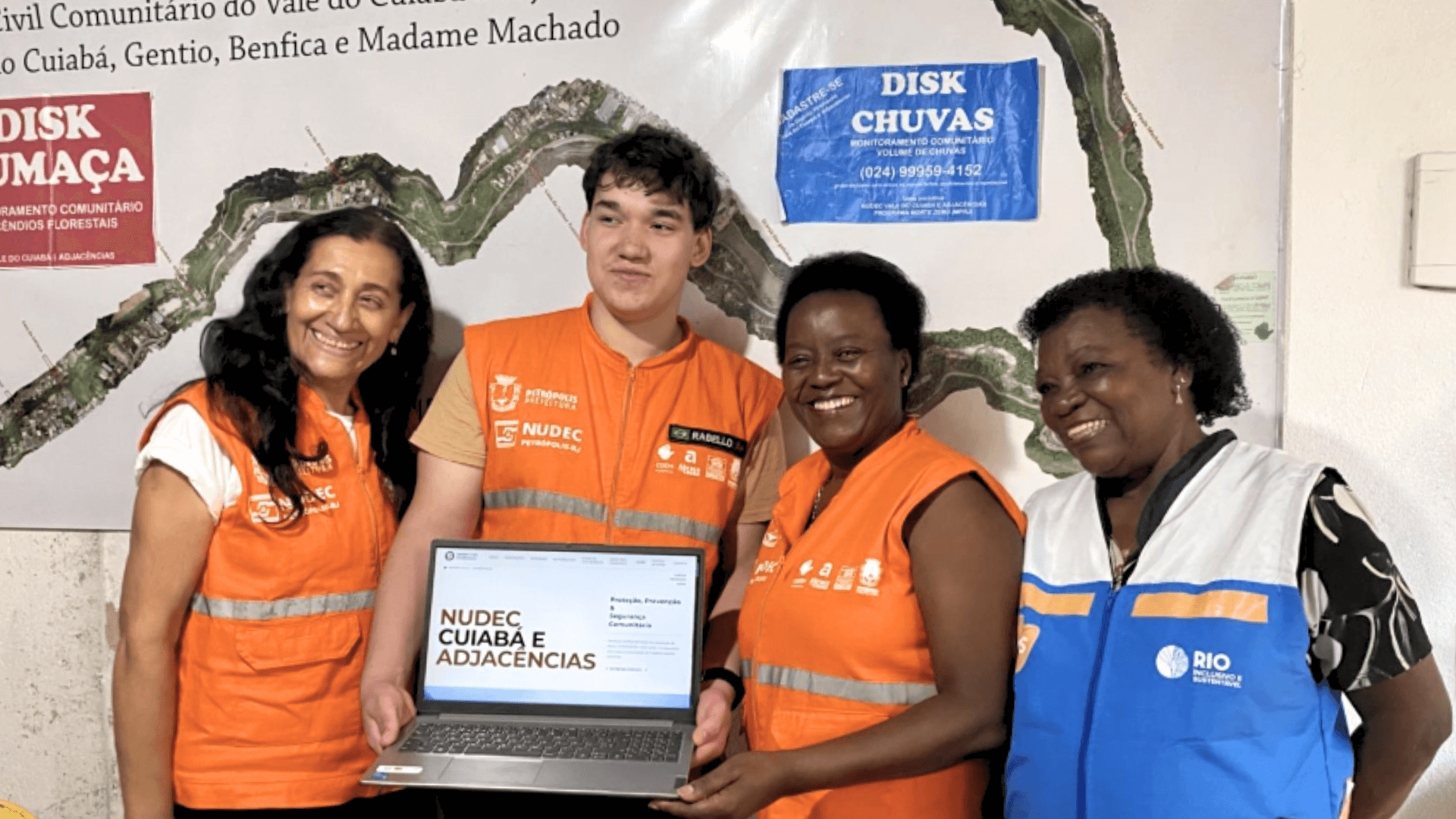
Community members participate in climate resilience and disaster preparedness activities at the Cuiabá Valley NUDEC, supported by UN-Habitat. © UN-Habitat/Livia Freire
For Cristina, women play a central role in protecting their communities.
“Women take care of the territory in the smallest details: they take care of the house, work, children, family and still find time to take care of the community. Here are women in leadership. Those who look with prejudice see a black and poor woman, and I am here. I am here because I am capable, and I see that I inspire other women to feel empowered too, so they know that they are also capable,” she adds.
Looking forward
Cristina’s journey shows that individual resilience can inspire collective action. Through initiatives like RJ Resiliente, UN-Habitat continues to support women leaders like Cristina in building safer, more resilient communities across Petrópolis and beyond.
Cover photo: © UN-Habitat/Jéssica Andrade