In Nepal, agriculture remains the backbone of daily life for 60.4 per cent of the population dependent on farming for their livelihoods. Yet nearly half of the rural residents – 47.3 per cent – are landless or near-landless, cultivating less than 0.5 hectares. Communities depend on subsistence agriculture for both food and income to support other needs, but access to land remains deeply unequal.
For women, especially those facing intersecting forms of exclusion – such as Tharu Indigenous women, Dalit women, and women living in informal settlements – land has long been a mechanism of exclusion rather than security. While these women are often responsible for cultivating the land and sustaining household food production, they frequently lack secure tenure: the formal recognition of rights that protects against forced eviction and social harassment.
Without secure tenure, women farmers live with constant uncertainty. They are unable to make long-term decisions about the land they depend on, including investments that would improve productivity or strengthen climate resilience.
This vulnerability is compounded as Nepal faces intensifying climate impacts, including erratic rainfall, flooding, and drought. Secure tenure is also a prerequisite for accessing basic services and government support; without it, marginalized women are unable to achieve life of dignity and adequate standard of living.
Against this backdrop, UN-Habitat has worked closely with national and local authorities to advance equal land rights for all women in Nepal. Since 2023, in the Dang District, UN-Habitat has supported the municipalities of Rapti, Rajpur, Lamahi, and Gadhawa through the “Safety Net of Innovative Land Tenure Solutions” project.
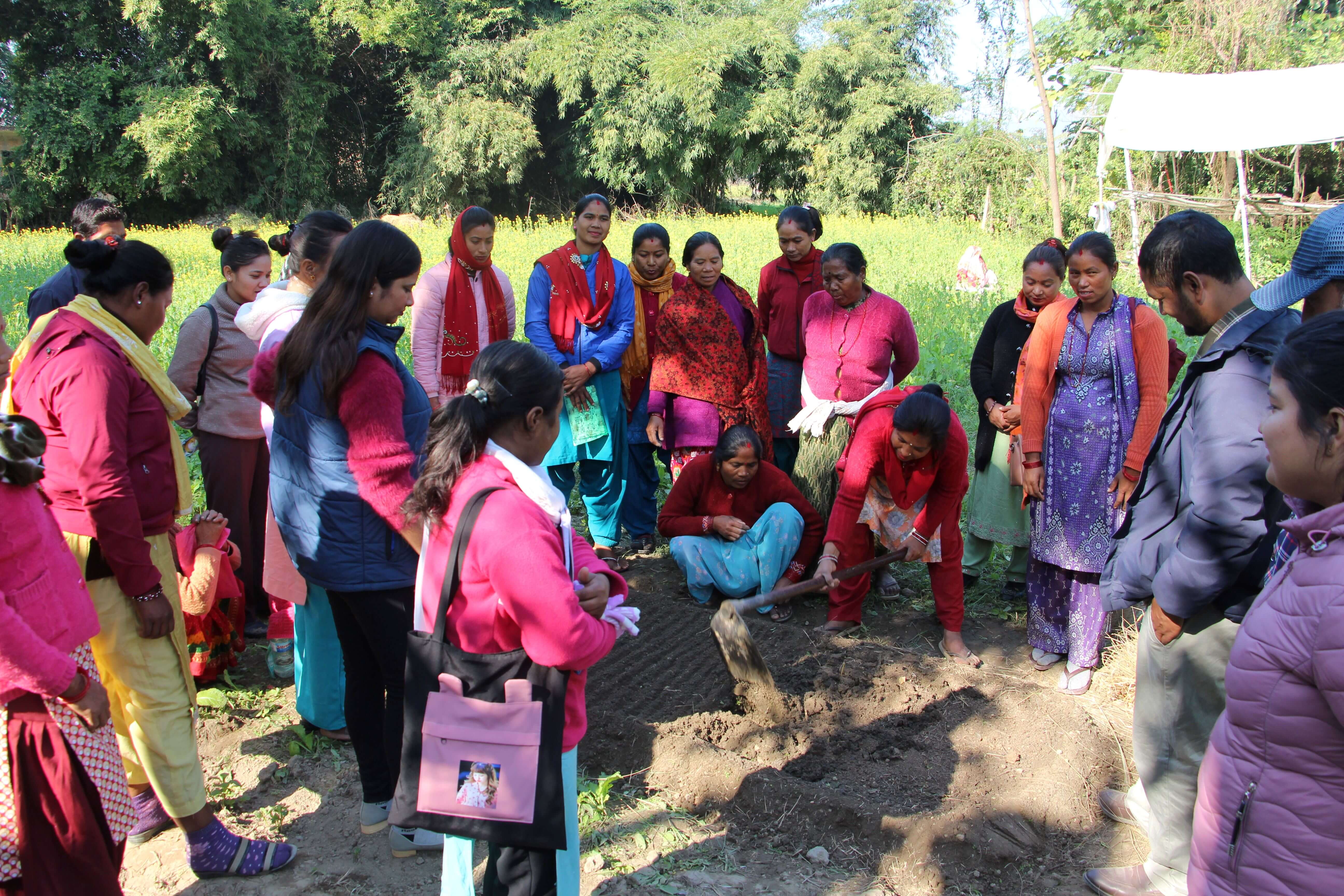
Training at Gadhawa Rural Municipality, Nepal. © UN-Habitat
The initiative introduced participatory and gender-responsive enumeration of landless and informal settlers, ensuring that women are formally recognized as equal owners within households. As a first step toward tenure security, 23,713 households received temporary cards – establishing a clear pathway towards recordation and successive verification for access to formal land ownership certificates.
Recognizing that land rights alone are not enough in the face of climate stress, UN-Habitat and its partners also worked with more than 2,000 women on contract farming and climate-resilient livelihood interventions. Support included integrated pest management and soil fertility practices, equipping women farmers with tools they identified as essential to succeed under changing environmental conditions. In parallel, women-led self-help groups transformed marginal riverbank areas into productive farmland using climate-smart technologies, producing cash crops as an additional source of income to support household expenditure.
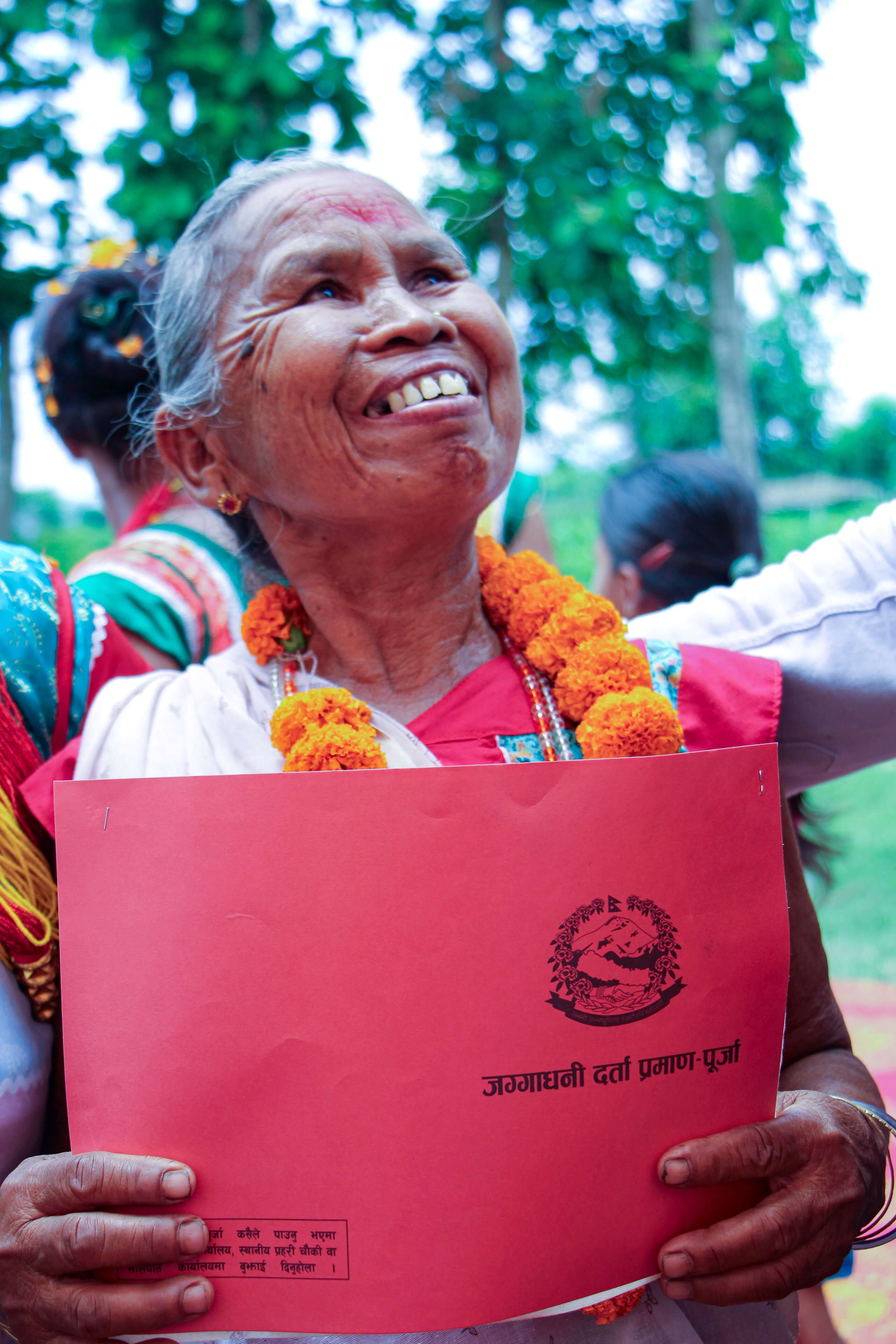
A senior citizen receives her land ownership certificate. Lamahi Municipality, Dang, Nepal. © UN-Habitat
Together, these efforts have delivered a tangible shift – from chronic insecurity and fear of eviction to greater stability and long-term prospects. Building on these outcomes, women’s equal land rights have now been institutionalized by the National Land Commission, in line with Nepal’s constitutional commitments to gender equality and women’s empowerment.
On International Women’s Day, the experience from Dang District underscores a clear message: securing women’s land rights is not only a matter of justice and women empowerment, but a foundation for climate resilience, food security, social harmony and sustainable development.
Cover photo: © UN-Habitat