
Japan provides over USD 20 million for UN-Habitat’s work with vulnerable communities
March 22nd, 2021
16 March 2021 – The Government of Japan has provided significant support of USD 20.3 million for UN-Habitat programmes including in Ethiopia, Iraq, Iran, Kenya, Lebanon, Sudan, Syria and Yemen. The…
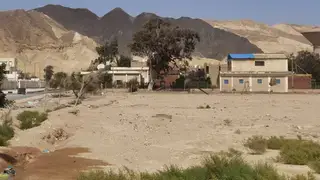
Egypt and UN-Habitat kick start preparations for strategic urban plans for two Egyptian cities
March 19th, 2021
Cairo, 9 March 2021 - Chairman of the General Organization for Physical Planning, Egypt and UN-Habitat kick off preparations of the strategic urban plans for the cities of Abu Zanima and Ras Sidr…
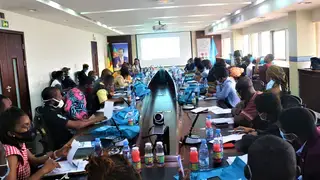
Cameroon hosts training workshop on data collection
March 19th, 2021
Yaoundé 19 March 2020 - Over 40 participants from the national government, municipalities, private sector, civil society and students took part in data collection training workshop held in Yaoundé…
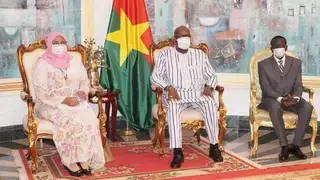
UN-Habitat Executive Director discusses sustainable urban solutions with the President of Burkina Faso
March 18th, 2021
Ouagadougou, Burkina Faso March 2021 - President Roch Marc Christian Kaboré of Burkina Faso met UN-Habitat Executive Director, Ms Maimunah Mohd Sharif, during her five day official visit to the…
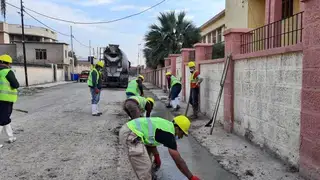
UN-Habitat marks World Water Day by water network rehabilitation in five cities across Iraq
March 18th, 2021
Erbil, Iraq, 22 March 2021 – Ismail Faris and his wife Um Medyan smile each time they turn their tap, and a steady stream of clean and cool water rushes out. For many across the globe, this a routine…
International events in Bogota kick off: Urban greens corridors of prosperity as a tool for sustainable development
March 18th, 2021
Bogota, 18 March 2021 - The first webinar of a series dubbed “Joint Roadmap Conversation” was held in Bogota early this week. The event - organized jointly by UN-Habitat and the Mayor's Office of the…

Urban Innovation in Practice: a webinar jointly organized by UN-Habitat and Connected Places Catapult, for African cities
March 18th, 2021
Nairobi, 15 March 2021—UN-Habitat and Connected Places Catapult recently organised the webinar “Urban innovation in Action” to promote urban innovation in Africa through a dialogue between the…
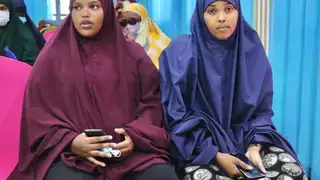
UN-Habitat in property registration drive aimed at increasing revenue and better service delivery in Baidoa
March 17th, 2021
Baidoa Somali March 2021- Over 21,400 properties were mapped and registered in a recently concluded mapping exercise in Baidoa district through the Joint Programme on Local Governance (JPLG) under UN…
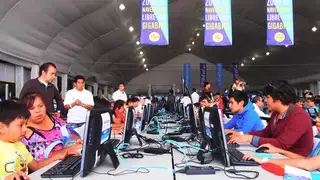
UN Habitat and the Federal Republic of Germany establish a United Nations ‘Innovation Technology Accelerator for Cities’ (UNITAC Hamburg) at the HafenCity University in Hamburg
March 16th, 2021
UN-Habitat, the United Nations agency for sustainable cities, with support from the UN Office for Information and Communications Technology (UN-OICT), and in collaboration with HafenCity University…

UN-Habitat Executive Director visits an informal settlement in Burkina Faso to see the challenges
March 15th, 2021
Ouagadougou, Burkina Faso, 13 March 2021 - UN-Habitat’s Executive Director, Maimunah Mohd Sharif, visited an informal settlement of Djikofé in Saaba Municipality on the eastern outskirts of the…
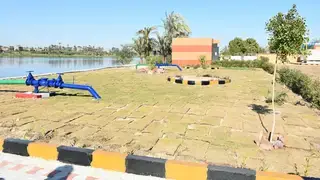
Government of Egypt, UN-Habitat and partners celebrate riverbank filtration project in three Governorates
March 12th, 2021
Luxor, Egypt 10 March 2021 - UN-Habitat Egypt, Coca-Cola Egypt, Global Environment & Technology Foundation (GETF), and the Ministry of Housing, Utilities and Local Communities (MoHUUC)…
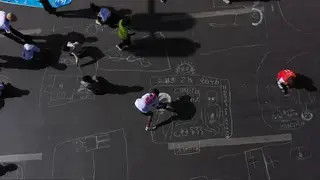
Advocating for Non-Motorized Transport to curb of the spread of COVID-19 in crowded public transportation network in Ethiopia
March 10th, 2021
Ethiopia 10 March 2021- UN-Habitat in partnership with the respective local authorities and with the support of Swedish International Development Cooperation Agency (SIDA) held COVID-19 prevention…

Launch of Her City – a digital platform to support girls’ participation in urban planning
March 10th, 2021
8 March 2020 – To mark International Women’s Day, the independent think tank Global Utmaning together with UN-Habitat, launched the Her City Toolbox, – an open-source digital platform that guides…
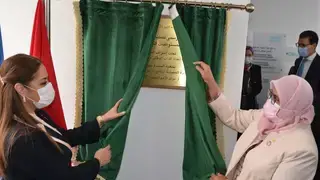
UN-Habitat re-establishes its country presence in Morocco signaling a strengthened partnership on sustainable urbanization
March 9th, 2021
Rabat, 8 March 2021 – UN-Habitat, the United Nations agency for sustainable urbanization, opened a new country office in the Moroccan capital Rabat which will serve as a strategic urban development…
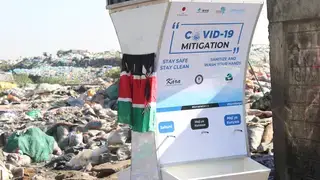
Hand washing stations in Nairobi’s biggest dumpsite officially launched to tackle COVID-19 pandemic
March 9th, 2021
Nairobi, 1 March 2021 – UN-Habitat and its counterpart agencies launched handwashing stations in Dandora dumpsite where more than 3,000 waste pickers are working, and hundreds of thousands of urban…