Afghanistan is ranked as one of the most climate-vulnerable countries on earth, being exposed to floods, droughts, and associated diseases. i Residents of informal settlements, which number over 1,000 sites across the country, are acutely vulnerable. ii Many are located in hazard-prone urban or peri-urban areas and lack critical infrastructure and durable housing. Low-income residents are often migrants from drought-afflicted rural areas and lack the financial capacity to meet the costs of climate breakdown. As the country’s cities expand by over 3% per year – the highest rate in South Asia – growing numbers of people are located in these peripheral sites where they are exposed to more frequent and severe climate hazards. iii
Afghanistan’s climate breakdown is occurring in the midst of a gender-protection crisis, resulting in intersectional vulnerability for women. Globally, studies show that women’s role in childcare and domestic work (e.g. collecting water, preparing safe food/drink) increases during times of climate shocks. This ‘feminisation’ of the climate crisis both exacerbates gender inequalities and mediates women’s experiences of climate breakdown.v In Afghanistan’s informal settlements, the feminisation of climate crisis is amplified by protection risks, including Gender-Based Violence (GBV) and insecure land rights. The 2024 Law on the Promotion of Virtue and Prevention of Vice (PVPV) has further restricted women’s access to employment, education, and public spaces, resulting in higher risk of negative coping mechanisms in times of shock. iv
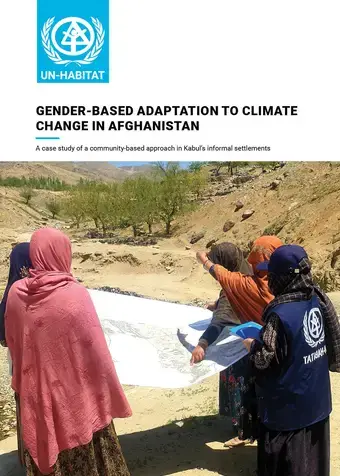
This brief provides a case study of a UN-Habitat intervention that addressed gender-based climate vulnerability in a Kabul informal settlement. It presents a DG-ECHO-funded project: its design, implementation and outcomes in Kabul’s Kart-e-Sakhi informal settlement. Following this introduction, the brief provides the results of a participatory assessment of gender and climate vulnerability in Kart-e-Sakhi. It then presents UN-Habitat’s response to these challenges with community-scale, gender-based climate adaptation planning and investments. Finally, the brief proposes a way forward to up-scale gender-based adaptation across Afghanistan’s informal settlements...
 Share
Share