UN-Habitat Housing Initiatives in Afghanistan | Selected Projects
Decades of conflict and natural disasters have internally displaced an estimated 6.3 million Afghans, forcing many to seek refuge in urban and peri-urban areas. Since September 2023, large-scale returns from Pakistan and Iran have further intensified the protracted humanitarian crisis. More than 4 million people have been repatriated since 2023, including over 2 million in 2025 alone, often with little more than what they can carry. This continued influx is placing immense pressure on the availability of shelter and housing, essential services, and livelihoods.
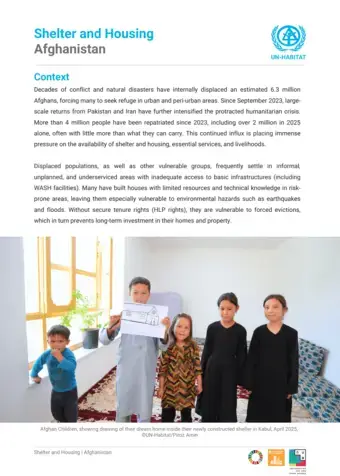
Displaced populations, as well as other vulnerable groups, frequently settle in informal, unplanned, and underserviced areas with inadequate access to basic infrastructures (including WASH facilities). Many have built houses with limited resources and technical knowledge in risk-prone areas, leaving them especially vulnerable to environmental hazards such as earthquakes and floods. Without secure tenure rights (HLP rights), they are vulnerable to forced evictions, which in turn prevents long-term investment in their homes and property. UN-Habitat has been at the forefront of addressing these shelter challenges, delivering life-saving assistance and enhancing living conditions, recognizing that adequate shelter and housing as well as HLP rights are central to the durable solutions strategy, enabling people to achieve self-reliance and resilience...
 Share
Share