Beirut 22 October 2020—UN-Habitat and UNDP have joined forces in implementing the Municipal Empowerment and Resilience Project (MERP) , an initiative being implemented in partnership with the Ministry of Interior and Municipalities (MOIM) and funded by the European Union, through its Regional Trust Fund in response to the Syrian crisis, the ‘Madad Fund’. The project aims to strengthen the long-term resilience of local authorities in Lebanon as well as host communities and displaced persons affected by the crisis.
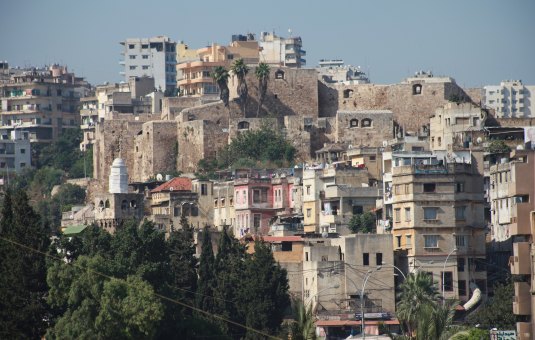
“Al-Fayhaa cities have suffered for a long time from escalating tensions, crises and recurrent conflicts and are among the most affected by the Syrian crisis; hence, the importance of the Municipal Empowerment and Resilience Project as a tool to support the Urban Community of Al-Fayhaa and the affiliated municipalities through the development projects that will be implemented,” said Hussein Ghamraoui, Head of Urban Community Al-Fayhaa.
MERP activities were officially launched in the three targeted areas, including the Urban Community Al-Fayhaa, the Union of Tyre Municipalities and the Federation of Municipalities of the Northern and Coastal Matn, in June and July 2020.
“UN-Habitat and UNDP are joining forces by sharing diverse expertise and resources to empower local authorities and support them to achieve longer term sustainable development in accordance with the vision, principles and goals of the 2030 Agenda,” said Taina Christiansen, Head of UN-Habitat Country Programme in Lebanon.
Directorate General of Local Administrations and Councils review
The review of the Directorate General of Local Administrations and Councils (DGLAC) was one of the major components recently launched in partnership with MoIM. How will the DGLAC review impact local authorities?
The DGLAC plays a crucial role in supporting over 1,100 municipalities and 50 Union of Municipalities (UoMs) in Lebanon, in a context where municipalities and UoMs often act as first responders to ensure emergency services are adequately provided to their communities.
On the other hand, the DGLAC reflects the predicament of many Lebanese public institutions. Legal loopholes, an outdated civil service structure, lagging digitalization, chronic understaffing, limited resources, bureaucratic systems and inconsistent political will have been common challenges across this public entity since the 1990s.
More on how this review will address these issues could be accessed from the following link.