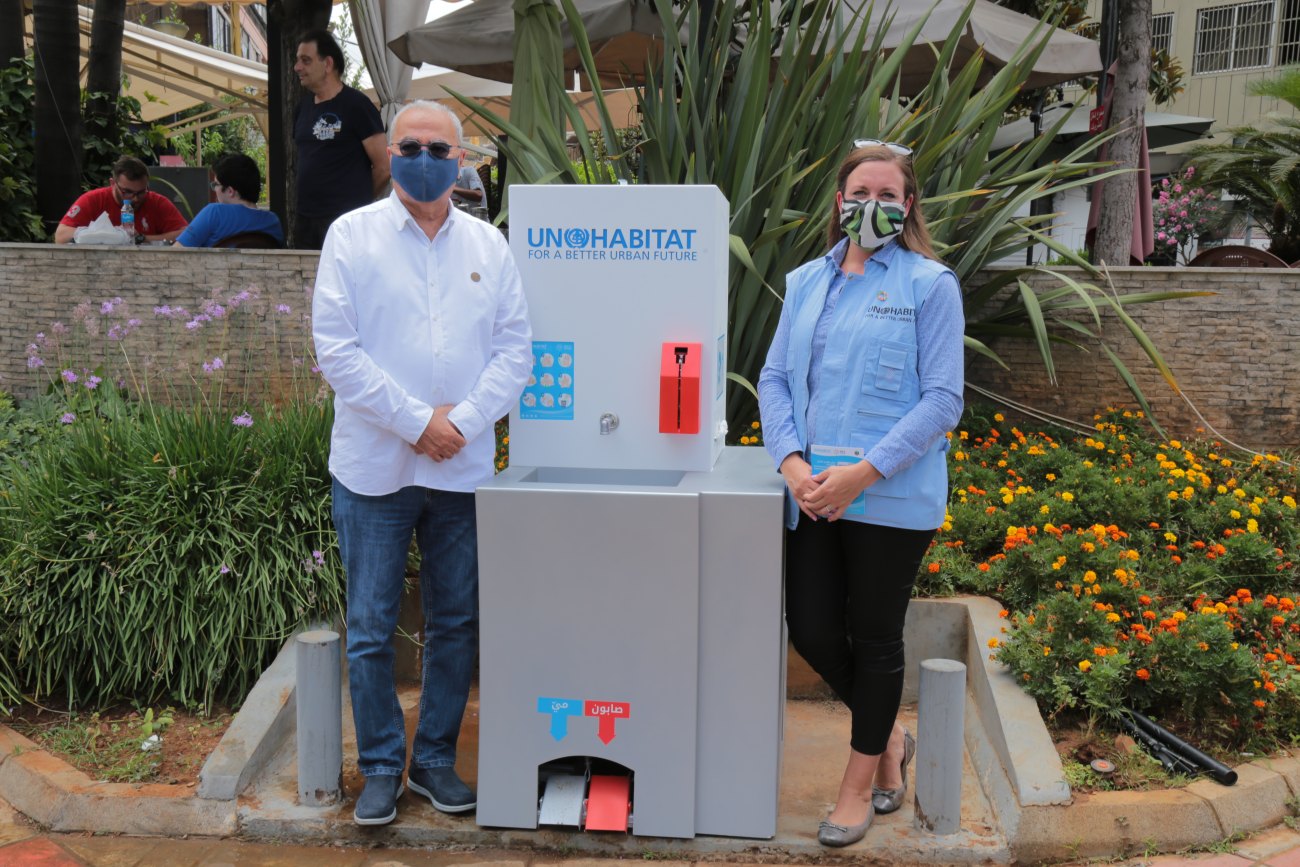
Beirut, 28 July 2020 – UN-Habitat Lebanon has designed, produced and installed the first communal handwashing stations in Lebanon to prevent the spread of COVID-19 and other similar health risks.
The stations in four urban neighbourhoods in Beirut (Sabra and Daouk Ghawash) and Mount Lebanon (Maraach and Nabaa in Bourj Hammoud), will benefit nearly 30,000 people including vulnerable Lebanese residents, refugees and migrants in poor urban neighbourhoods.
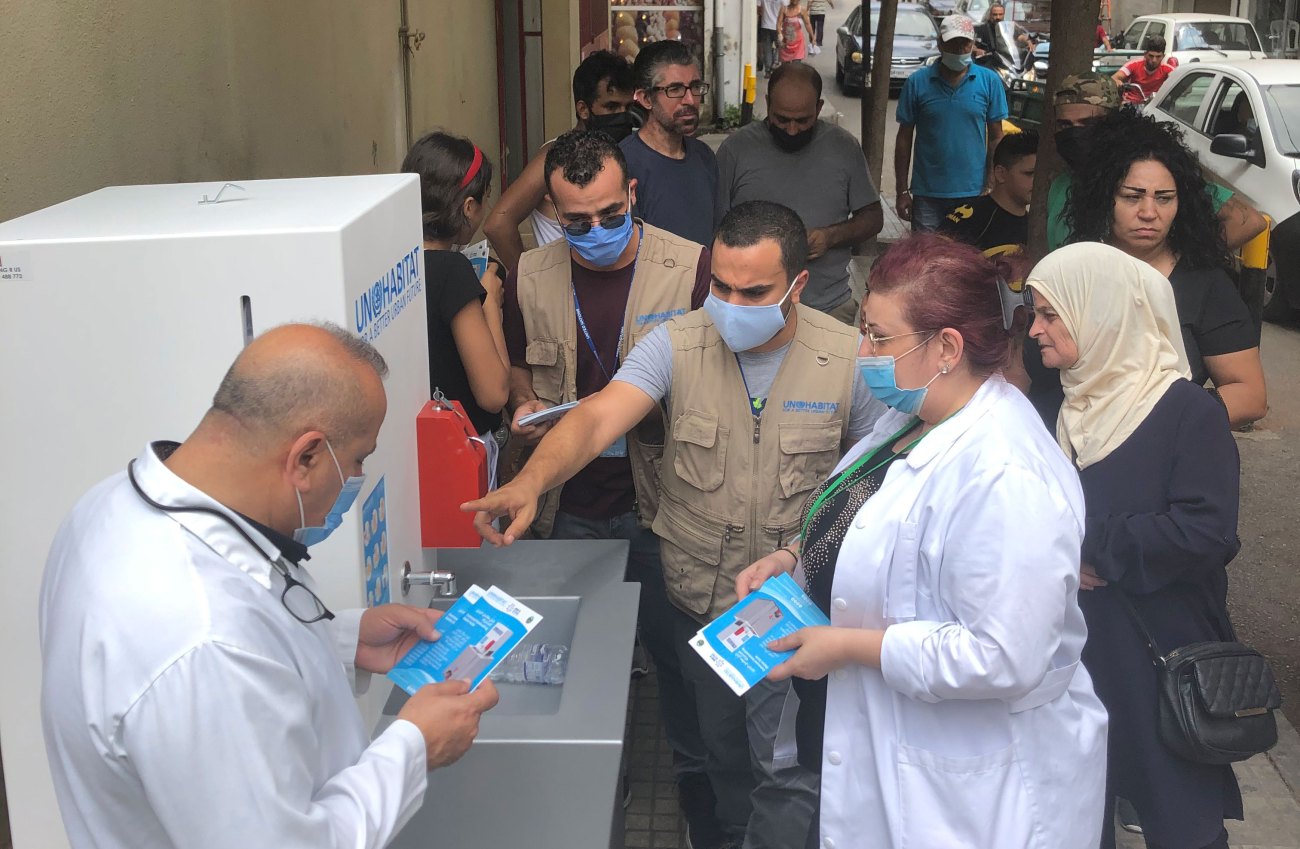
This is the first time in Lebanon that handwashing stations have been installed in the streets, on pavements, in vacant municipal spaces, next to public facilities (educational, religious), and in municipal gardens, making handwashing available and accessible to all, especially marginalized community groups.
“Awareness, water and proper sanitation are the first line of defence against the spread of COVID-19. Through the provision of communal handwashing stations and awareness raising, this project aims to reduce COVID-19 risks and exposure, targeting vulnerable Lebanese, refugees and migrants, residing in specific urban areas in Lebanon,” said Taina Christiansen, Head of UN-Habitat Country Programme in Lebanon.
Public spaces in vulnerable neighbourhoods in Beirut and Mount Lebanon were selected to host 22 handwashing stations. This was achieved in close collaboration with the Municipality of Beirut, Municipality of Bourj Hammoud, and the Popular Aid for Relief and Development (PARD), a local NGO in Beirut.cio-economic crisis.