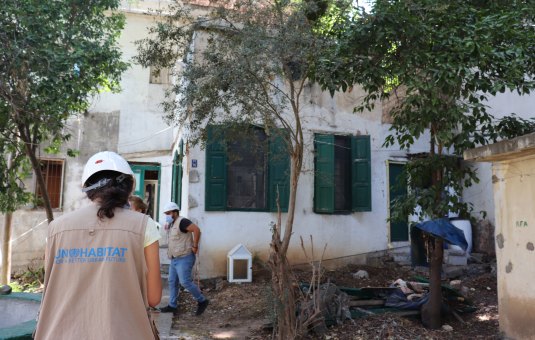
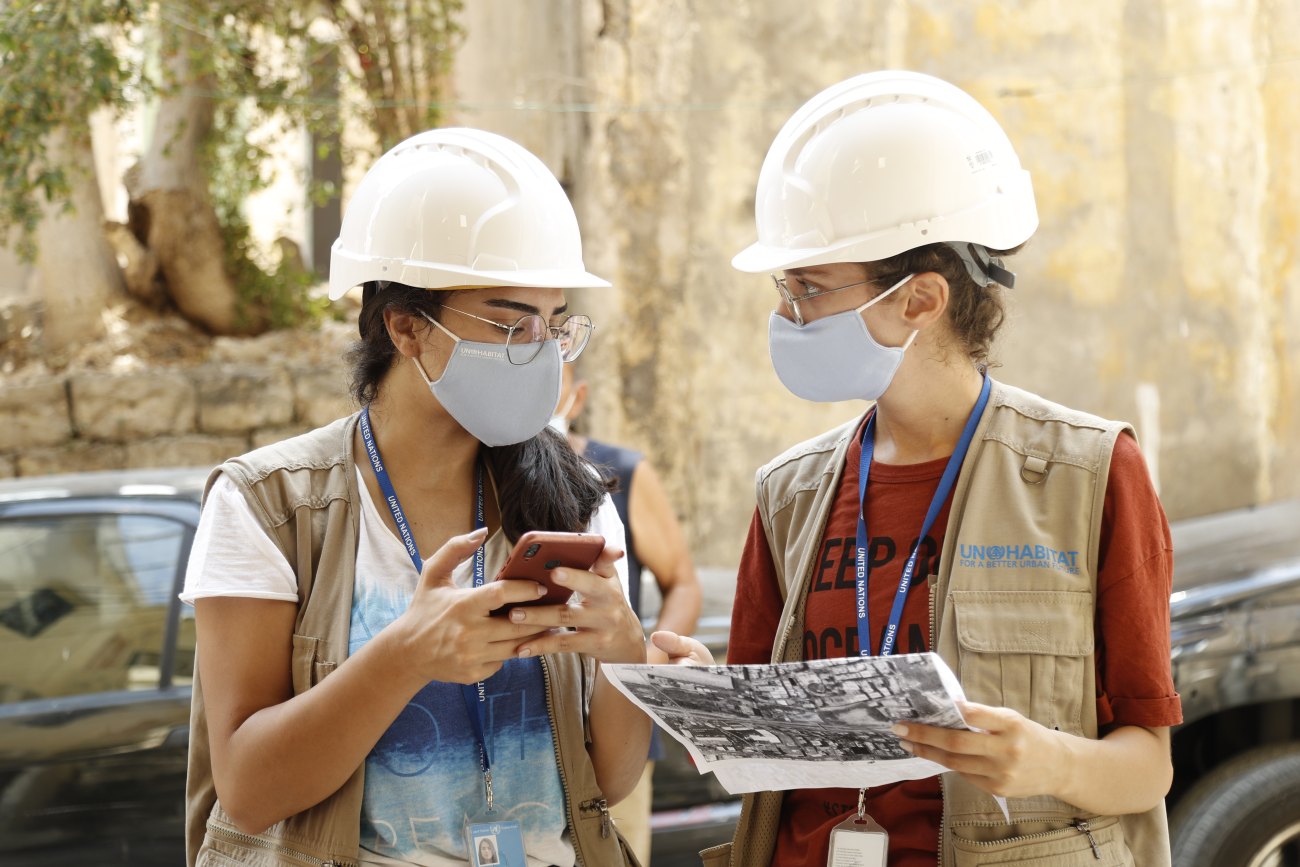
A participatory community driven approach is applied to all UN-Habitat’s projects, from inception to design and execution, with local governance but also laying the foundation for long term sustainable urban solutions.
An area-based approach coupled with a strong evidence-based focus on local and national urban planning is central to UN-Habitat’s methodology and interventions in Lebanon. To support plan-led interventions with local and national authorities and stakeholders across Lebanon, UN-Habitat has developed detailed neighbourhood and city level profiles across the country.
“UN-Habitat Lebanon ensures that communities are engaged throughout the design, implementation and sustainability phases of its projects and our work in Maraach is a prime example. Through this approach we are able to target our interventions so that specific community needs, and challenges are addressed while fostering community ownership of the projects,” said Taina Christiansen, Head of UN-Habitat Lebanon.
“It was great how UN-Habitat has worked with the community and listened to the communities’ needs to make sure that the project addressed them,” said Mari Grepstad, First Secretary, Royal Norwegian Embassy of Beirut.
Many of UN-Habitat’s projects are implemented based on needs identified through the UN-Habitat-UNICEF Neighbourhood Profiling project. This project developed profiles for 28 disadvantaged neighbourhoods in Lebanon featuring data on different sectors including the built environment, health, education, water and sanitation, local economy and livelihoods, among others.
A project underway in Maraach, Bourj Hammoud is the direct outcome of a profile and its outlined key needs and challenges. Through Polish Aid funding, five alleyways are being transformed to be greener through renewable energy and urban gardening; safer through improved mobility and organised electrical wiring; and, equipped for emergency response through the delivery of a rapid intervention firefighting vehicle suited for the narrow streets of Bourj Hammoud.
“The upgrading of the street has granted us hope for a better tomorrow,” said Fathi Serhan, resident and beneficiary of UN-Habitat implemented project in El Jazzar Street, Sabra.
UN-Habitat Lebanon places innovation at the core of its interventions.
Encapsulating several “waste wise” projects to promote climate action, UN-Habitat has also pioneered initiatives to manage solid waste, from rubble and debris left by the Beirut Port explosion or plastic and glass waste. The initiatives are implemented through Project Zero, a partnership established by UN-Habitat with multiple private sector companies including Nestlé, Diageo, IBI Group, PepsiCo and Development Inc. to address plastic pollution in Lebanon and several other countries across the Arab region.