14 March 222 - Beirut Municipal Social Cell (MSC), a joint initiative of the City of Beirut and UN-Habitat Lebanon Office, offered a webinar last month to present the results of its work on mitigating social and protection issues in marginalised neighbourhoods in Beirut.
The initiative is one of the Targeted City Actions supported through the Mediterranean City-to-city Migration project (MC2CM) to enhance local migration governance in the region.
Taina Christiansen, Head of Lebanon Country Programme of UN-Habitat, opened the meeting by recognising how the dialogue between municipalities and communities is not always a given especially when it comes to marginalised neighbourhoods.
She also stressed how the Municipal Social Cell was key to provide the Municipality and other actors with data about the needs within these neighbourhoods. “Without data, without information, we cannot target our interventions properly,” she said.
Beirut Mayor Jamal Itani, welcomed participants by stressing that the MSC showcases how targeted social intervention can change people’s lives as much as big infrastructures projects, as it provides a channel to listen to and understand the needs of people marginalised within the Beirut society.
The Municipality of Beirut, through City Councillor Yusra Sidani, also highlighted how partnerships including the local authority, international organisations, and civil societies are needed to achieve the global agendas, including the SDGs.
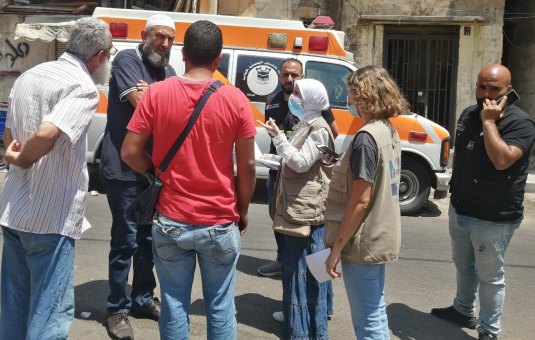
Following the opening, the staff of the Beirut Municipal Social Cell presented their work initiated to support the involvement of the Municipality to address the deterioration of social, safety and security conditions in two neighbourhoods in Beirut hosting Palestinian and Syrian refugees, Sabra and Hayy Tamlis.