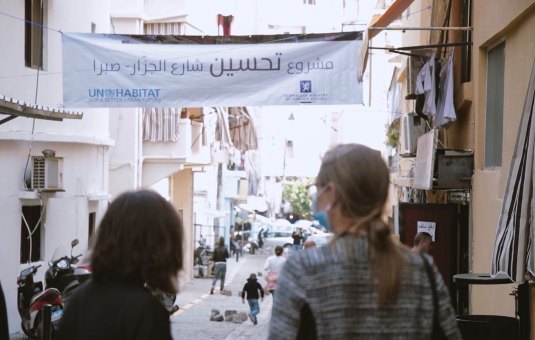
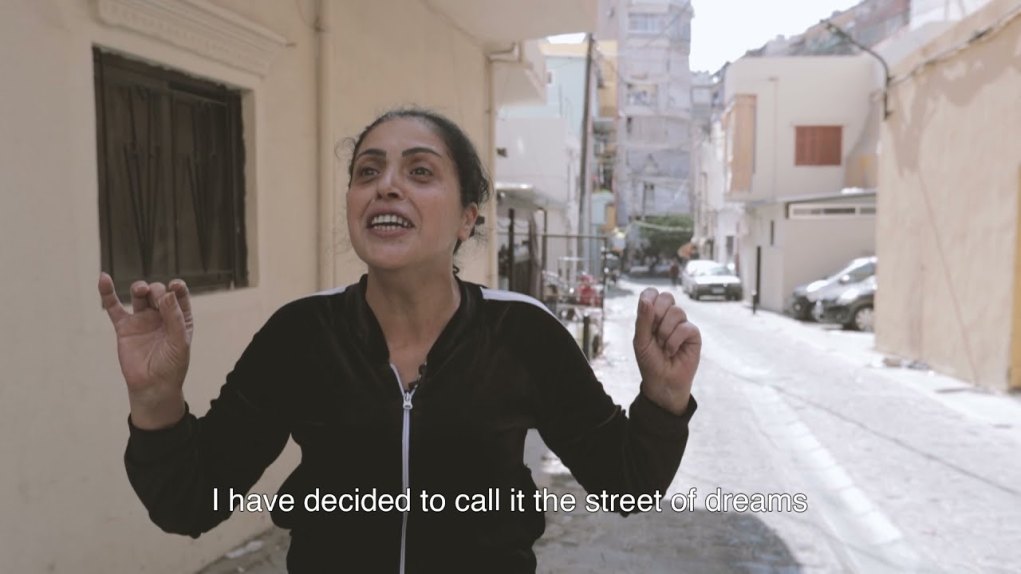
Beirut, Lebanon, November 2021 – UN-Habitat rehabilitated 22 building facades, improved street mobility and safety, and access to basic urban services for residents living in El Jazzar Street, Sabra, Beirut.
The project, funded by The Royal Norwegian Embassy in Beirut, ensured that overhead electrical wires were put underground to enhance safety for the first time in a vulnerable neighbourhood in Beirut. The overall aim of this project is to improve the quality of life and enhance social cohesion for everyone living in Sabra, Beirut.
Fathi Serhan, a resident said that “in these difficult times that we have been going through, the rehabilitation of El Jazzar Street has given us hope that we will live a better life.”
El Jazzar street is considered the most vulnerable sub-neighbourhood in Sabra characterized by substandard living conditions, overcrowding, poor housing conditions, deteriorated infrastructure and weak local economic development. It is home to more than 1,000 people who are mainly Lebanese, in addition to Syrian and Palestinian refugees.
To facilitate community engagement, a local committee consisting of the area’s residents and community leaders was formed with women and men of different ages and nationalities including Lebanese, Palestinian and Syrian residents, to share inputs into to the design, implementation, and sustainability of the project’s interventions.
“The community’s active engagement enabled UN-Habitat to better understand challenges and needs facing residents of El Jazzar Street. This ensured that the project’s interventions were targeted and that local decision-making was strengthened,“ said Maryam Nazzal, Social Development Coordinator at UN-Habitat.