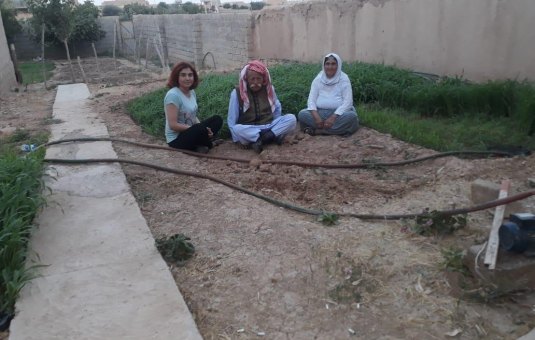
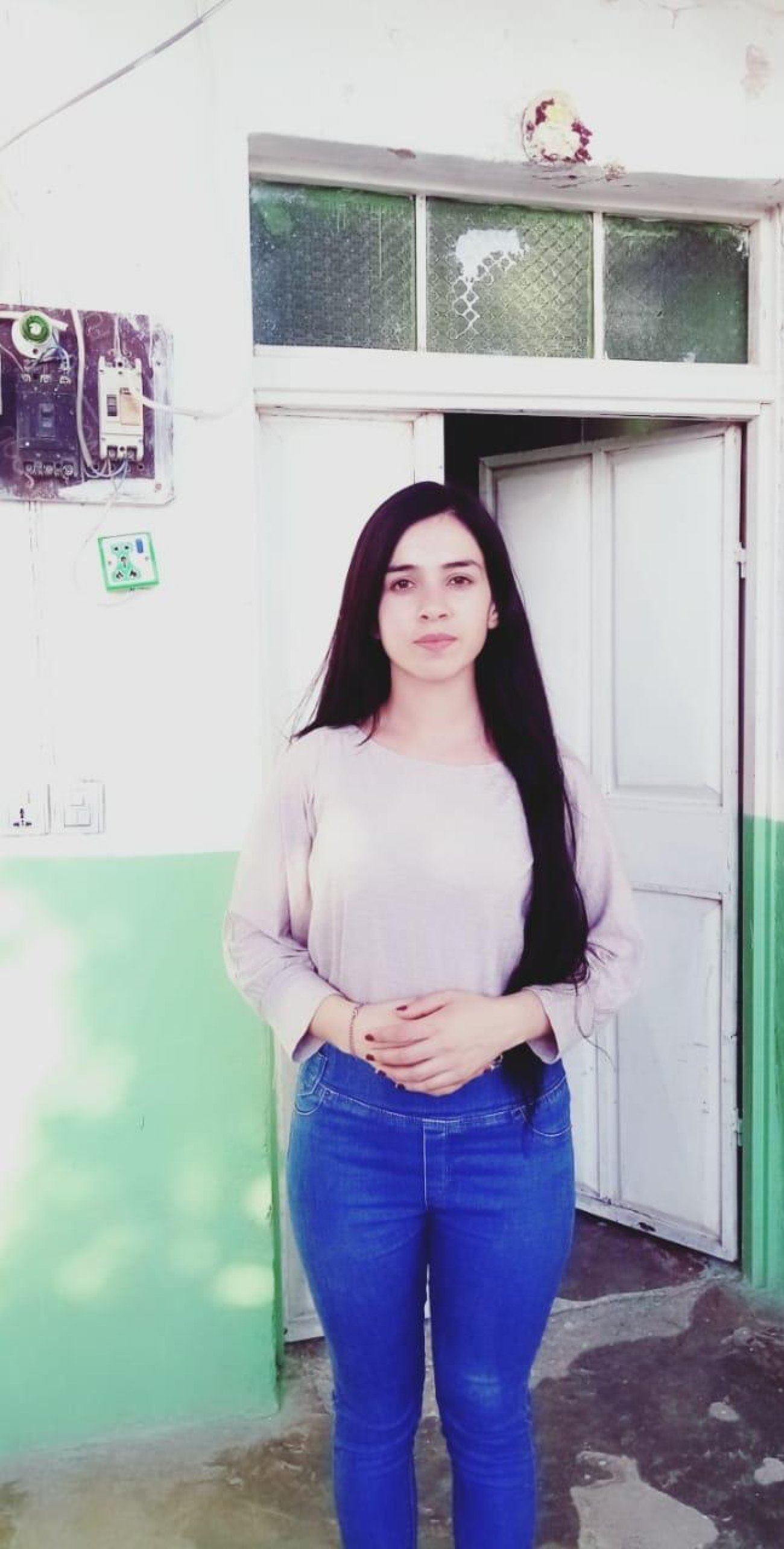
Family members were scattered during the displacement, either in Iraq or in other countries as refugees. As they returned to Borek, people added the absence of loved ones to the hardships of coming back to a town that is now lacking many essential services, such as running water and a constant supply of electricity. Moreover, Najat’s and Layla’s homes were damaged during hostilities; to this day they have not been able to repair them due to lack of resources. “The house is made from mud and there were explosions all around,” explains Layla, “it still has open walls and floods when it rains.” Neither of these families has received assistance. Layla’s family applied for compensation upon return: “After two years we have not received an answer from the government and we have spent so much money.” As with every Yazidi family in Sinjar, they have never had any documents to prove they own their land, which often leads to unsuccessful compensation claims for destroyed or damaged property.
Now 21 years old, Najat and Layla have become active in their community. “In Borek, young women have few opportunities to earn a living. Business training would help us”, says Najat. Layla also draws attention to the dire situation of the most vulnerable members, such as people with disabilities.
In 2018, UN-Habitat launched the programme titled “Support to IDPs Housing, Land and Property Rights in Nineveh, Northern Iraq” with the aim of supporting the sustainable return of the displaced population by contributing to the resolution of property claims. Families are visited by the UN-Habitat team to collect information and geo-spatial data to identify the plot. The claim is then digitally registered in a software based on Social Tenure Domain Model, through a specially tailored mobile application. Once the property claim verified, an Occupancy Certificate is issued. Layla’s and Najat’s household were surveyed at the beginning of 2019 and have now received their certificates. For most of these Yazidi families this is the first time they possess any document that recognizes their rights over the lands they work and the houses they live in.
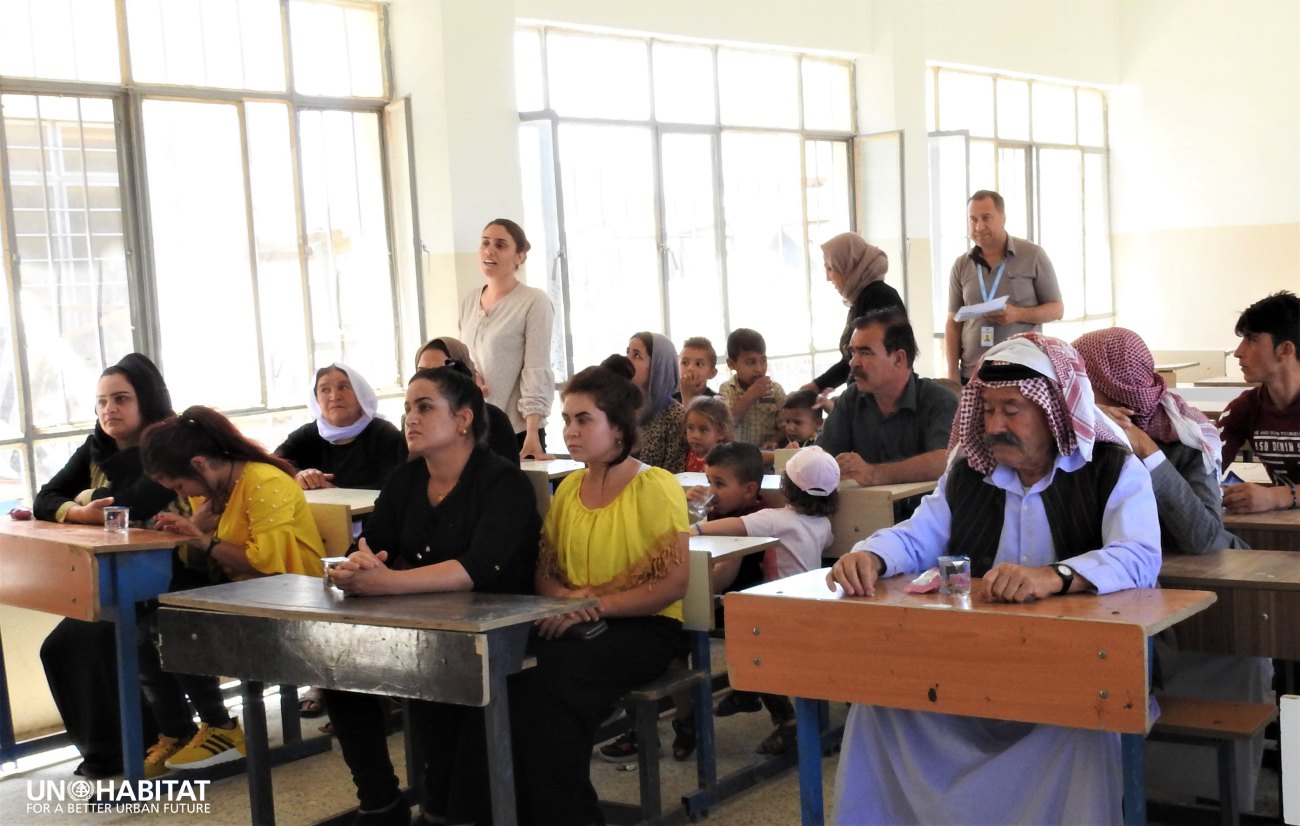
Awareness raising being a cornerstone for empowering communities, the programme intends to strengthen the knowledge on housing, land and property rights among Yazidi people. In line with UN-Habitat’s gender-sensitive approach, in May 2019 a female-only session allowed 67 women to discuss, in a safe and friendly environment, what these rights mean to them.