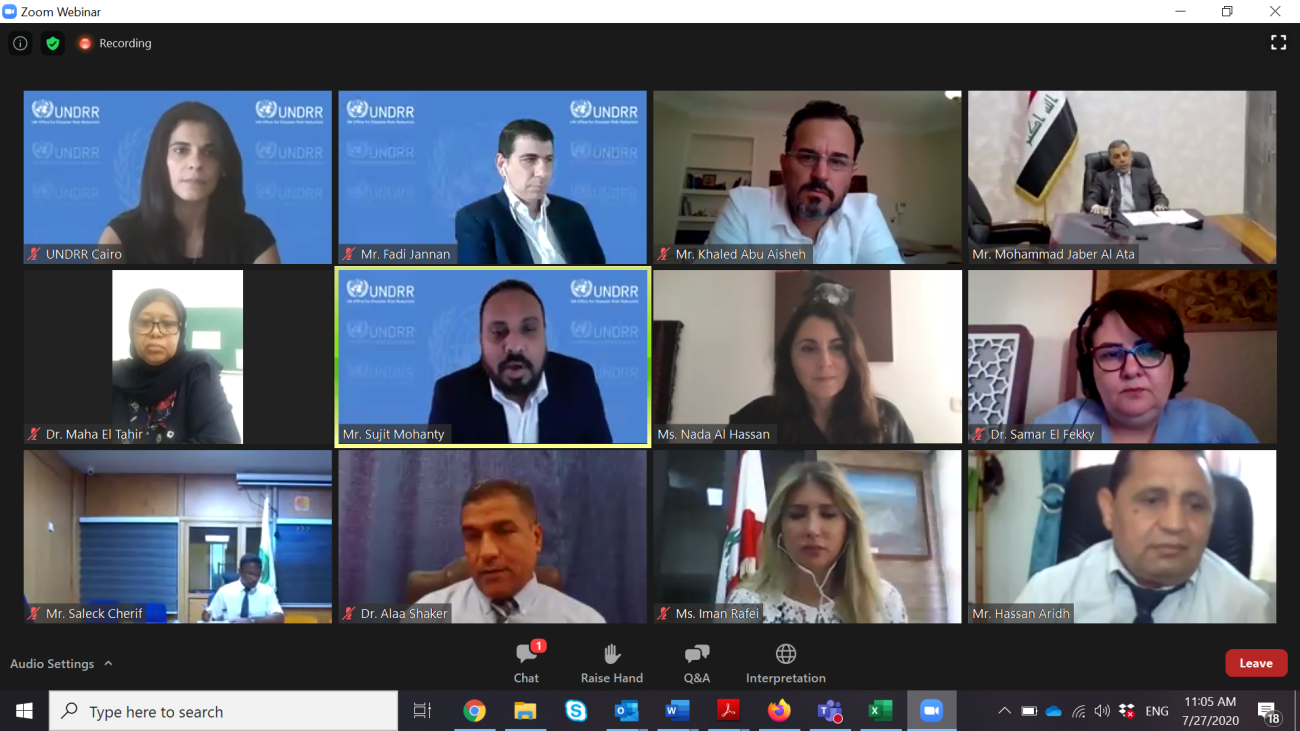
Cairo, 27 July 2020 – A best practices webinar for Arab cities to discuss the lessons learned in responding to COVID-19 at the city level and exchange effective emergency preparedness and response took place online with the participation of 10 cities.
The Issue-Based Coalition on Urbanization in the Arab region (IBC-U) co-led by the UN-Habitat Regional Office of Arab States and UNEP West Asia Office in partnership with UNDRR Regional Office of Arab States convened the webinar.
In response to the outbreak of COVID-19, Arab countries imposed rapid emergency measures to halt the spread of the virus and approved early stimulus packages to support vulnerable populations.
The IBC-U was established in 2020 with several UN and regional agencies (UNEP, UN-Habitat, UNESCWA, UNDRR, WHO, IOM, UNOPS, WFP, UNESCO, League of Arab States and Cities Alliance) in response to the global UN reform initiatives to strengthen regional collaboration and provide coherent and effective normative guidance and technical support to promote sustainable urbanization in Arab countries.
Ten Arab cities namely: Aqaba, Jordan; Dubai, United Arab Emirates; Tabarka, Tunisia; Khartoum, Sudan; Nablus, Palestine; Moroni, Comoros; Zgharta District, Lebanon; Qena, Egypt and Nouakchott, Mauritania shared their short-term crisis management tools and innovative solutions to remain functional and combat the pandemic.
They highlighted the socio-economic impacts of the pandemic and rescue measures to protect populations at risk and sustain the provision of basic services.
“Inclusive local recovery plans are crucial to contain systemic risks and seize the recovery opportunity to achieve long-term resilience goals of Arab cities” said Sujit Mohanty, Chief of Regional Office for Arab States of UNDRR.