A second life for buildings, a way out of homelessness
Description
In the lead-up to and during the third session of the Open-ended Intergovernmental Expert Working Group on Adequate Housing for All (OEWG-H), taking place in Nairobi on 26–27 November 2026, this story is part of a series highlighting housing experiences and practices from different parts of the world. These stories are presented as examples for reflection and exchange.
Description
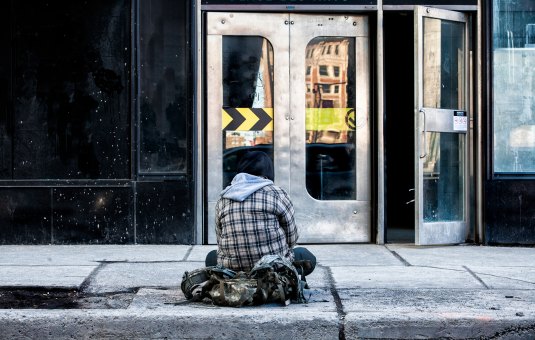
A shelter bed can get someone through the night. But what happens in the morning?
Description with Image
Finding work, attending appointments, looking for an apartment, keeping documents safe, answering calls from landlords – all become harder without a stable place to live. And moving out of homelessness is rarely a matter of finding a vacant apartment and walking through the door.
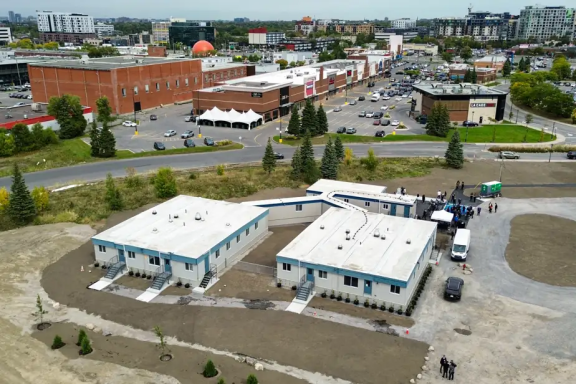
In Montréal, Canada, a new housing initiative is trying to close that gap. On the grounds of a former horse-racing track, buildings originally made from prefabricated sections manufactured off-site and assembled on location have been converted into transitional housing for people experiencing homelessness. Residents have a place to stay while receiving individualized support to help them move into permanent homes.
It's a modest but important shift: from somewhere to sleep, to somewhere to start rebuilding the conditions for a home.
Giving existing buildings a new purpose
In September 2025, Montréal inaugurated its first modular transitional housing project with support services. The facility accommodates individuals and couples assessed as suitable for this type of housing, with residential units, shared spaces and offices.
The buildings were previously used as construction offices for a hydroelectric development in northern Québec. Rather than build a new facility, the city adapted these structures for residential use, putting existing buildings and available land to work in response to urgent housing needs.
It is a practical approach. Repurposing buildings can help cities establish accommodation without starting an entirely new construction project, particularly when time and resources are constrained.
The project brings together municipal, provincial and community partners. The Société d’habitation du Québec, the province's housing agency, contributed CAD 1.7 million through funding linked to the Canada–Québec Housing Accelerator Fund agreement. The City of Montréal invested CAD 2.5 million, including acquisition and site preparation, while the provincial health and social services ministry allocated CAD 790,000 annually for support services delivered by Old Brewery Mission.
Founded in 1889, Old Brewery Mission is a non-profit organization working to prevent and address homelessness through emergency assistance, prevention and rehousing programmes. At the new facility, its role is to help residents navigate what comes next.
Towards permanent housing
A room provides stability. Finding a permanent home takes more.
Residents receive individualized psychosocial support, including help with employment reintegration and securing permanent housing. For someone navigating homelessness, that support can make a difference in managing the practical hurdles of finding an apartment, accessing services, securing financial assistance or returning to work.
The aim is to give residents breathing room – somewhere safe to stay while they work through the barriers that can make it difficult to move into permanent housing.
But transitional accommodation is just that: transitional. It cannot replace the need for affordable homes, and a place in the facility does not guarantee that a suitable apartment will be waiting when a resident is ready to move.
The project's longer-term impact will depend on what happens beyond its doors: how many residents move into permanent housing, how long that takes, and whether they are able to remain housed. Those outcomes will matter as much as the number of rooms provided.
Local action, national ambition
Montréal's initiative comes as Canada steps up its response to homelessness. The federal Budget 2026 sets out a plan to put the country on a path towards ending homelessness within ten years, backed by nearly CAD 30 billion in measures.
That includes CAD 10 billion for supportive and transitional housing and CAD 5 billion for an Integrated Supports Fund linking housing with health and social services – an approach that recognizes how closely housing stability is connected to other aspects of people's lives.
Montréal's project puts that connection into practice at a local level. It combines accommodation, social support and cooperation between public authorities and a community organization, while making use of buildings that were already available.
For cities facing growing housing pressures, the approach offers a practical option to consider: repurpose existing structures where possible, connect accommodation with support services, and make the transition to permanent housing part of the plan from the outset.