Inclusive Communities - Thriving Cities
Summary
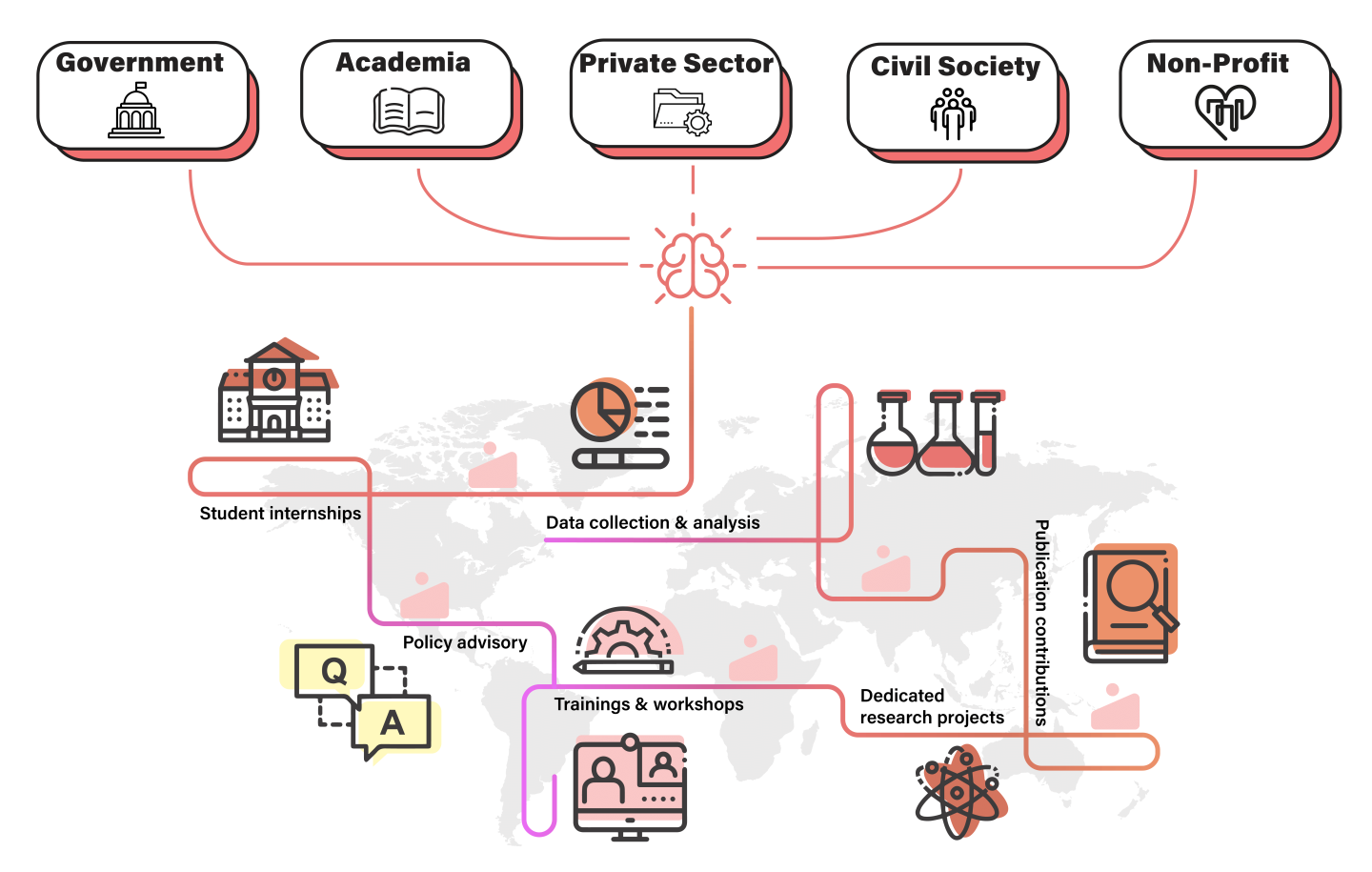
UN-Habitat's Flagship Programme: Inclusive Communities - Thriving Cities employs urban regeneration as a tool to reduce spatial inequalities and poverty. Supporting the social, economic, and environmental transformation of deprived areas and strategic locations within a city will result in connected, dynamic, diverse and vibrant neighborhoods. This transformation of urban areas is expected to lead to an increase in equality of outcomes for all.
Challenges addressed
Challenges addressed
What UN-Habitat can offer
- Enhanced awareness and capacities of national and local authorities and partners to put people at the centre of urban regeneration policies and projects.
- Strengthened legal and institutional environments that enable community participation and effective remedies for breach of rights of all parties affected by urban regeneration projects.
- Improved quality of life in cities and communities living in deprived urban areas targeted through urban regeneration projects while preserving cultural heritage and ecological assets.
Our overall objective is to promote social and environmental value creation globally by supporting governments and urban actors to build more inclusive and thriving neighbourhoods and communities through urban regeneration.
Duration of support
Duration of support
The challenges
The challenges

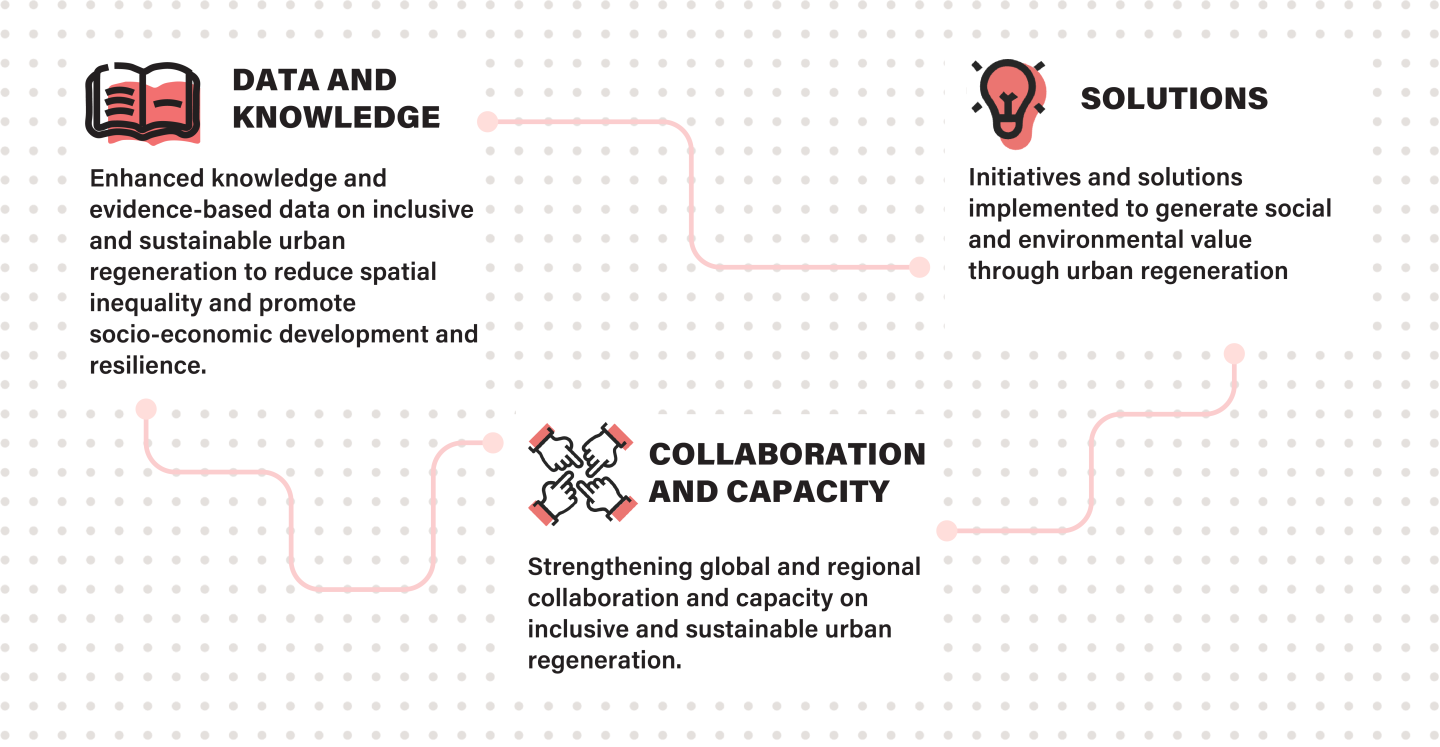
Goals and Outcomes
Our overall objective is to promote social and environmental value creation globally by supporting governments and urban actors to build more inclusive and thriving neighbourhoods and communities through urban regeneration
Goals and Outcomes
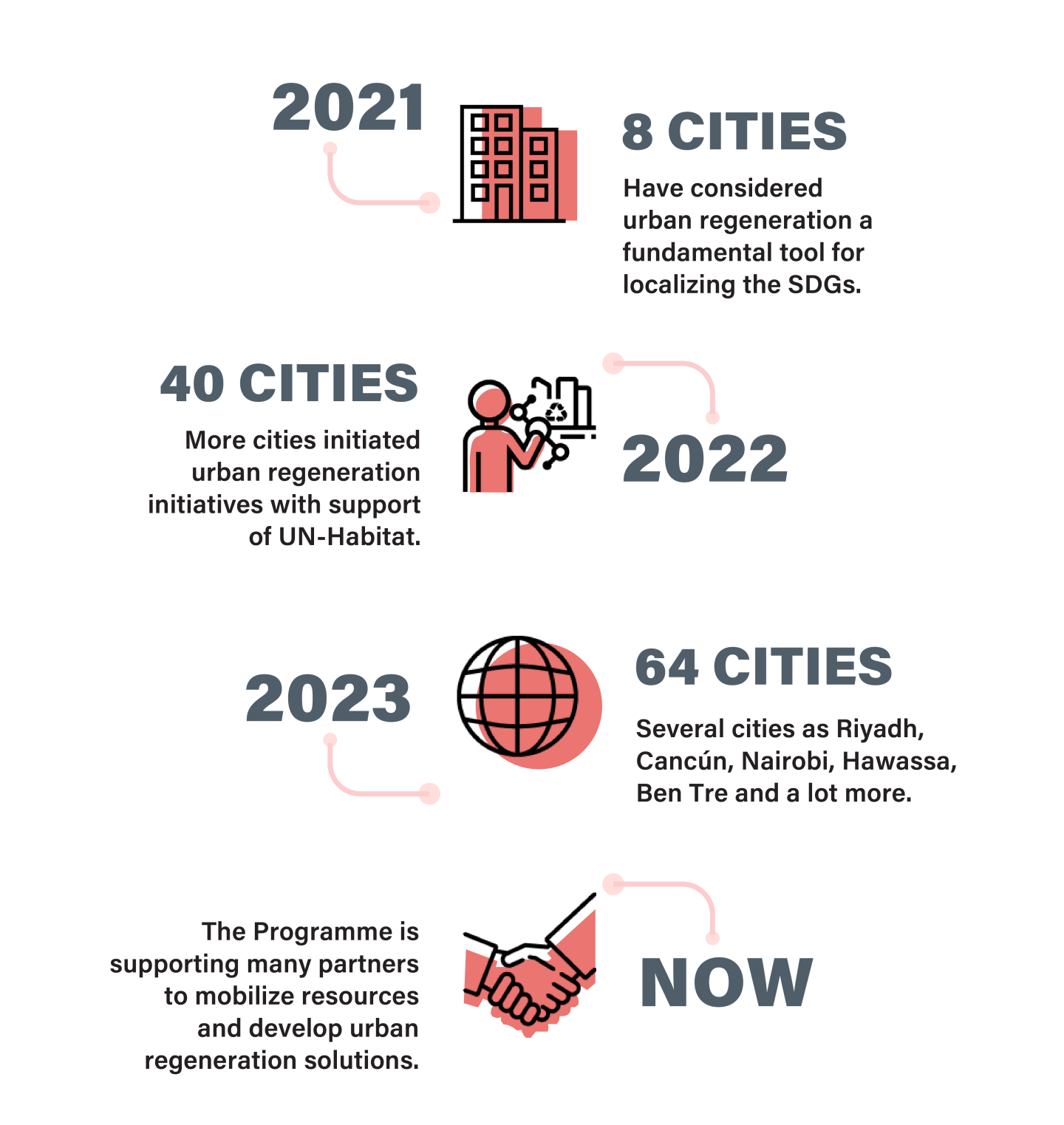
Our achievements so far
Our achievements so far
Project Experiences / Case Studies
A) Urban Integral Operations (OUIS) - The Caribbean
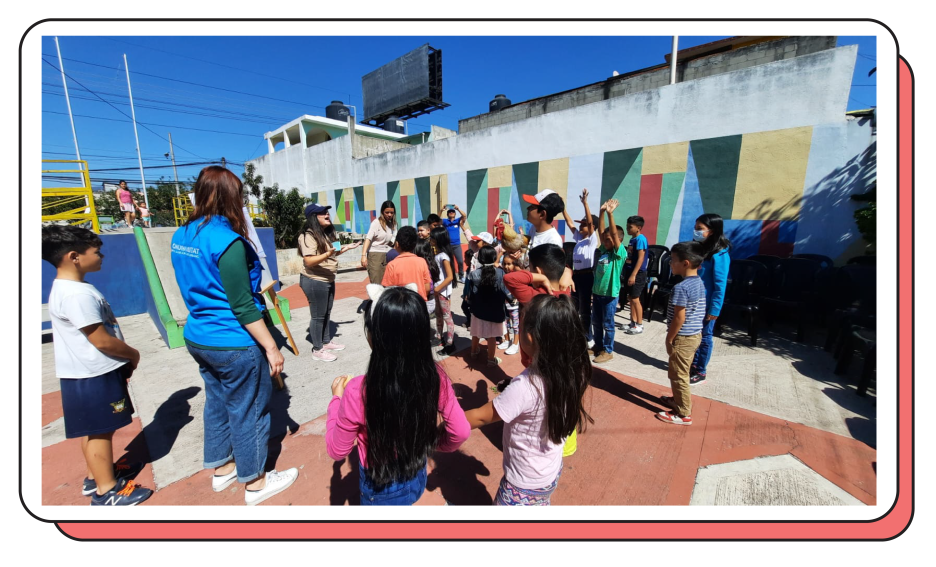
The Urban Integral Operations (OUIS) initiative, led by UN-Habitat, focuses on enhancing living conditions in vulnerable neighbourhoods through integrated planning in Latin America. This initiative aims to develop shared visions for sustainable in Costa Rica, Cuba, Guatemala, Honduras, El Salvador.
The OUIs process includes a diagnostic assessment to identify the potential areas of interventions. This is followed by defining long-term goals and needs of residents into the planning. The outcome is a detailed, strategic, and implementable programme. The initiative has promoted collaborative decision-making and produced comprehensive urban plans that meet local needs while supporting sustainable development goals. By integrating diverse perspectives and coordinating efforts, the OUIs have contributed to fostering inclusive and sustainable development.
B) Nairobi Rivers Basin Regeneration - Nairobi, Kenya
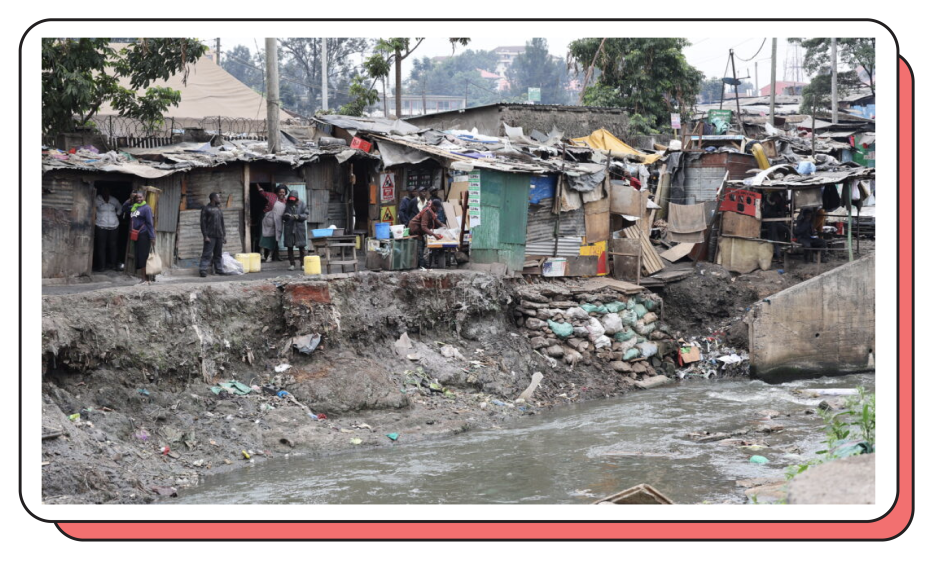
The Nairobi Rivers Basin Regeneration Programme leverages existing local knowledge and expertise to drive socio-economic and environmental transformation. Through its 9 goals, the programme applies urban regeneration as an engine for socio-economic and environmental transformation in the city: Habitat restoration and biodiversity, sustainable water resource management, waste management, food and agriculture, place and community, economic transformation, climate resilience, health and wellbeing, and community engagement. The programme fosters open participation and partnerships to address challenges and enhance social cohesion.
It aims to create a sustainable, resilient river system, improve basic services, generate livelihood opportunities, and enhance connectivity and green spaces, contributing to local economic development and environmental well-being. In the long run, this is expected to contribute to local economic development, better urban health, enhanced environmental wellbeing, and climate resilience.
Parque de La Equidad - Cancun, Mexico
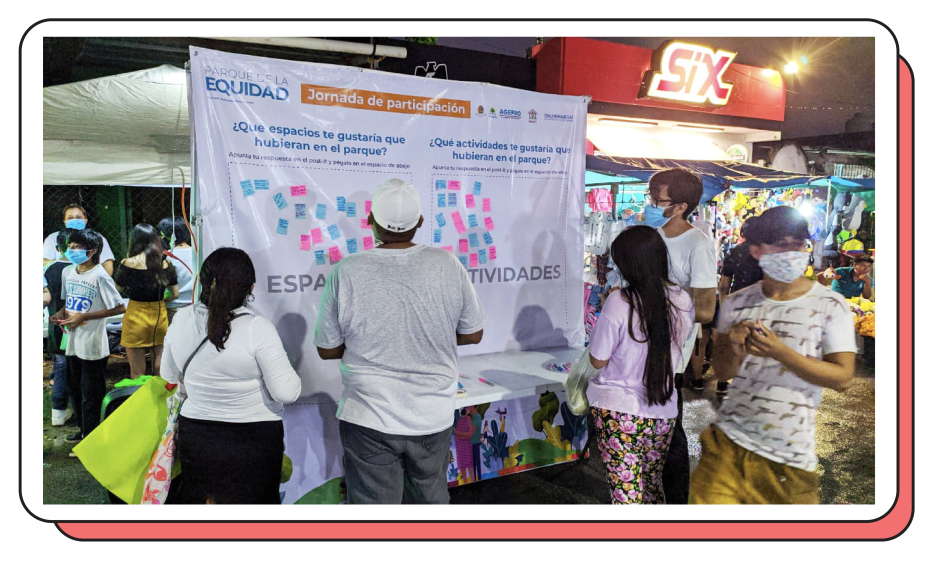
Cancun's rapid urbanization, driven by tourism, has led to deep spatial and social inequalities. The Strategic Projects Agency of the State of Quintana Roo (AGEPRO) partnered with UN-Habitat to develop the Parque de La Equidad, a 16-kilometre linear park that crosses three of the main avenues of the city. This project aims to improve infrastructure, services, and facilities for more than 200,000 people.
Three components are central to the initiative: an urban regeneration masterplan, land-value capture mechanisms, and a conceptual design guide for the public space. The project prioritizes sustainability, inclusivity, and accessibility and was conceived through a participatory planning process that integrated stakeholders from a wide range of social sectors, and local inhabitants.
Partners and Beneficiaries
Partners and Beneficiaries