Kibera, Nairobi, Kenya, 22 March 2020 - “We don’t have enough water to drink and cook our food, so where will we get water to wash our hands frequently?” This was the reaction of Anna Nyokabi, a resident of Kibera, one of Nairobi’s largest slums, when the first confirmed case of COVID-19 in Kenya was announced earlier this month. Anna is a single mother of seven children eking out a living as a nanny in a neighbouring well-to-do suburb.
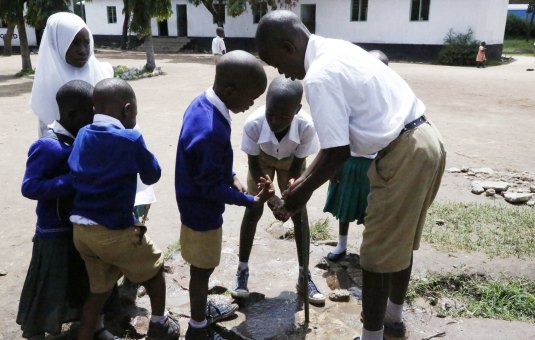
Regular handwashing with soap and running water is recommended by the World Health Organization as one of the best ways to prevent the spread of COVID-19. However it is difficult for Anna and her neighbours to put this into practice due to lack of water in slums. Water points, when available, are only in certain locations and are even harder to access when there are restrictions on movement to prevent or contain an outbreak of COVID-19.
There is a high risk that the impacts of COVID-19 on the urban poor living in slums such as Kibera will be considerably higher compared to other areas as maintaining social distancing and enforcement of self-isolation is extremely difficult in overcrowded areas.
Residents often live hand to mouth and staying at home is often not an option.
“Most of us are casual labourers or run small businesses. We must leave our houses to feed our families.,” adds Anna.
To prevent the spread of COVID-19 in slums and informal settlements, the UN family under the leadership of UN-Water, national and local governments, civil society organizations, women and youth groups and community leaders is looking at the following measures: