Background to CityRAP:
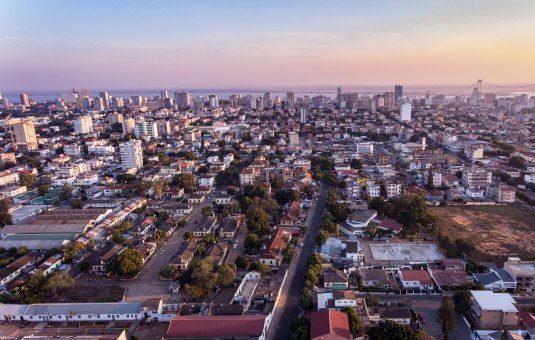
Many cities in the Africa have low adaptive capacities, making them potential hotspots to climate and disaster risks. To help these cities, UN-Habitat and the Technical Centre for Disaster Risk Management, Sustainability and Urban Resilience (DiMSUR), developed the City Resilience Action Planning, or CityRAP, tool to facilitate resilience planning at the city level.
CityRAP is a participatory planning process, that enables city managers and municipal technicians in small to intermediate sized cities to understand and plan actions aimed at reducing risk and building resilience. So far, 30 cities in 11 African countries have implemented CityRAP, and identified their resilience needs, such as reinforcing drainage systems, ecosystem restoration, better management of solid waste and establishing early warning systems and safe havens to protect lives and the city’s assets.
UN-Habitat is working to bring CityRAP to as many cities as possible. In 2019 CityRAP is being implemented in Ethiopia (Arada, Dire Dawa and Adama), Malawi (Lilongwe), Mozambique (Dondo), South Africa (George, Port Alfred and Potchefstroom), Union of Comoros (Fomboni), Zambia (Lusaka and Chipata) and Zimbabwe (Mutare and Chipinge).
CityRAP is only the first step in the journey to resilience. Once the plan has been defined and approved, the challenge is to implement it by working with governments, city administrations, donors and investors, and the local communities to carry out practical infrastructure projects and enforce policies that will better protect cities in emergencies. UN-Habitat is scaling up its efforts to support this phase of resilience building and is launching a project to execute the resilience plans, developed through CityRAP, in one city in each of these four countries: Madagascar, Mozambique, Malawi and the Union of Comoros.
UN-Habitat, together with DiMSUR, is also working at the regional level to enhance disaster risk management by increasing technical capacities and supporting regional coordination, with the aim of substantially reducing the disaster risk and vulnerability of urban communities in African cities.