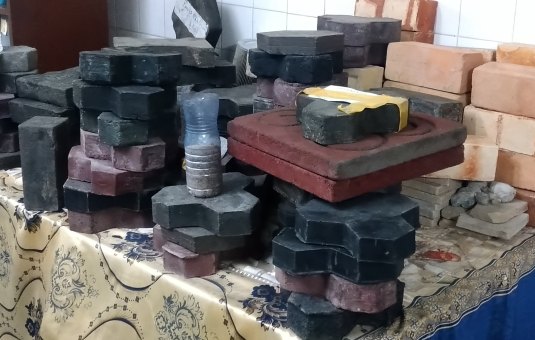
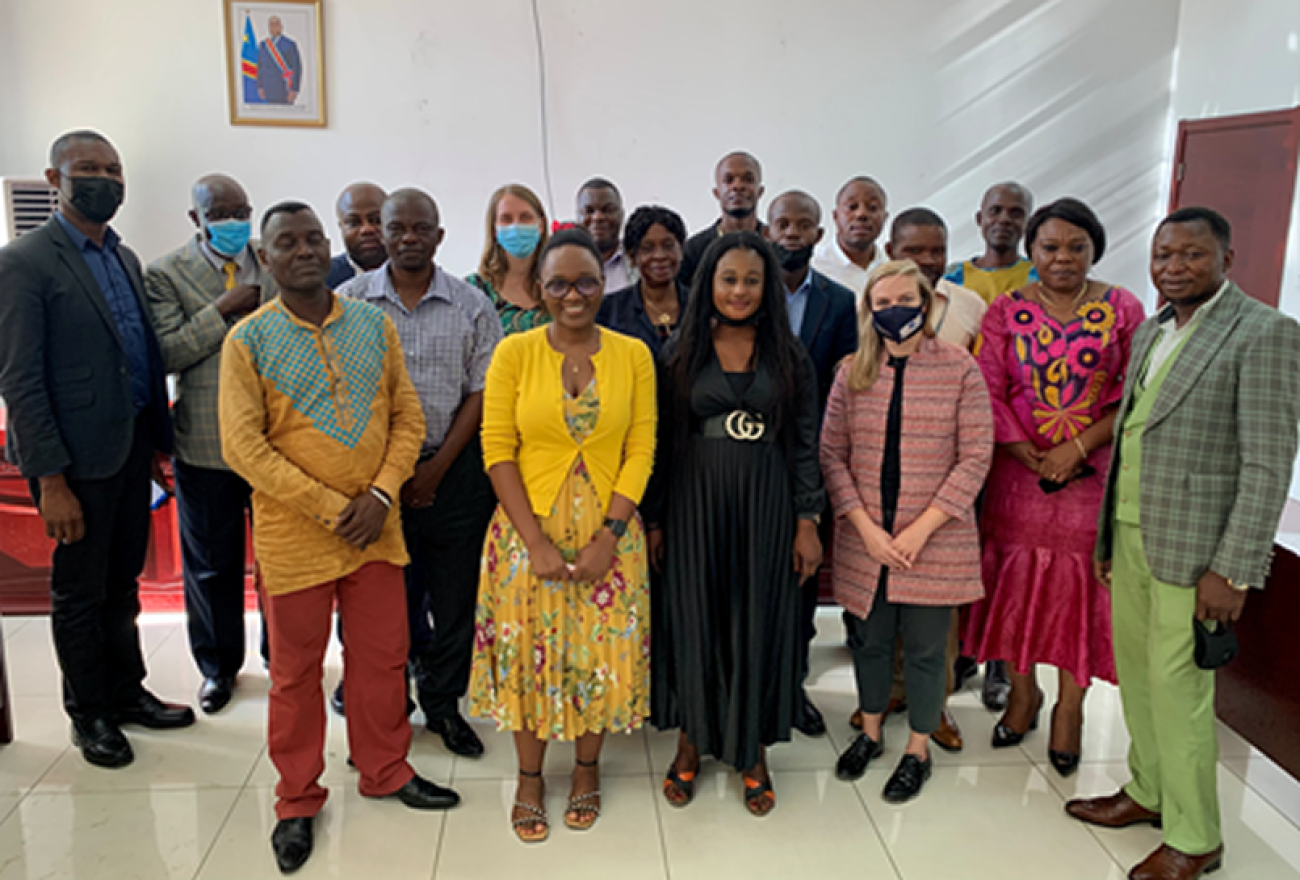
Another topic the 30 participants discussed was plastic solid waste and how it can be both a burgeoning problem and economic opportunity in areas of recycling, transforming and reusing plastic and organic waste to generate wealth and energy.
“The plastic waste could then be delegated to the private sector, leaving just about 10 per cent of the total waste to be managed by the city,” Professor Biey Makaly added.
Alphonse Mata, one of the people active in the field, said his charity, Tearfund, has already created 71 jobs with the recovery of plastic waste into tiles, bricks, shoes, handbags, and similar products.
Alexander Bamanisa, managing director of CleanPlast, said his company paid individuals 250 Congolese Francs (USD 0.13) per kilo of plastic waste and used them to prepare 40,000 tonnes of plastic for recycling every year.
Participants also agreed that if people were made aware of the value of the plastic waste they produced every day, then cleaner plastic would be available for recovery, instead of the private sector having to pick their feedstock out of rivers or from the street.
The workshop concluded with participants dividing into four teams in which they identified the challenges and solutions encountered in transporting and collecting solid waste, recycling of plastic waste, recycling of organic waste and the final disposal.
The main challenges they identified for each of the topics was the lack of awareness on solid waste recycling options and the lack of infrastructure, including sorting facilities, and compost beds/pits to put the existing laws into action.
The participants believed that many of these challenges would be resolved if the government would collaborate more with the private sector, provide good infrastructure, and raise awareness about solid waste management.
UN-Habitat will use the results of the workshop as a base in its work to support the government of DRC and the city of Kinshasa to develop new projects and identify primary investments in the field of solid waste management.
African Clean Cities Platform (ACCP) is a knowledge sharing and investment promotion platform to achieve waste related Sustainable Development Goals (SDGs) by 2030 in rapidly urbanizing Africa.
It was established in 2017 by representatives from 24 African countries together with the Ministry of Environment of Japan, the Japan International Cooperation Agency (JICA), the City of Yokohama, the United Nations Environment Programme (UNEP) and the United Nations Human Settlements Programme (UN-Habitat). As of December 2021, 89 cities and 42 countries have become members of ACCP.