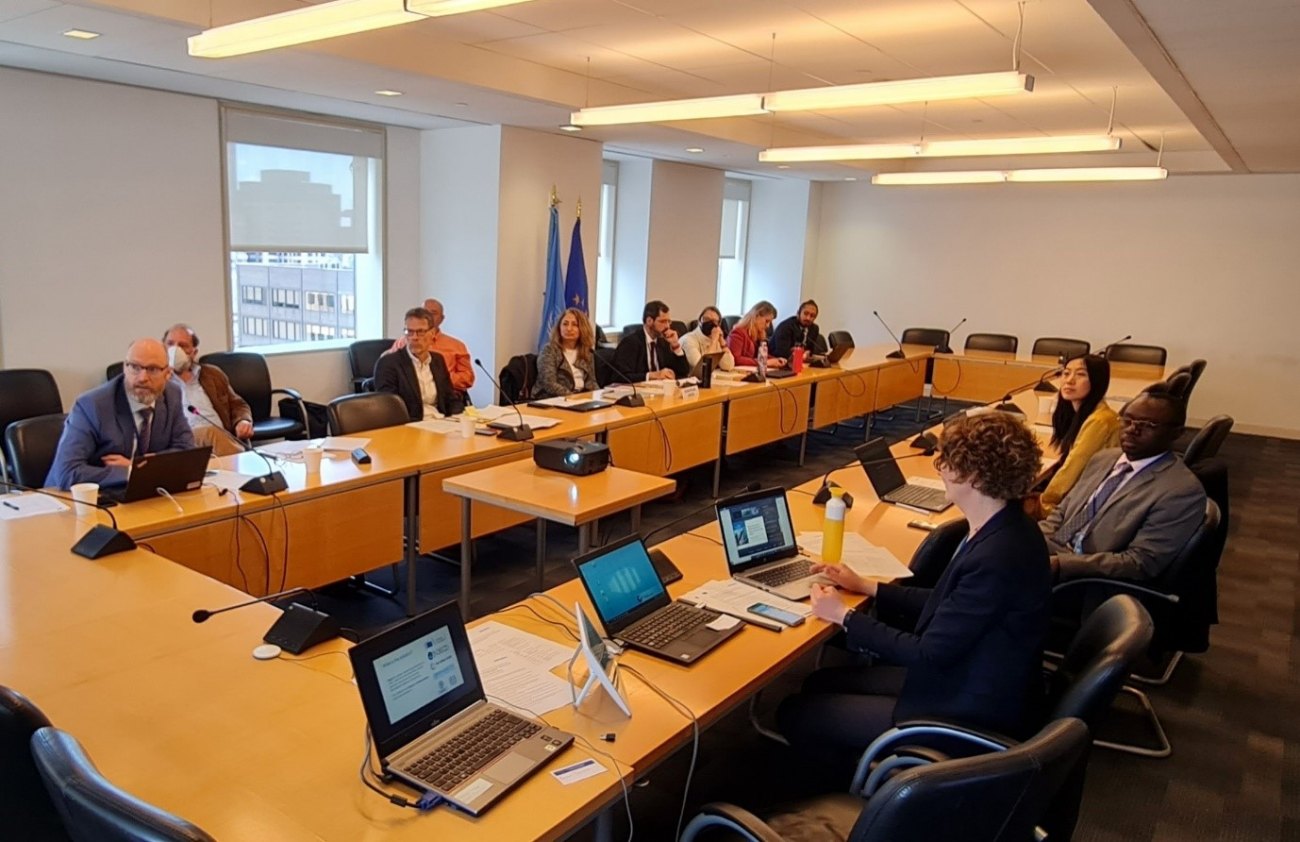
When a disaggregation by the Degree of Urbanization is included in the data collection through such surveys, new and promising analysis can be carried out not only by UNICEF, but also by countries and other organizations and academia.
“UNICEF supports the new definition of urban and rural areas. We need to include this in our internal data work and also in the data collection through our household surveys. If data is geocoded when it is gathered, we will be able to analyze child and maternal wellbeing by urban, peri-urban and rural areas,” said Turgay Ünalan from UNICEF’s data division.
“This is important because we have seen an ‘urban advantage’, that in general urban areas perform better than rural areas, for example for education. At the same time, it is important to look at inequalities within areas. We call it the ‘urban paradox’: the poorest children in cities are worse off than the poor children in rural areas. City averages can hide these inequalities,” added Jan Beise from UNICEF.
“The definition of the Degree of Urbanization has a clear advantage for international comparison. The estimates are very solid while the projections are a bit less certain. For reporting on the Sustainable Development Goals, going back to 2015 when they were launched is tricky,” said Patrick Gerland Chief of the Population Estimates and Projections Section from the UN Department for Economic and Social Affairs (DESA).
“However, for the successor of the Development goals after 2030, we are very optimistic that the Degree of Urbanization can be included in the data methodology and reporting,” he added.
UN-Habitat’s work on the Degree of Urbanization is supported by the European Union who funded the project “Urban2030- Monitoring and Reporting of the Urban and Territorial Dimensions of the Sustainable Development Goals”.
Related articles:
https://unhabitat.org/whats-in-a-definition-a-lot-when-it-comes-to-data-collection