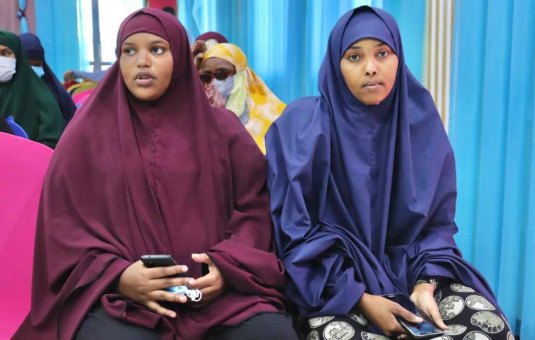
An awareness raising campaign was carried out to make the exercise more inclusive and ensure engagement of the whole community equally in a bid to bring all on board and make sure local people are served better with extra revenue from their own taxes.
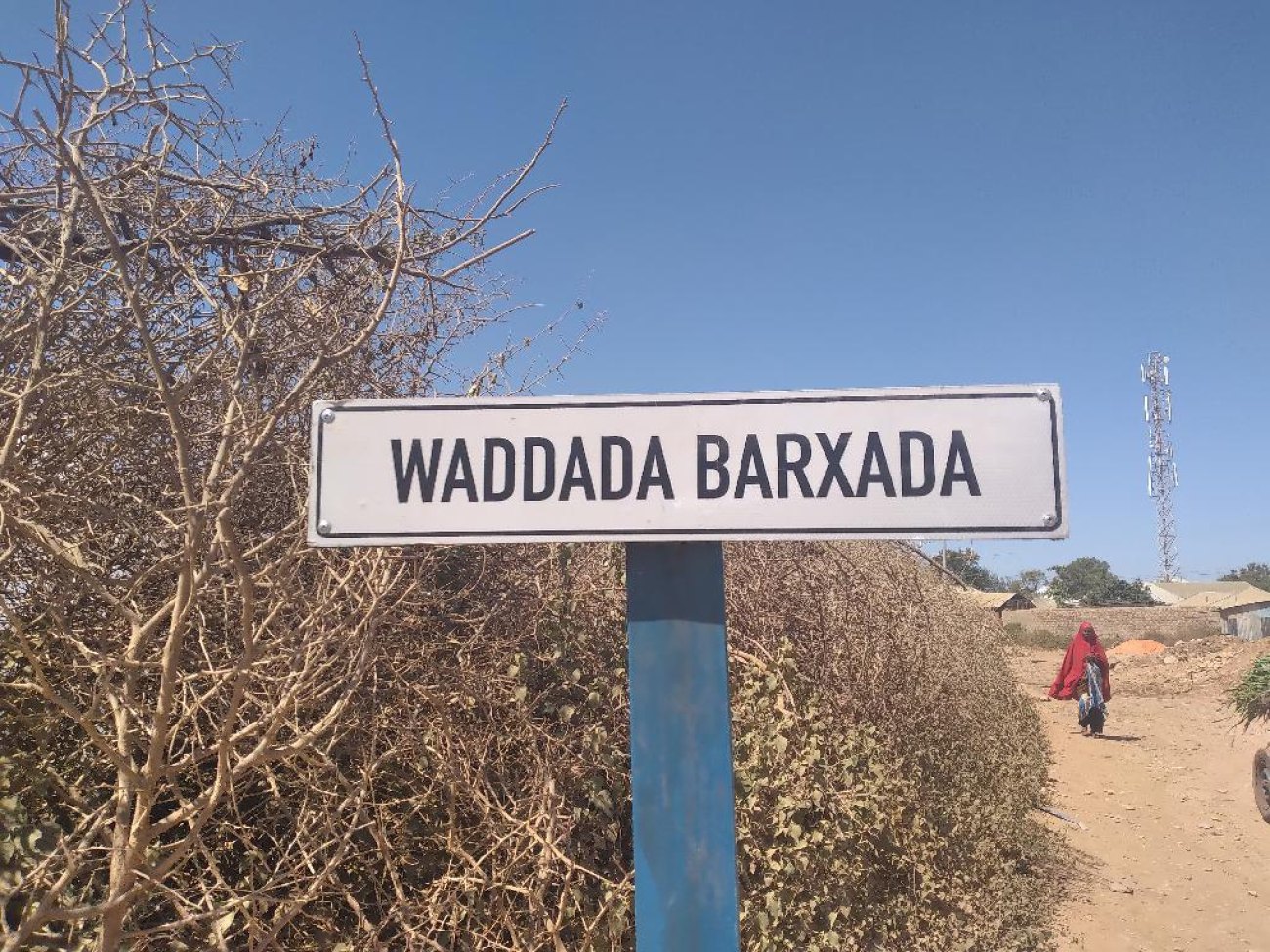
The exercise also led to the demarcation of sub-zones boundaries, production of updating of district administrative maps, roads classification, road naming and road signs installation. Following this exercise, it is projected that Baidoa district will generate an estimated half a million dollars per annum from this untapped revenue stream.
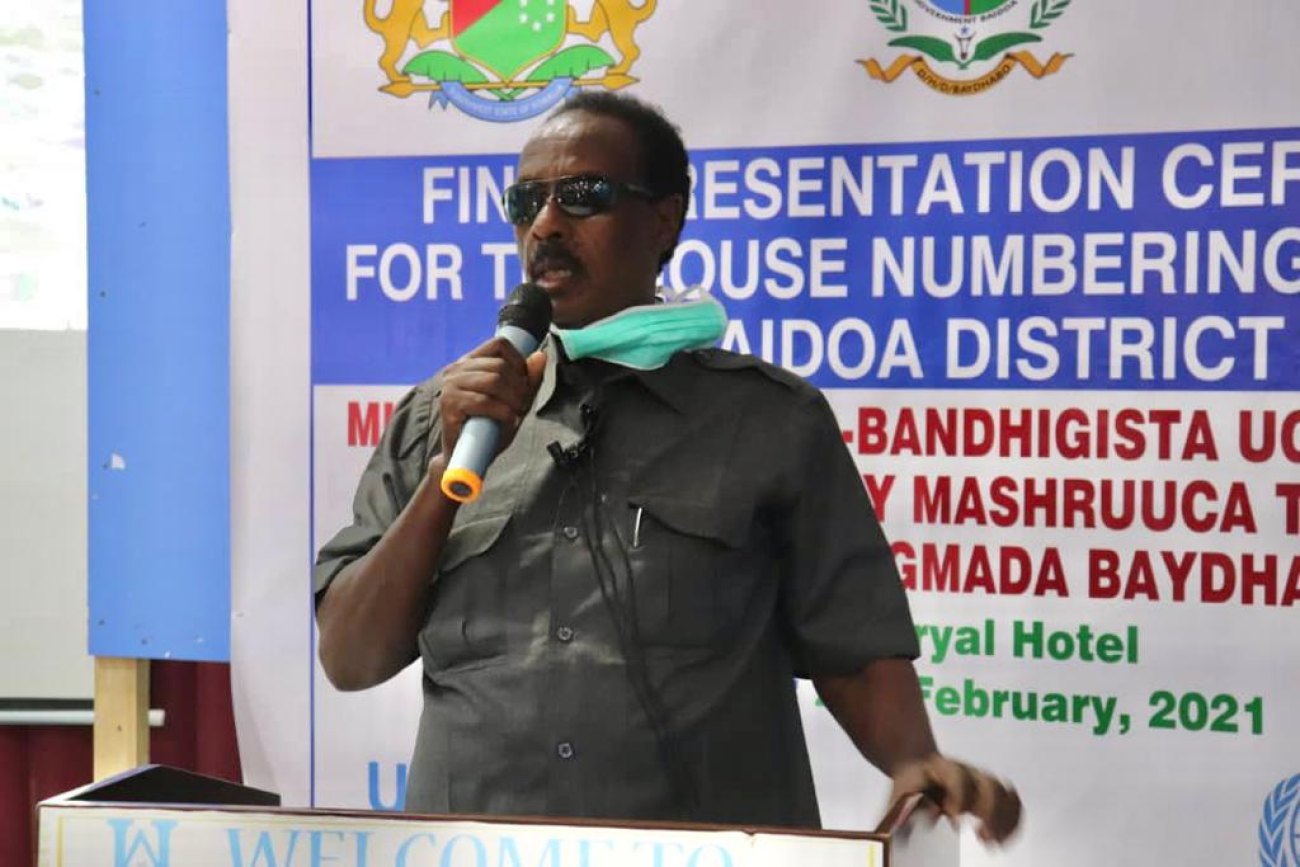
Ali Abdi Adem, the Director General of Ministry of Finance remarked that the georeferenced property will not only ease and increase property tax collections but will also enhance transparency and accountability in the revenue collection process.
Fowsi Mohamed Nuur, a representative from the local communities highlighted that the locals were keen to register their property in the hope that it will contribute to land security and provide unique identities to individual properties. Locals also expressed their willingness to pay taxes, challenging the municipality on the need to invest in social services for sustained collaboration between public authorities and local communities.
This property registration exercise was aimed at strengthening the capacity of the local government to collect revenue and enhance service delivery. This is towards the achievement of UN-Habitat’s mandate which is to promote socially and environmentally sustainable towns and cities.
“I would like to appreciate UN-Habitat JPLG’s support and technical guidance that saw sub-districts border delineated, maps updated, property data collected; and plate numbers fixed, said Hassan Mo’alim Ahmed (Biikole), the mayor of Baidoa. He further underlined the importance of this exercise in generating revenue and consequently providing quality services even as the district works towards self-sustaining revenue.
This initiative was funded by Denmark, Sweden, Switzerland, Norway, European Union and USAID.
Baidoa is situated approximately 240 Kilometres west of Mogadishu and south-east of the Ethiopian border and is on one of the main Somalia trade corridors, connecting the seaport of Mogadishu and the productive region of the Lower Shabelle with Ethiopia and Kenya.