NAIROBI, 3 December 2019 - Meeting the ambitious goals of the Paris Climate Agreement requires a fundamental transformation of how urban infrastructures and services, such as transport, energy, water, waste and urban space, are planned, delivered and maintained. It also requires effective monitoring, reporting and tracking of performance.
UN-Habitat and Local Governments for Sustainability (ICLEI), are collaborating to support over 60 cities, and 8 national governments, to harness the potential of urbanization to meet the Paris Agreement goals.
A second phase of the flagship project, "Accelerating climate action through the promotion of Urban Low Emission Development Strategies", or "Urban-LEDS II" for short, has been running since 2017 and will finish in 2021. The project is funded by the European Commission.
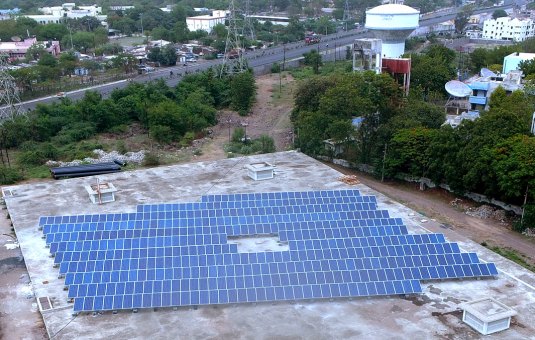
During 2012 - 2015 under the Urban-LEDS I project, ICLEI and UN-Habitat guided and supported eight model cities in Brazil, India, Indonesia and South Africa to develop comprehensive Urban Low Emission Development Strategies (Urban LEDS) and action plans using ICLEI's Green Climate Cities process methodology. These strategies were integrated into city development planning with the use of new policies and laws. Local pilot projects on the use of sustainable energy – energy efficiency and renewable energy – were successfully implemented. The project contributed to developing a new Monitoring, Reporting and Verification (MRV) process for local climate action, strengthened sub-national capacity and action on climate change, and opened new dialogues on vertical integration (multi-level governance) with countries active in the United Nations Framework Convention on Climate Change (UNFCCC).