Ouagadougou, Burkina Faso, 17 March 2022 – Showing its alignment to both needs on the ground and working in line with other United Nations agencies, a UN-Habitat project is providing an integrated approach, aligned with the country’s Humanitarian Response Plan (HRP) published this month.
The HRP, published March 4, underlines the country’s urgent need for shelter, WASH, schooling and education and food for people in vulnerable situation.
The security situation in the country has led to 1.7 million people becoming internally displaced, many of them finding refuge in urban areas.
Most affected by the internal displacement are women and children, as insecurity has led to the closure of more than 3,500 schools and health facilities in areas where violence and threats by unidentified armed groups has forced populations to leave. Thousands of children are out of school, although some attend school in the areas in which they find safety and shelter.
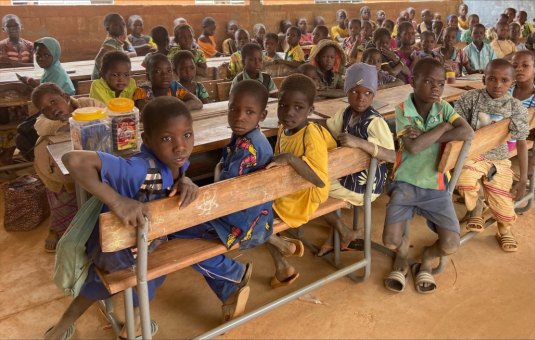
Classrooms have become overcrowded as the number of children has increased, impacting learning capacities and complicating the task of teachers.
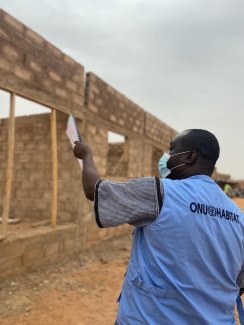
UN-Habitat is currently implementing the project "Strengthening the Resilience of Local Communities in Urban Displacement Context and the COVID-19 Pandemic" to address the urgent need for increased access to services. The project includes constructions of additional health centers and expands school facilities in areas most needed: the four cities of Kaya, Kongoussi, Tougouri, and Dori.
The project, with its integrated and area-based interventions, underscores UN-Habitat's approach to advancing the links between humanitarian, development, and peace in Burkina Faso, in line with the agency's overall strategy. The project will also increase access to housing for people in vulnerable situations, based on UN-Habitat’s objective to “put housing in the center.”