“As Mayor of the Metropolitan City of Busan, I take seriously our commitment to the credo ‘The First to the Future’. We joined forces with UN-Habitat and OCEANIX to be the first to prototype and scale this audacious idea because our common future is at stake in the face of sea level rise and its devastating impact on coastal cities,” said Mayor Park Heong-joon, who has set an ambitious agenda, including turning Busan into a green smart city and launching a bid for World Expo 2030.
Speaking at the Roundtable, which took place at the UN Headquarters in New York, and was attended by government ministers of housing, Mayors, Ambassadors, and high-ranking UN officials, the Executive Director of UN-Habitat, Ms. Maimunah Mohd Sharif said. “We cannot solve today’s problems with yesterday’s tools. We need to innovate solutions to global challenges. But in this drive for innovation, let’s be inclusive and equitable and ensure we leave no one and no place behind. I am happy this Roundtable takes place ahead of the High-Level Meeting on the New Urban Agenda, where cities and countries around the world come together to discuss sustainable urbanization.”
“In designing a solution for the most vulnerable coastal locations on the frontlines of climate change, OCEANIX’s new modular maritime neighborhoods will be a prototype for sustainable communities informed by Busan’s unique juxtaposition of old and new. Creating a connection between the city and the seaside, OCEANIX Busan will expand this spirit onto the waterfront,” said Bjarke Ingels, Founder and Creative Director of BIG-Bjarke Ingels Group.
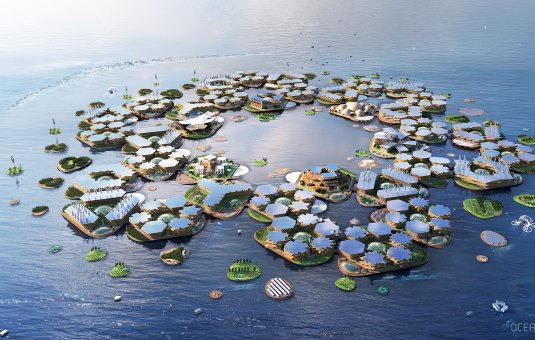
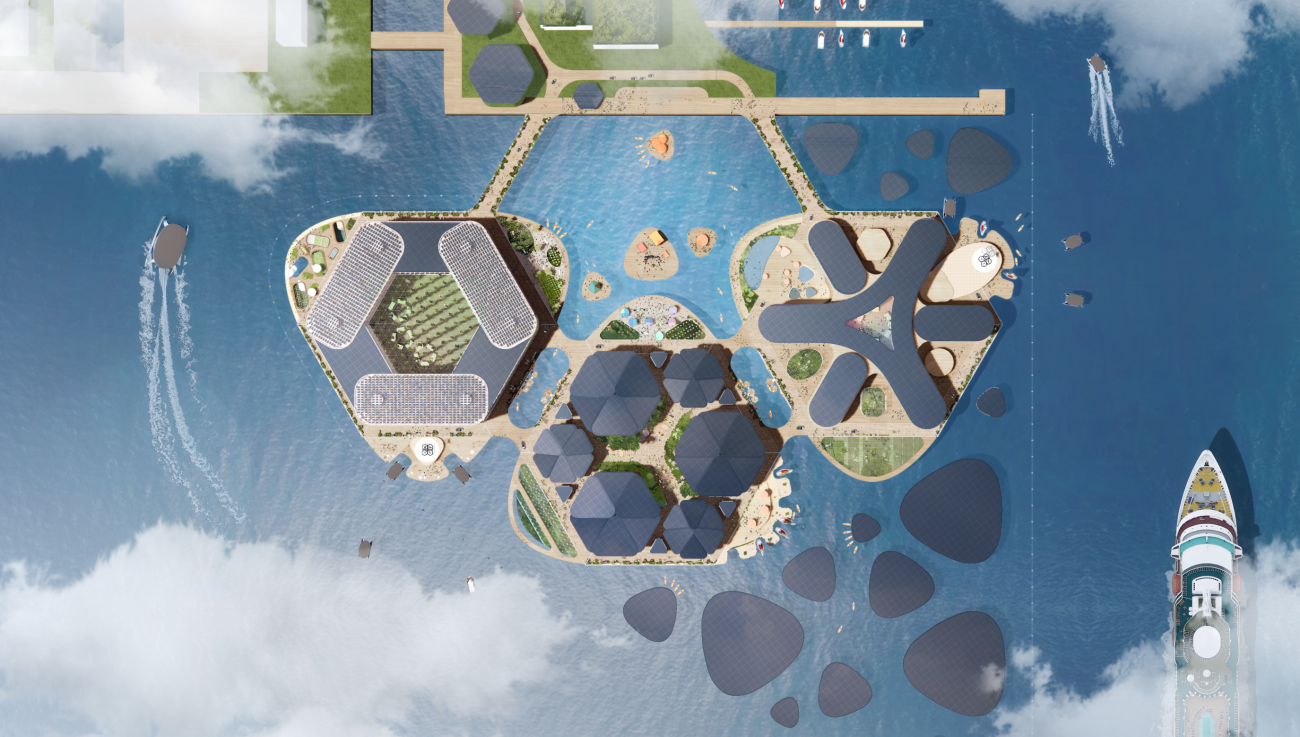
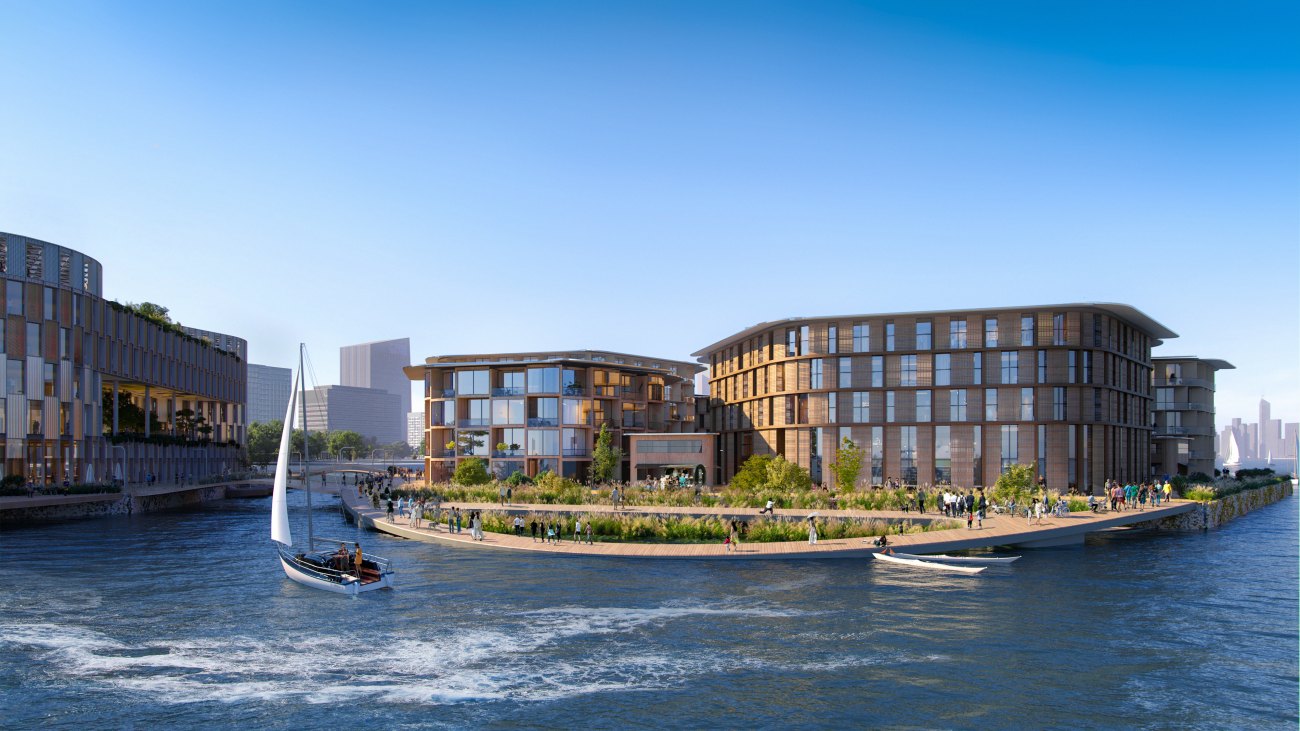
OCEANIX Busan is the world’s first prototype of a resilient and sustainable floating community. The interconnected neighborhoods total 6.3 hectares to accommodate a community of 12,000 people. Each neighborhood is designed to serve a specific purpose - living, research, and lodging. There are between 30,000 to 40,000 square meters of mixed-use programs per neighborhood. The floating platforms connect to the land with link-span bridges framing the sheltered blue lagoon of floating recreation, art, and performance outposts. The low-rise buildings on each platform, defined by their soft lines, feature terraces for indoor-outdoor living, helping to activate the network of vibrant public spaces. OCEANIX Busan will organically transform and adapt over time. Starting from a community of 3 platforms with 12,000 residents and visitors, it has the potential to expand to more than 20 platforms. The floating platforms are accompanied by dozens of productive outposts with photovoltaic panels and greenhouses that can expand and contract over time based on the needs of Busan. OCEANIX Busan has six integrated systems: zero waste and circular systems, closed loop water systems, food, net zero energy, innovative mobility, and coastal habitat regeneration. These interconnected systems will generate 100% of the required operational energy on site through floating and rooftop photovoltaic panels. Similarly, each neighborhood will treat and replenish its own water, reduce and recycle resources, and provide innovative urban agriculture.