The Weight of Water: Mae Bai’s New Beginning
Description
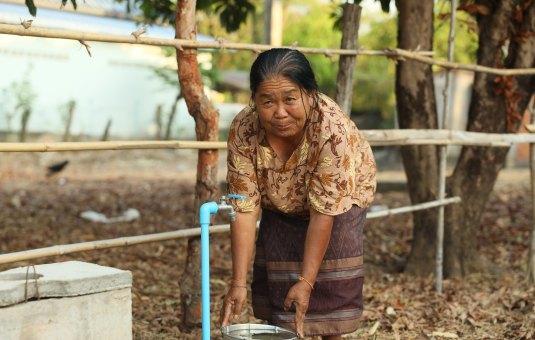
Each morning before the sun creeps over the trees, Bai Singsouthaluck wakes up, slips out the front door and walks into her garden where a short stub of robin-egg blue PVC pipe sticks out of the ground.
Description with Image
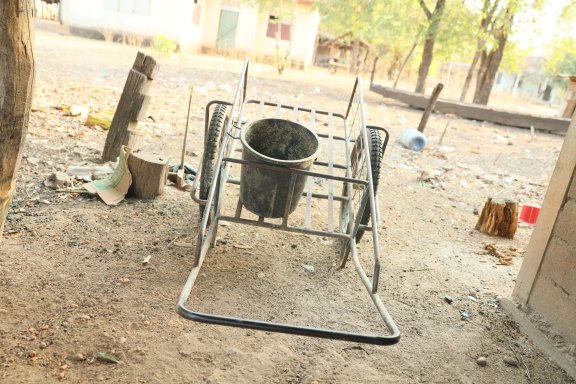
For the better part of six decades, such a simple convenience was inconceivable. Instead, Mae Bai’s morning routine in the Sayphoutong district of Savannakhet province involved trudging at least an hour round trip to the Mekong River pushing a handcart. At the river, she filled up 20-litre jugs and then made the exhausting return journey hauling almost 100 litres of water. A flat tyre on her old two-wheel cart meant no water at all.
But earlier this year, that small stub of PVC pipe liberated Mae Bai from her daily routine – the spigot is the delivery point of a new water treatment and piped water system installed across Lao PDR. UN-Habitat led this generational investment in basic services as part of the agency’s 2026–2029 Strategic Plan. It was funded by the Adaptation Fund and implemented with support from the local state-owned water company known as Nam Papa Savannakhet. As a result, access to clean piped water has improved the quality of life for an estimated 52,928 Laotians and directly reduced the physical and time burden on Laotian women and girls, who are typically responsible for securing water for their families.
A hard life
Until the arrival of a water tap on her property, Mae Bai knew no other way than the daily trek. As the eldest daughter of six children in a rural Lao family, she was born into this kind of devotion to meeting her family’s basic needs. Mae Bai has been a caregiver nearly all her life, looking after her parents and raising her siblings. Self-sacrificing by nature, she even sold her livestock to ensure her nieces and nephews received a secondary education.
By the time she reached her sixties, Mae Bai was living alone after her parents passed and her nieces and nephews moved away. Then, in 2024, her already difficult life took a tragic turn. A motorcycle struck Mae Bai while she was walking to the nearest market and knocked her unconscious on a rural road. Villagers rushed to help and loaded her into a motorcycle sidecar that took her to the nearest hospital.
The crash caused a blood blockage in her skull and lasting damage to her shoulders and back. Because of these injuries, her body could no longer carry the heavy weight of water. She also had to stop running her small business of selling snacks in the village, as she could no longer travel to the market to buy products.
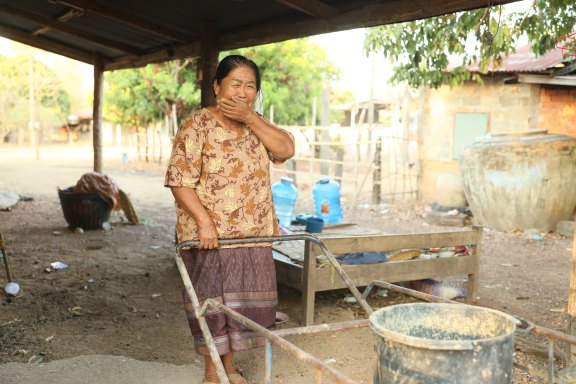
The physical limitation of her injuries left Mae Bai feeling a deep sense of hopelessness. She was forced to ask neighbours for water, which made her feel shy and "pitiful." She tried to regain her independence by investing her savings into a pregnant pig, but a disease killed all nine piglets.
"It was like I kept on dying again and again," she said of the loss.
Quote
"This project makes me feel like I am finally born again."
Piped water, resilient infrastructure
At the same time Mae Bai was struggling with the aftermath of her injuries, UN-Habitat began planning for the large-scale rollout of water pumps, filters, pipes and other necessary infrastructure across two districts in Savannakhet province.
Most settlements in the district have access to water throughout the year thanks to their proximity to a tributary of the Mekong River. But securing clean water was a perennial challenge – the river could be muddy both during monsoon season due of flooding and in dry season because lower water flow disturbed sediment on the river bottom. Climate change has exacerbated these seasonal conditions.
Prior to this intervention, UN-Habitat had implemented community-based small-scale water supply systems in 189 villages across the southern provinces of Sekong, Saravane and Attapeu. A key strength of that earlier work was the integration of village-level climate vulnerability and risk assessment into water system planning and management. The findings of these assessments, together with community consultations, helped determine the most appropriate water supply technologies and shape community action plans. Because many of the targeted villages were in remote areas, strong community commitment to operation and maintenance was deemed essential for long-term viability. This evidence-based approach helped communities understand why authorities made certain technical and management choices, which in turn strengthened a sense of ownership of both the facilities and the action plans.
Building on this experience, UN-Habitat applied and expanded this same evidence-based approach in the scaling-up project in Sayphouthong district. In this case, climate vulnerability and risk assessment were integrated not only into water system planning but also into the town master planning process. This helped inform the design and location of public infrastructure so that water systems, roads, and other assets could better withstand climate-related events. The process also contributed to stronger institutional capacity. For a country like Lao PDR, where climate resilience capacity remains limited, this approach offers a potentially replicable model for strengthening local resilience to climate risks.
“UN-Habitat’s water supply project in Phine and Sayphouthong is not only improving access to safe water, but also strengthening climate resilience and supporting more inclusive and sustainable urban development,” said Nam Papa Savannahkhet Technical Officer Soutthisone Thonemanyvong. “By engaging communities in planning, management and maintenance, the project is creating a strong foundation for long-term sustainability in these emerging districts.”
A powerful gift
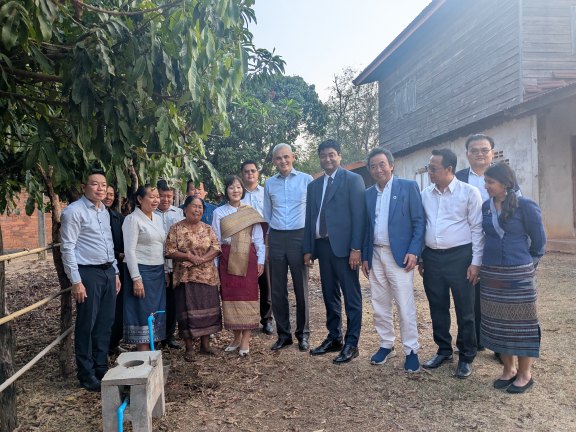
In 2026, the new system began operating in Sayphoutong. Mae Bai became one of the first villagers to experience clean, running water at home under the project’s prioritization of vulnerable households. Standing side-by-side with the Chair of Provincial Administration Office of Savannakhet, H.E. Mdm Daovone Saysouliane, a former district resident, Mae Bai wept with joy as water sputtered out. She was so moved that she almost took off her shoes before stepping into the small puddle, treating the water with sacred reverence.
"With this project, it may seem like nothing to you," Mae Bai said. "But it makes me feel like I am finally born again."
No longer forced to spend half her day fetching muddy water, Mae Bai is looking toward the future. She plans to try raising pigs once more, hoping to earn enough income to restart her snack business. For a woman who gave everything to her family, the water is a quiet, powerful gift.