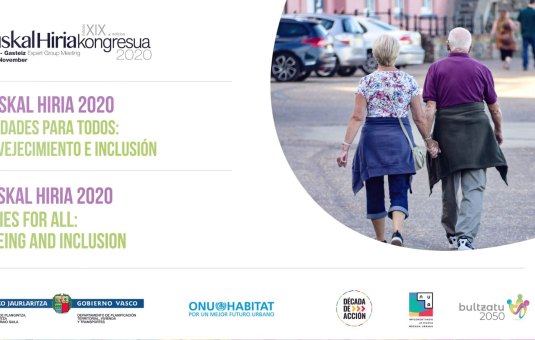
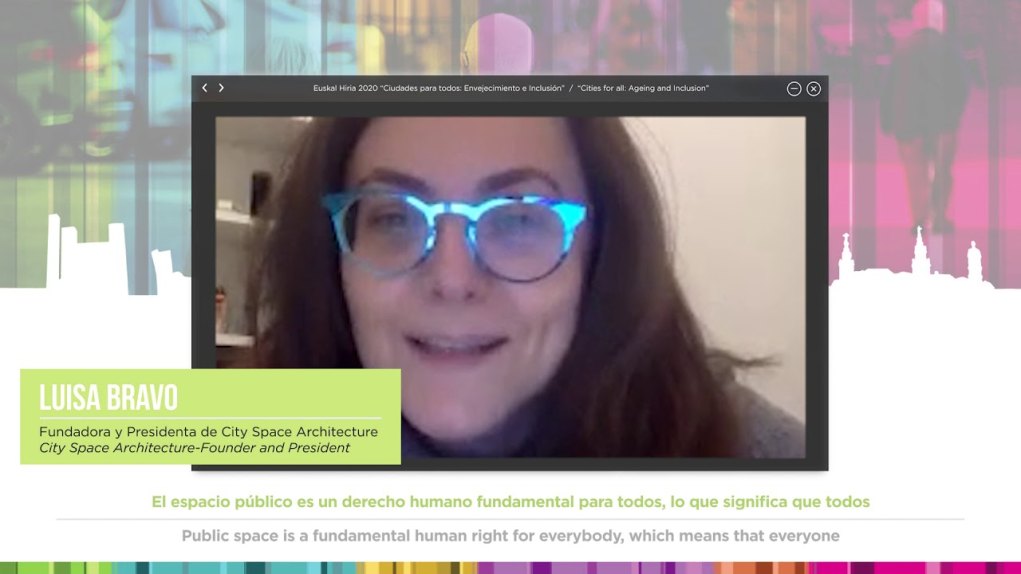
Iñaki Arriola, Counsellor of Territorial Planning, Housing and Transport of the Basque Country, highlighted in the opening session “to address this phenomenon from multiple approaches and a comprehensive treatment”, and pointed out that this topic is mainstreamed in the Urban Agenda - Bultzatu 2050, on issues such as the city model, health, housing, care facilities, the quality of public space, commerce and local services.
In addition to the Counsellor, the opening was attended by Arantza Leturiondo Aranzamendi, Vice-Counsellor of Territorial Planning of the Government of Basque Country, the Basque Journalist Iñaki Gabilondo, the Associate Professor of Gerontology at the University of Helsinki and the Research Network on Ageing in Europe, Kathrin Komp, and Shipra Narang-Suri, Head of UN-Habitat's Urban Practices Division.
In her intervention, Ms Narang-Suri highlighted that there is ample empirical evidence that shows that the morphology of cities has direct consequences for the population, and particularly for vulnerable groups -among which are older people- in terms of health, access to services, equity, social integration, safety, provision of opportunities and resilience, and that therefore, the way in which cities are planned, designed and managed will also determine the opportunities for inclusion.
During the sessions participated experts from UN-Habitat, the regional and local government of the Basque Country, international organizations, universities, non-profit organizations, international networks and platforms, research groups, among others.
For more information please contact gonzalo.lacurcia@un.org or ana.munozarranz@un.org.