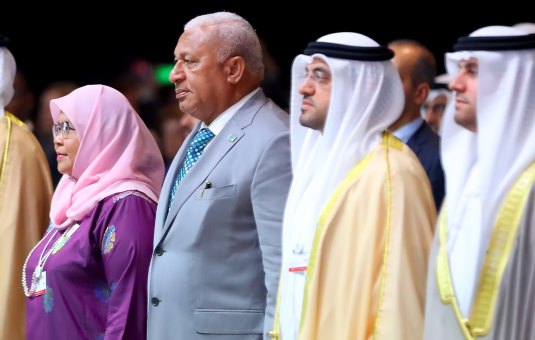
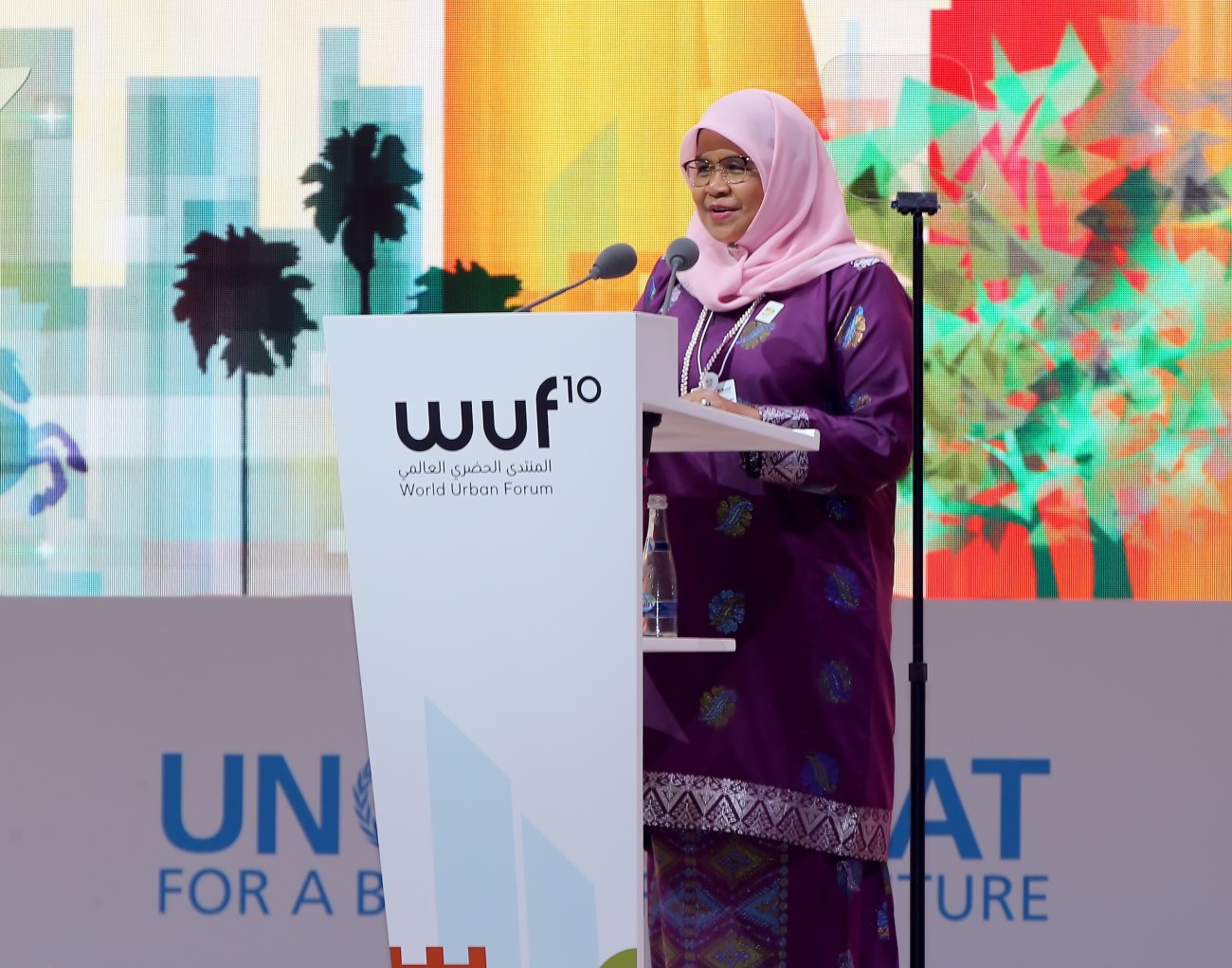
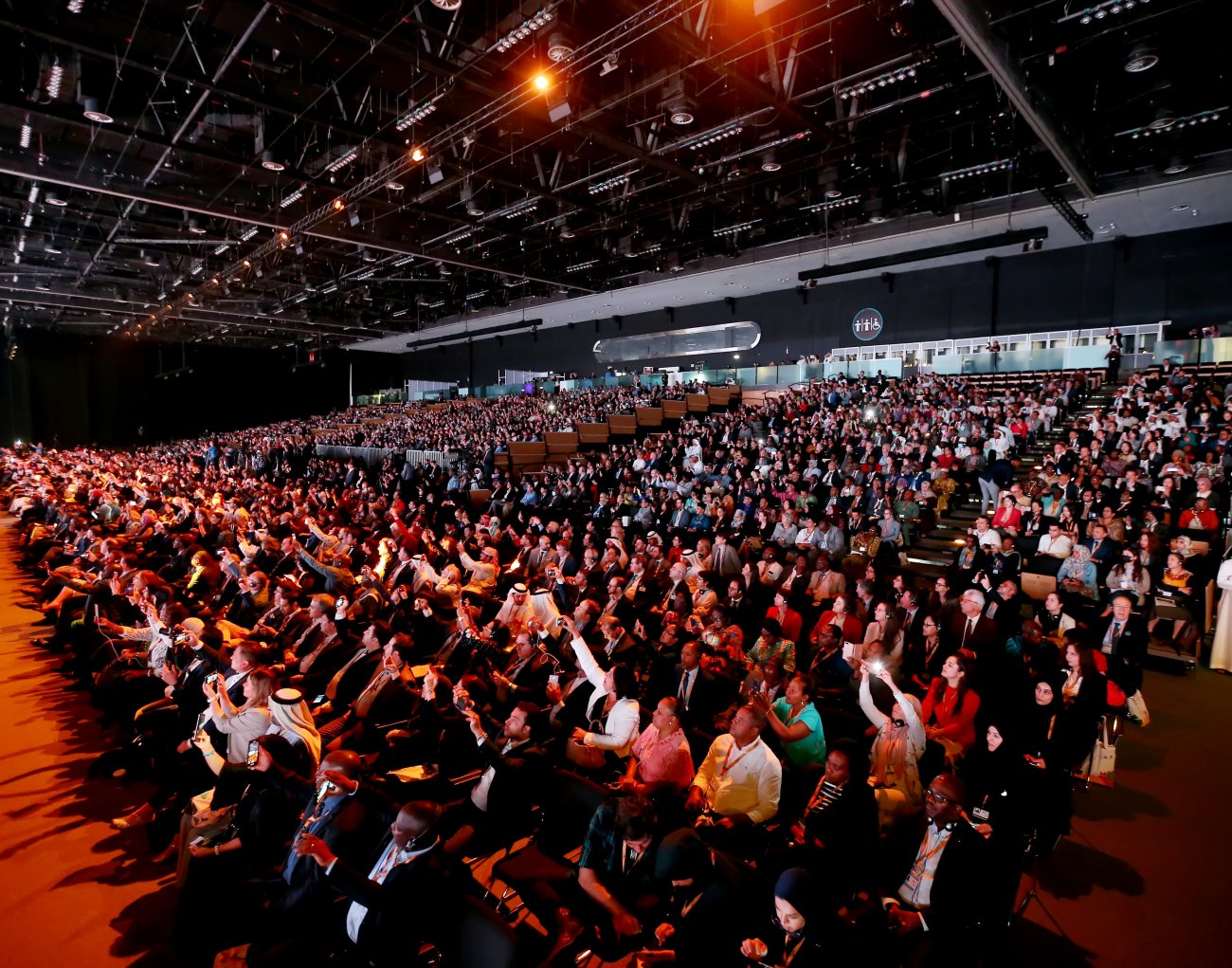
Ms. Sharif said UN-Habitat could not have asked for a better host than Abu Dhabi. She highlighted the special significance of the Tenth session of the World Urban Forum, saying the World Urban Forum had truly come of age as the world’s premier gathering of thinkers and doers for sustainable urbanization, and this year it coincided with the 75th anniversary of the United Nations.
Thanking the President of Afghanistan and the Prime Minister of the Republic of Fiji for their continued support of UN-Habitat, Ms. Sharif said it was their sense of urgency, their ability to translate policy into practice and to regard urbanization in holistic terms that would ensure it could be transformed into opportunities for sustainable development.
President Ashraf Ghani of Afghanistan said that meeting the challenges posed by the scale and scope of urbanization in the context of global uncertainty, disruptive and destructive change required fast action.
“Urgent, systematic and global action is required. We have the tools and repertoire of techniques to solve the problem,” he said, adding that the world needed change in the culture of states, culture of people, and the culture of global organizations.
The Prime Minister of the Republic of Fiji said the Forum offered the opportunity to discuss the role of cities in averting crises by making urban living synonymous with sustainability.
He said living standards in cities had grown remarkably, but that progress has come at the cost of a warming world.
“The old model of development is untenable; if we continue to urbanise on carbon-intensive industries, the world’s cities will crumble into hotbeds of inequality and extreme vulnerability,” he warned.