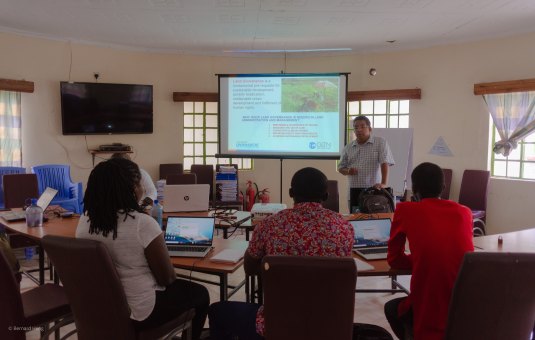
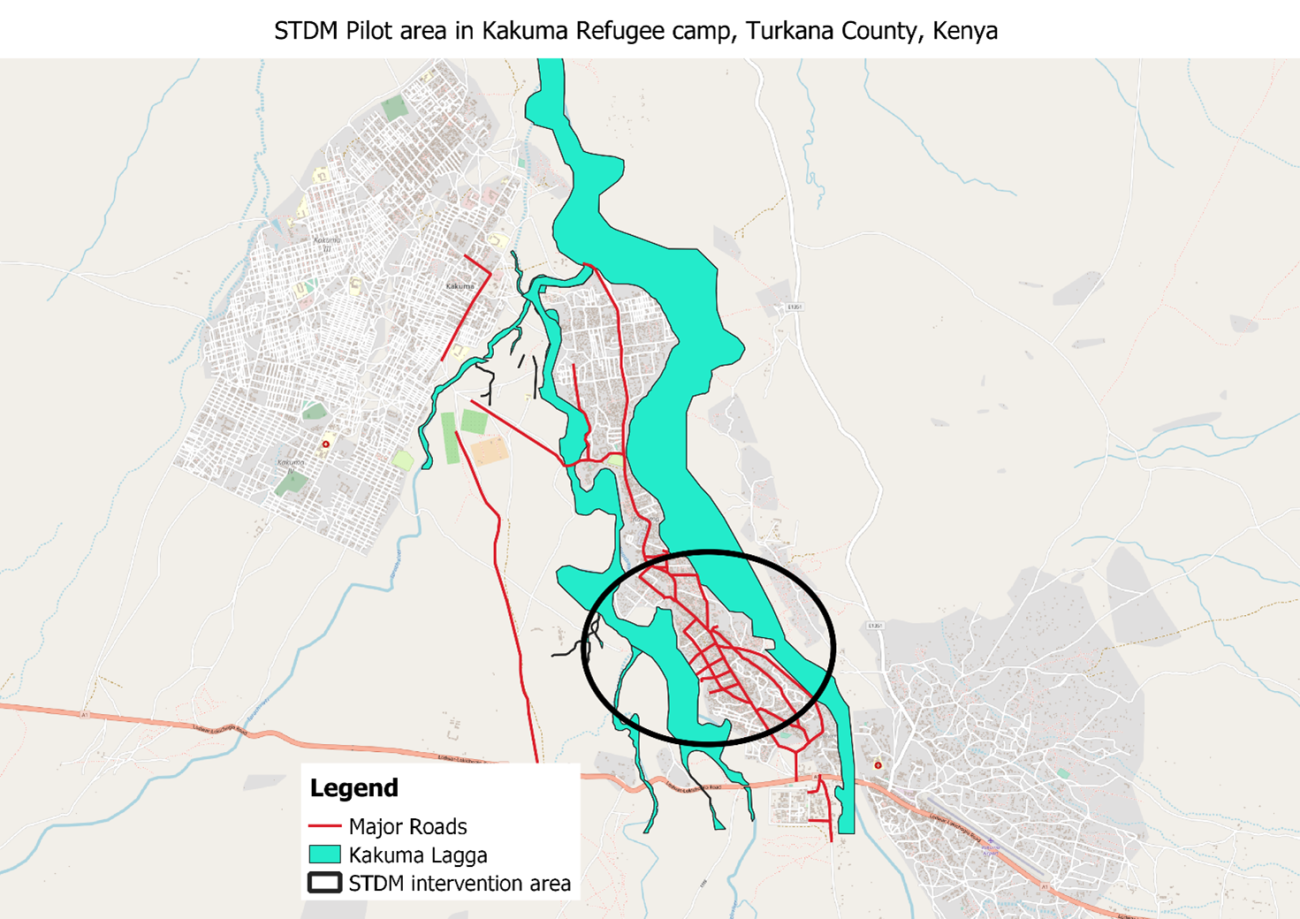
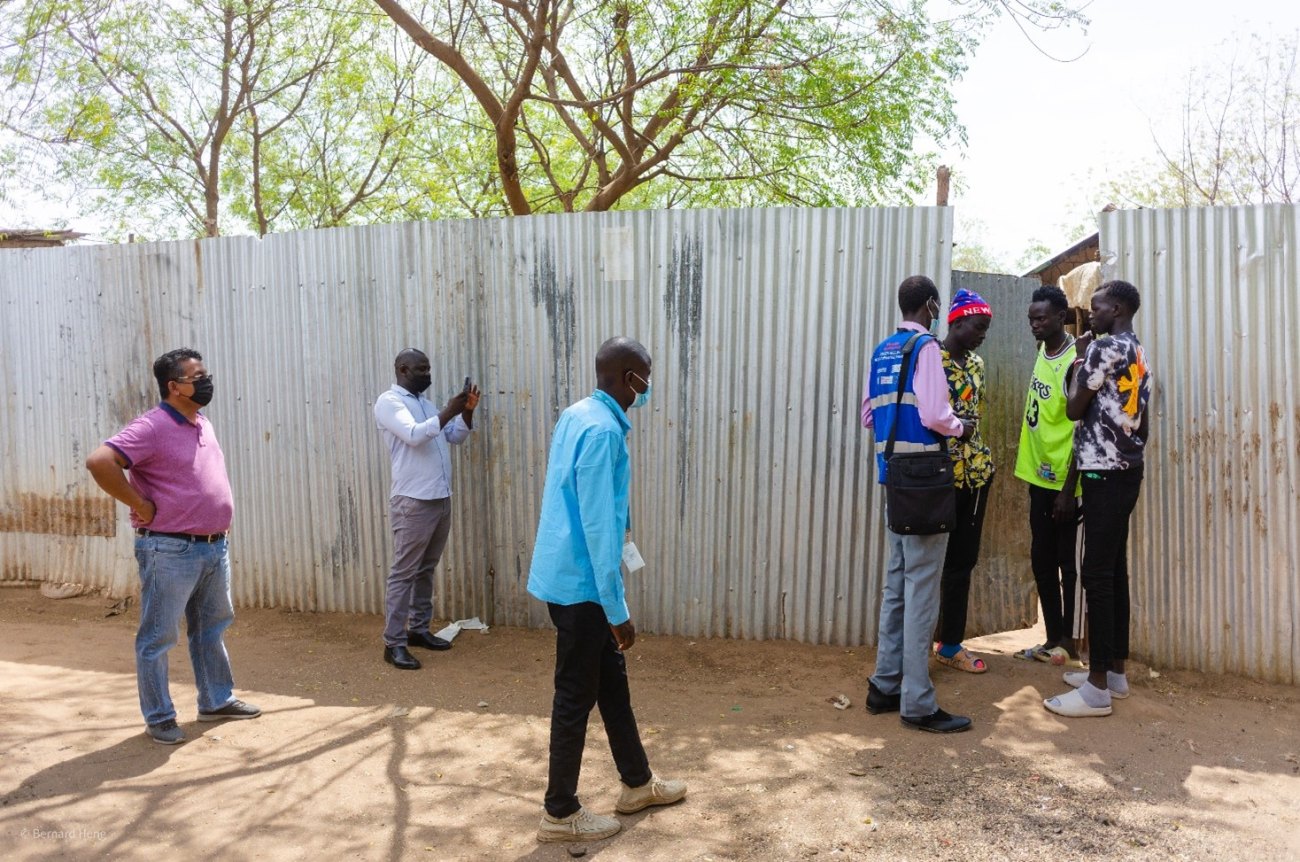
This system will also provide a foundation for rapid response in future crises. Over the course of the training, participants covered different aspects on data capture, spatial data management and analysis, and use of STDM as a common platform to accommodate information from different sectors.
“STDM presents an exciting opportunity for different stakeholders, from different backgrounds to coordinate data. Moreover, its spatialised nature will be key in aiding stakeholders to streamline resources and develop targeted, effective, and multi-sectoral interventions to support Persons of Concern,” said Bernard Heng, UN-Habitat Kakuma field officer.
“More importantly, STDM’s flexibility as a database system will allow stakeholders to retain protection concerns, such as limiting sensitive information when sharing externally – necessary considering the wide range of vulnerable groups residing in Kakuma-Kalobeyei,” he added.
In addition, UN-Habitat’s Kakuma field office and GLTN colleagues met with various partners including NRC, UNHCR, and National Land Commission (NLC) to discuss opportunities to collaborate in planning, capacity development, and awareness on land governance approaches.
The partners have applauded the use of STDM for coordinating a sustainable model across Kakuma-Kalobeyei as the area sees a continued influx of hosts and refugees and for integrating a wide array of data for diverse needs using a centralised database.