Lalitpur City, Nepal, 31 March 2022 – Nepal’s Katmandu Valley is home to seven world heritage sites and over 50 heritage settlements -- old towns characterised by a typical pattern of compact row housing of three to four floors, brick houses clustered around courts, stone paved streets and narrow alleys. They are peppered with temples and open spaces usually with traditional water sources such as stone spout, wells and pond.
Dating back centuries, these settlements hold historical and architectural significance and rich cultural values, in addition to their contribution to Nepal’s tourism industry.
In 2015, an earthquake severely damaged many of the houses and monuments in several heritage settlements. With physical damage came ruin to the economic vitality that many of these settlements enjoyed from year-long international tourism.
UN-Habitat project
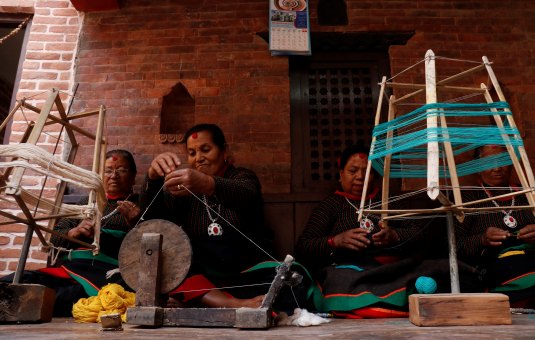
In a project that started in 2018, UN-Habitat project Sustainable Tourism and Green Growth for Heritage Settlements of Kathmandu Valley Project worked to rebuild the heritage settlements of Bungamati and Pilachhen, the latter a farm community on outskirts of Lalitpur, which is also known as city of craft.
The project was funded by European Union’s Switch Asia Initiative.
These households still depend on agriculture, although many community members have shifted to regular jobs and business. In the reconstruction project, UN-Habitat provided technical assistance to use typical traditional technology and restore Newar settlement morphology in which the houses are planned around courtyard with streets and underpasses leading to interconnected open spaces.
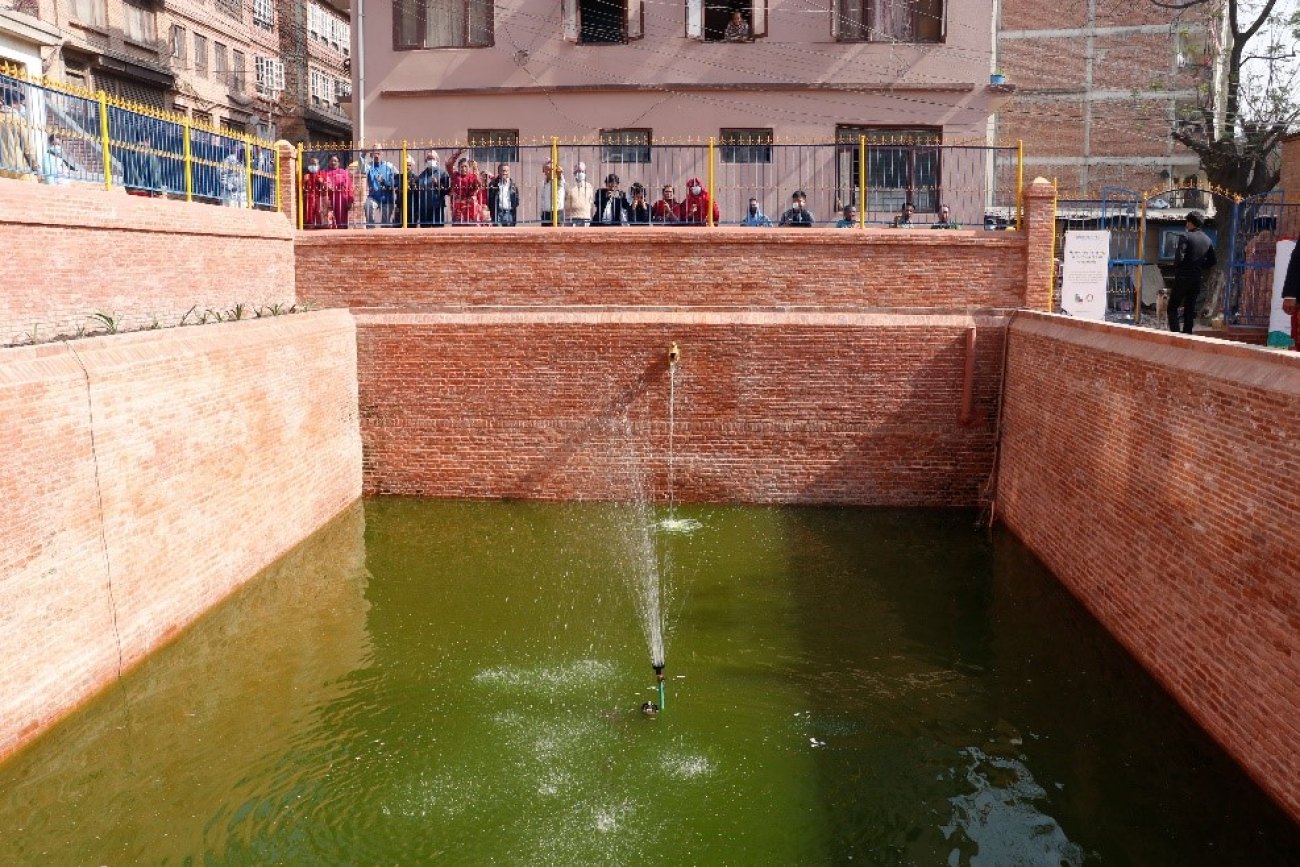
In addition to technical assistance, the project supported in restoring the rest house and the traditional pond in Pilachhen, which has around 139 houses for a population of about 700 people.
Ponds in such heritage settlements have ecological, religious and socio-cultural significance. They help enhance micro-climate, fulfill water demand in the dense settlements, and contribute to in ground water recharge and storm water management.