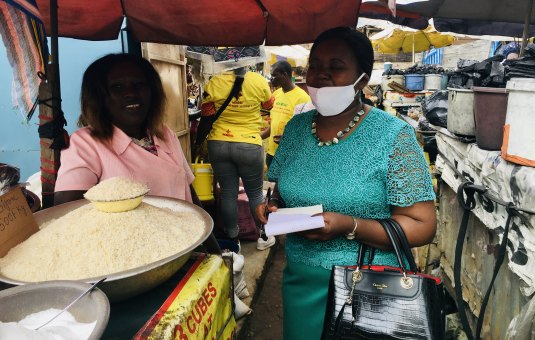
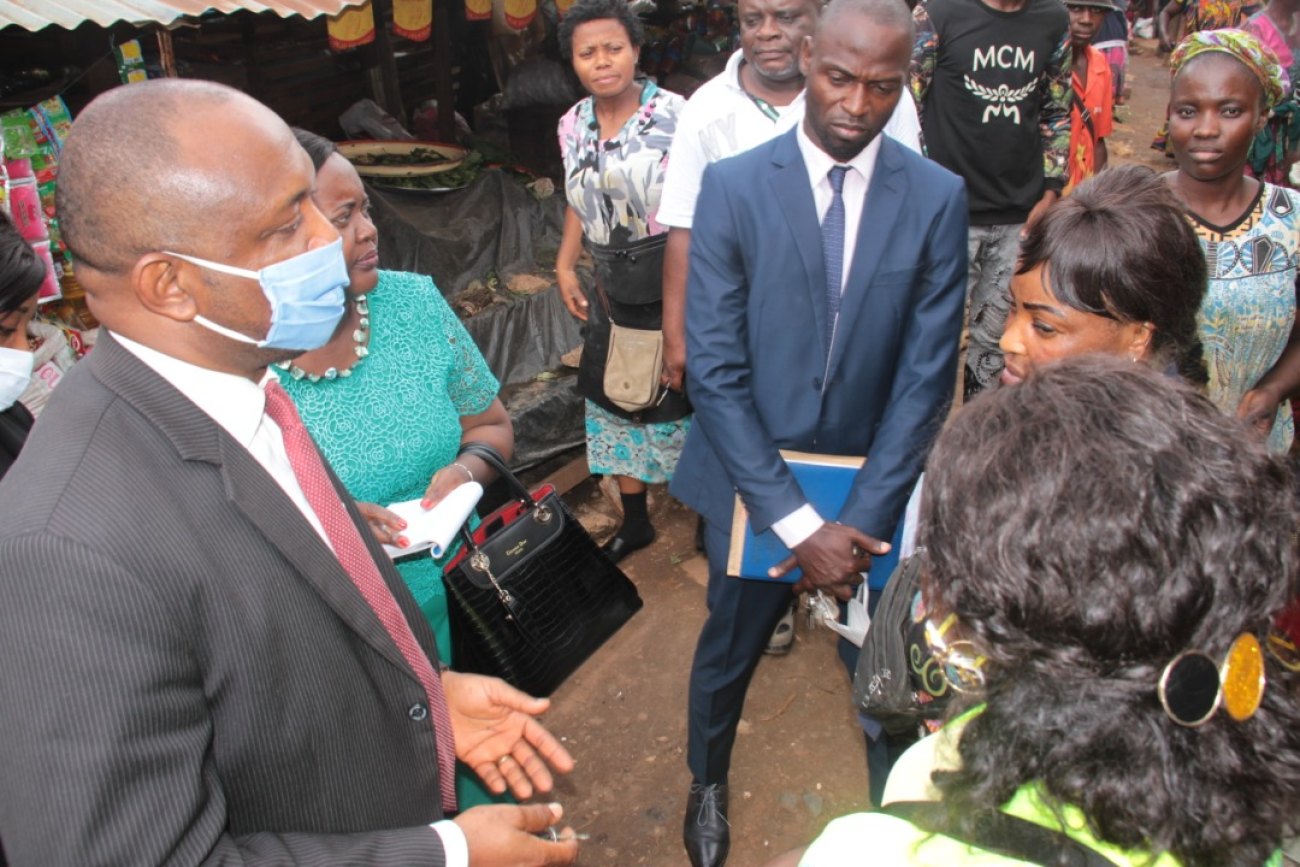
After discussing the project with the local monitoring committee, the project management team of UN-Habitat and the Ministry of Housing and Urban Development visited disadvantaged neighborhoods in the municipality of Yaoundé 2. The group met market traders at Messa, where the large street markets of Mokolo and Madagascar are located, and then continued to the informal market of Mbankolo.
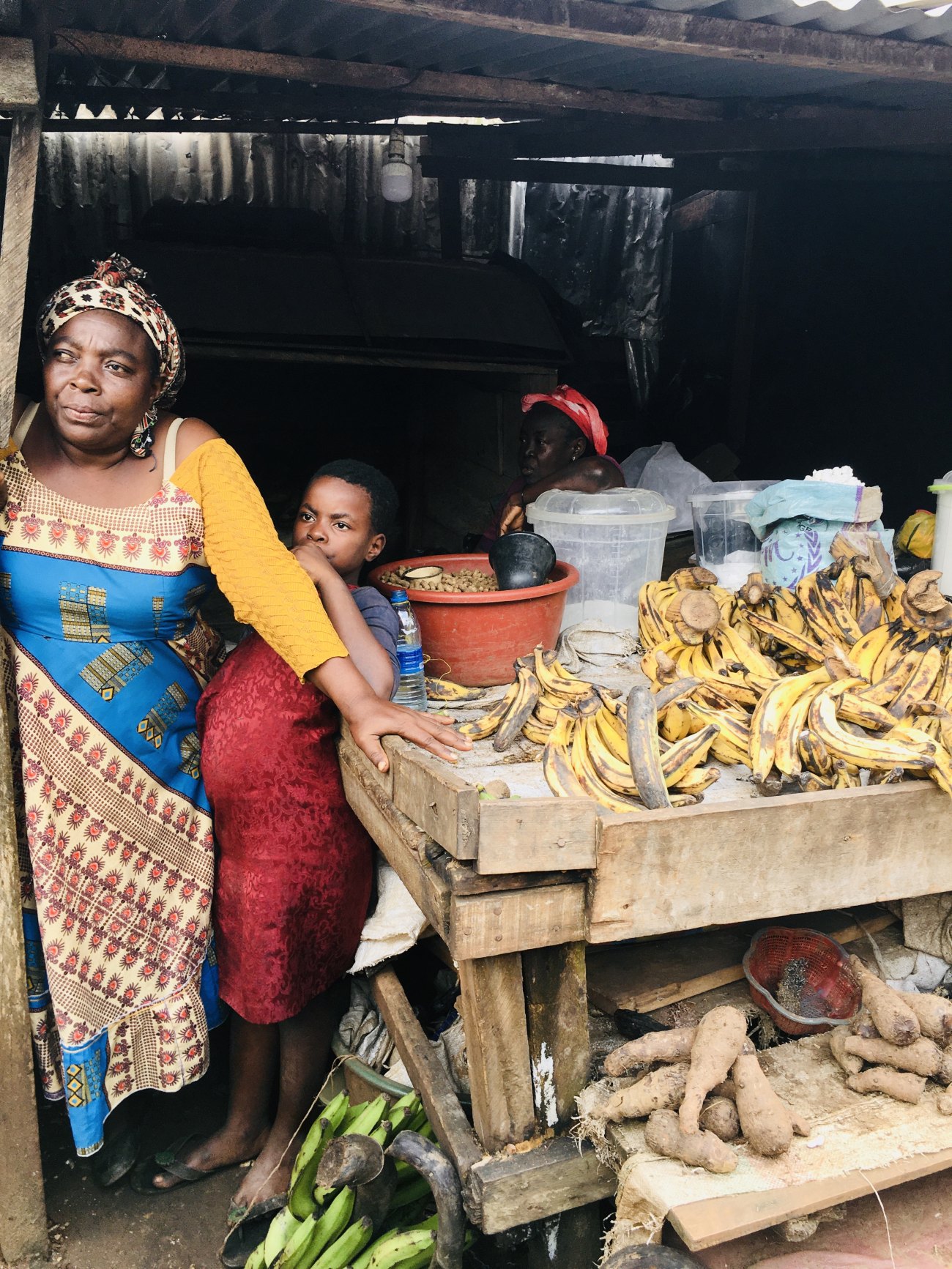
Jeanette, an elderly trader of vegetables at the Madagascar market, shared her experience of the impact of the pandemic: “We had difficulty finding the agricultural produce to sell but there were also less customers.” Her views were shared by François, a young butcher at the same market: “It was much too quiet here during the confinement. My income dropped so badly that I had to sell some of my household items to get cash”. Although handwashing facilities are available at many markets, there are rarely any toilets. Nobody wears a mask. Physical distancing cannot be respected either as the stalls are placed so close to each other that passing another person is impossible without touching.
In a residential area dominated by informal housing, Mohammed, a young trader of socks and tights living in a small house next to a stream littered with plastic waste talks quietly how he had suffered a total loss of income following the disappearance of all customers during the confinement. Unable to pay his rent or to buy food, the pandemic has caused tremendous distress to him and his brother who he lives with. Adding to their difficulties, during the heavy rains of the season, the nearby stream flooded their home and destroyed many of their belongings.
The road to recovery will be long, and there is a need to support vulnerable people and small businesses, and to focus on improving housing and public space often located in flood or landslide prone areas.