In São Pedro, children have a say in the spaces they call home
Description
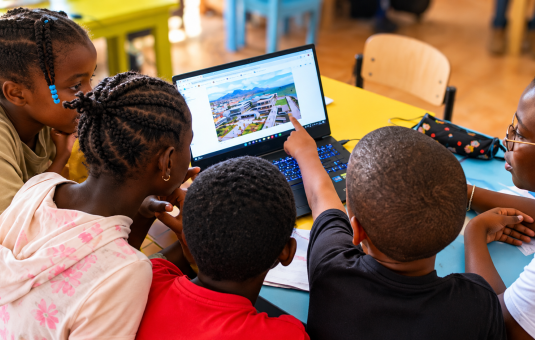
In São Pedro, a neighbourhood on the outskirts of Praia, Cabo Verde, 18 children and adolescents set out to look at their streets differently.
Description with Image
Walking through the places where they play, meet friends and spend time after school, they identified what made them feel safe, what made them uneasy and what they would change. Their ideas are now helping shape the design of a public square in their neighbourhood.
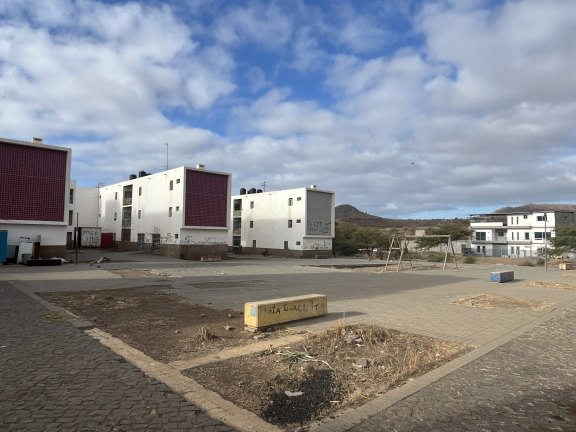
For the young participants, the exercise brought everyday concerns into focus. Infrastructure is limited in parts of São Pedro, and some public spaces become less welcoming and harder to use after dark. Better lighting, places to play and areas where people can gather were among the improvements they wanted to see.
“I think this is really cool because we’re going to have a safe place to play,” says Alita Borges, 9. “Right now, this place is kind of boring, but with the square it’s going to be really fun and nice!”
Seeing the neighbourhood through young eyes
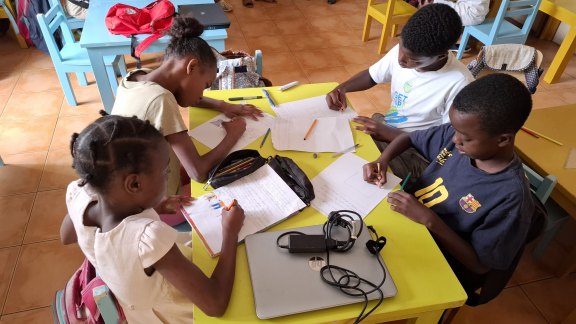
The neighbourhood walk was the starting point for a four-day co-creation workshop held in March 2026. The participants explored streets, open spaces and community facilities, discussing what worked, what did not and how these places could better serve the people who use them.
Working in groups, they then used UN-Habitat’s Block by Block methodology, which uses digital tools to help communities visualize and design public spaces. Adapted for the workshop with artificial intelligence (AI) tools, the methodology allowed the children and adolescents to turn their ideas into visual proposals.
Their designs reflected a shared set of priorities. Safety, particularly in the evening, came up in every group, with better public lighting a recurring request. Participants also called for cleaner spaces, more greenery, shaded places to gather and facilities for sport, recreation and play.
“We’re going to plant flowers, clean up the area, and put in a slide, swings and a trampoline!” says 9-year-old Erick dos Santos.
The workshop gave participants a chance to imagine how their neighbourhood could better serve them: a place where children can play safely, friends can meet and people of all ages can gather and spend time together.
Quote
“We’re going to plant flowers, clean up the area, and put in a slide, swings and a trampoline!”
Description with Image
The workshop is part of a joint programme, Promoting Awareness and Advocacy for the Human Security Approach in Overcoming Crises in the Municipalities of Praia, São Filipe and São Vicente in Cabo Verde. Implemented by UN-Habitat and the United Nations Office on Drugs and Crime (UNODC), in partnership with the Municipality of Praia, the programme is funded by the United Nations Trust Fund for Human Security.
Its approach connects safer, more accessible public spaces with wider aspects of human security, including social cohesion, participation, well-being and a sense of belonging.
For Francisca Santos, UN-Habitat National Coordinator in Cabo Verde, involving residents in shaping their surroundings is central to this approach. Those who use and experience a place every day, she says, should have a say in how it is designed.

From drawings to a public square
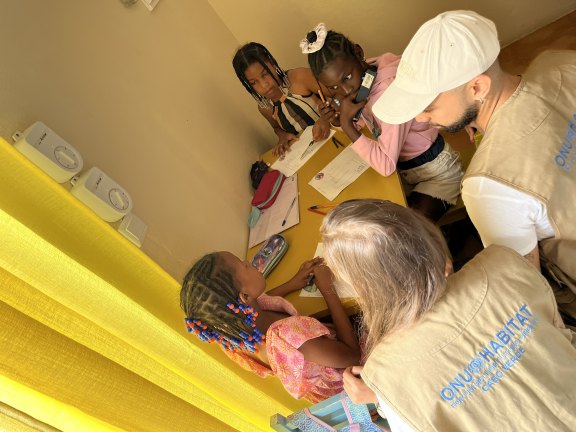
By the end of the workshop, the participants had moved from identifying problems to presenting design proposals to family members, neighbours and local representatives.
Their ideas were brought together in a priority matrix, identifying the features considered most important for the selected public space. These priorities are now informing an urban design project, which is in its final stages and expected to move towards implementation.
At the closing session, André Monteiro, Director of Social Promotion at the Municipality of Praia, reminded the young participants that they were particularly well placed to help shape the square because they live in the neighbourhood and know its everyday realities.
“This square will not simply be built for you. It will be built with you. It is your square,” he said.
The proposed design reflects many of the ideas raised during the workshop, from better lighting and play areas to greenery and places to gather. For Santos, making the space work for everyone will also mean considering the needs of children, young people, adults, older people and persons with disabilities.
“Those who will use, experience and care for this place every day should also have the opportunity to dream it and help design it,” she says.
Quote
“I’m going to invite all my little friends! It will be very close to my house, and right now we don’t have anything like that here.”
Description with Image
For 10-year-old Winny Semedo, one of the most appealing things about the proposed square is the chance to share it with others.
“The idea of the square is really nice because we’ll be able to play together with other people,” Winny says. “I’m going to invite all my little friends! It will be very close to my house, and right now we don’t have anything like that here.”
The design is still moving towards implementation, but the children have already helped determine what the space should offer. If the project goes ahead as planned, the square will reflect their priorities: somewhere safer to play, more welcoming places to meet and room for the neighbourhood to come together.
