“Informal settlements are the physical manifestation of urban poverty and key climate hotspots due to their location in very fragile sites,” said Ms. Inga Korte, UN-Habitat's Team Leader for Urban Climate Resilience. She emphasized how crucial inclusive urban planning is, noting “their residents have to play a part in building sustainable and inclusive communities.”
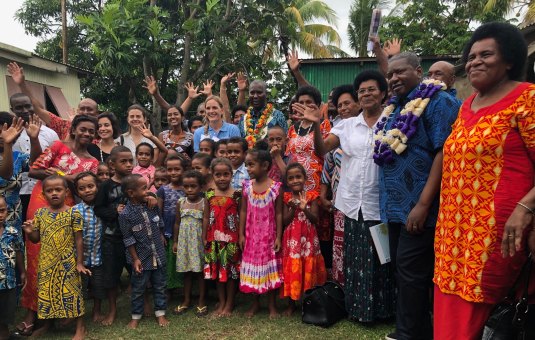
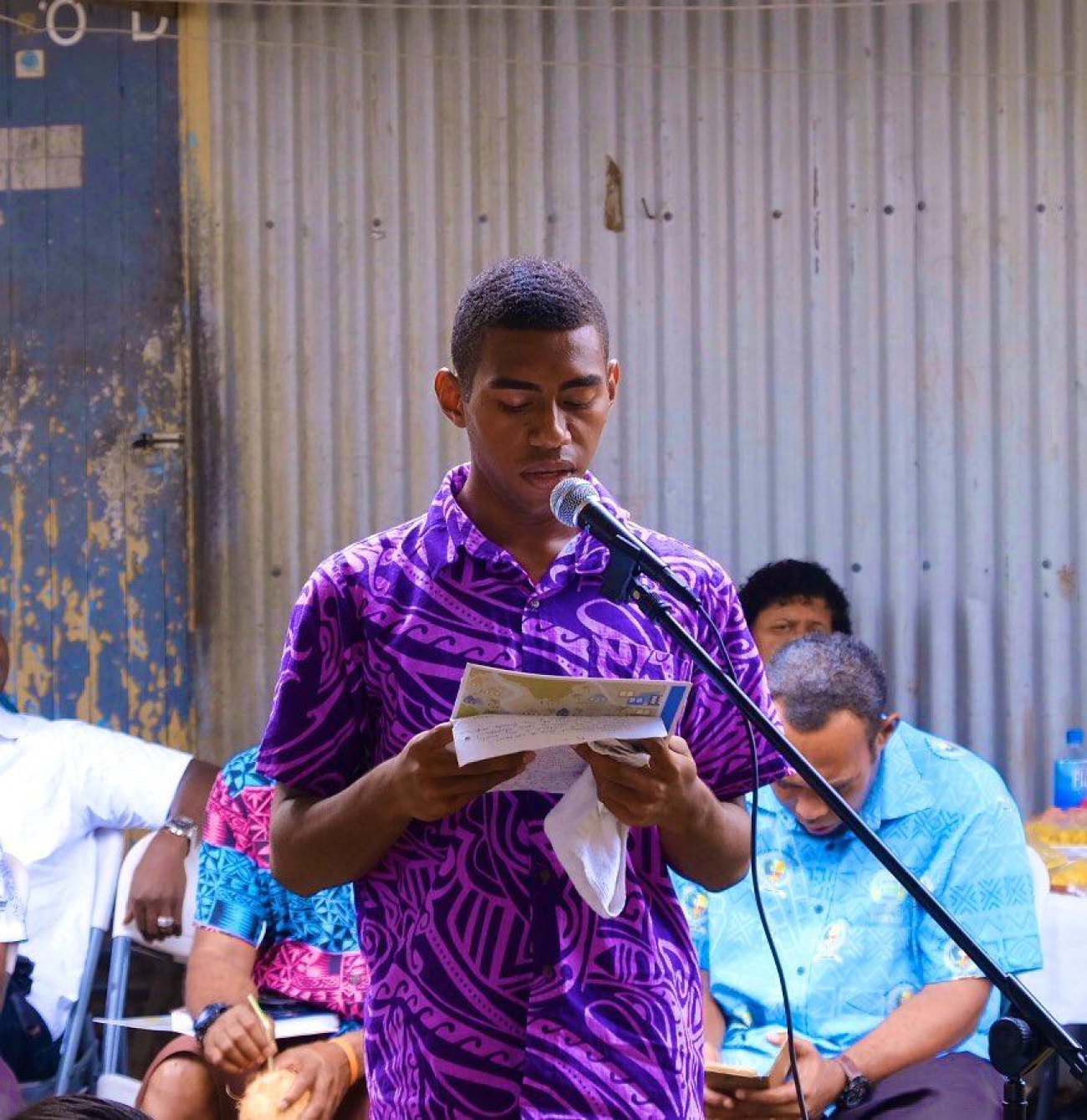
Community members of Vunato village shared their personal stories about how climate change is impacting their lives and their daily struggles due to frequent floods, heavy rainfall, or extreme heat. Livai Saravi, a youth representative from Vunato, talked about the importance of education, and how difficult it is for many of his peers from the settlement to go to school. “Education has not always been a priority in my community, which is why there is high unemployment,” Saravi said. “But I don’t want to be a statistic. I want to be a doctor to help my family and community live a better life.”
After listening to the community speaking, Dr. Muhammed-Bande committed to take their stories as far as he could.
The delegation then walked through the community to see the living conditions and day to day impacts of climate change in Vunato, including river floods, intense rainfall, and extreme temperatures. Project team members highlighted some of the most urgent issues that are being faced by the community, including poor sanitation, poor housing conditions, overcrowding and waste management.
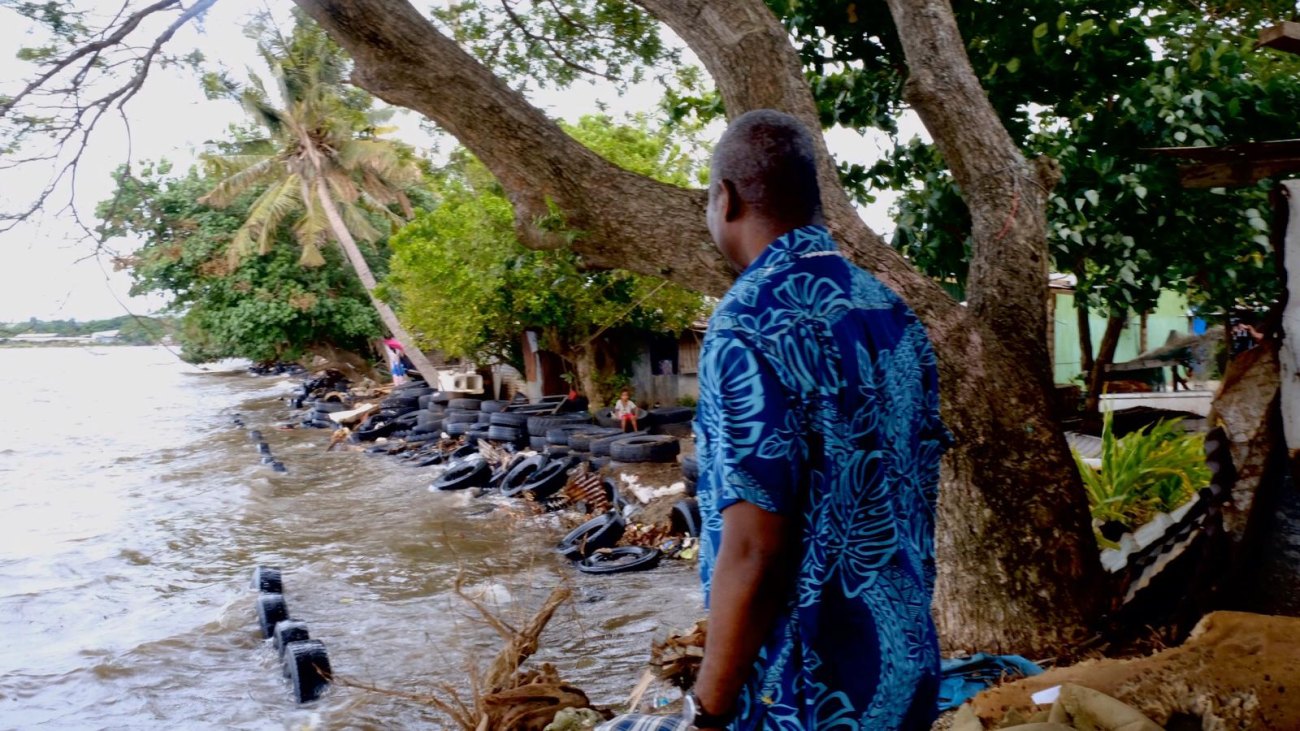
For his final stop during his first mission to Fiji, the President then went to Nasoata settlement, a coastal community that is highly affected by sea level rise and coastal erosion. There, Mr. Tomasi, the community leader, showed the PGA how their community is threatened by rising seas, and he called for urgent climate action.