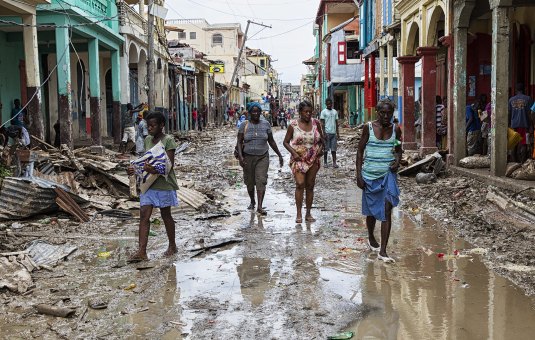
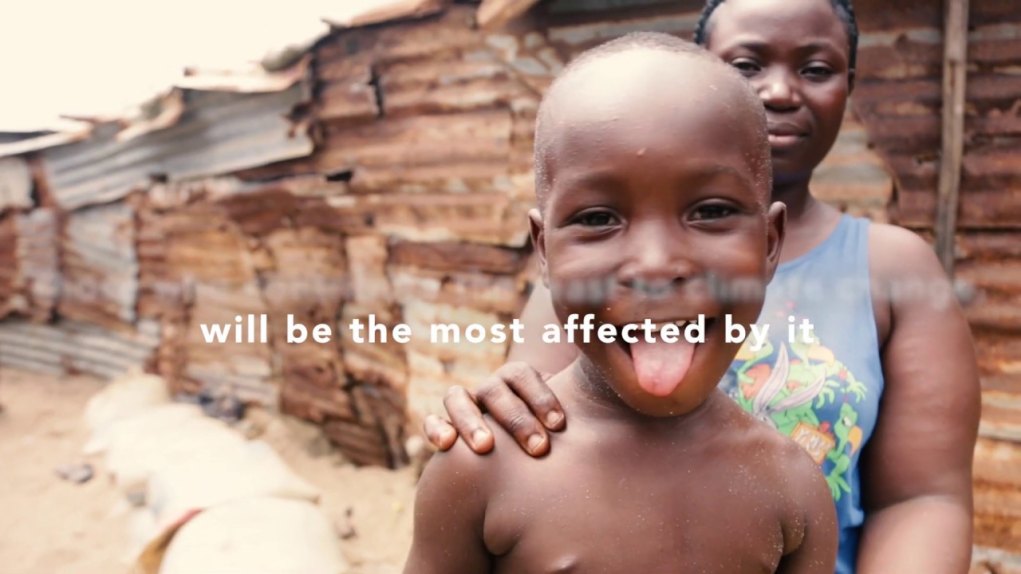
In the recently released report Adapt Now: Global Call for Leadership on Climate Resilience prepared by the high-level Global Commission on Adaptation, cities are underlined as one of the key systems for accelerated climate action. The commission recommends cities should invest in “upgrading the living conditions of the 880 million people living in informal settlements that are highly vulnerable to climate change.” It calls for a Year of Action, during which the Commission will champion a set of initiatives clustered in eight action tracks to mobilize scaled-up action. In “Resilient cities”, one of the action tracks, the Commission will champion the Building the Climate Resilience of the Urban Poor initiative to put people living in poverty at the centre of urban adaptation.
For more than 20 years, UN-Habitat has been working towards upgrading the housing and living conditions of about five million slum dwellers worldwide. Improvements to sanitation, infrastructure and access to basic urban services, and utilizing improved technology were among the top priorities for upgrading the living conditions of the urban poor. With the increasing climate crisis, it is urgent to strengthen this effort while building the capacity of cities and communities towards robust adaptation and mitigation.
It is also essential to work closely with communities on the ground to generate ownership and engagement. The Know Your City Campaign run by Shack Dwellers International, a partner of the initiative, is an example of how such engagement has helped gather and validate climate data at the community level. Beyond data collection, tangible actions include a full range of design solutions, including sustainable or green infrastructure, ecosystem-based approaches to adaptation and nature-based solutions. The Mahila Housing SEWA Trust in Ahmedabad is an example of this, they support communities make roofs to reduce indoor temperature by using biodegradable polymer.
Building the Climate Resilience of the Urban Poor has the ambition to step-up climate action for the most vulnerable. It is co-led by the Governments of Kenya and Brazil. The coalition is also made up of community organizations (Shack/Slum Dwellers International, WIEGO), local governments organizations (ICLEI, C40, United Cities and Local Governments - UCLG), organizations of planners with ISOCARP and P4CA, infrastructure providers (AECOM, Arcadis, ARUP), academia (IIED, University of Twente – ITC, UCCRN), United Nations and intergovernmental organisations (UNDRR, UNDP European Commission), as well as international programmes and non-governmental organisations (100 Resilient Cities, Adrienne Arsht-Rockefeller Foundation Resilience Center, Cities Alliance, WorldPop Project, World Resources Institute).
The initiative is opened to other partners towards the UN Climate Action Summit 2019, when commitments will be announced. Together, we can help build safe, sustainable and resilient environments for the urban poor.