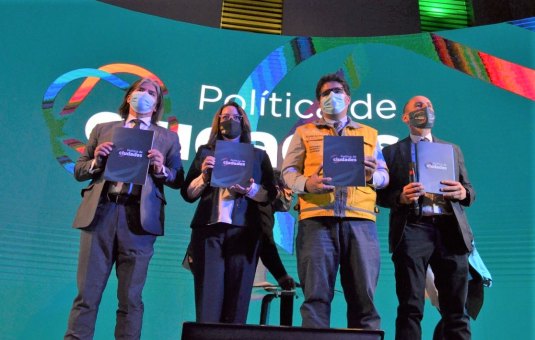
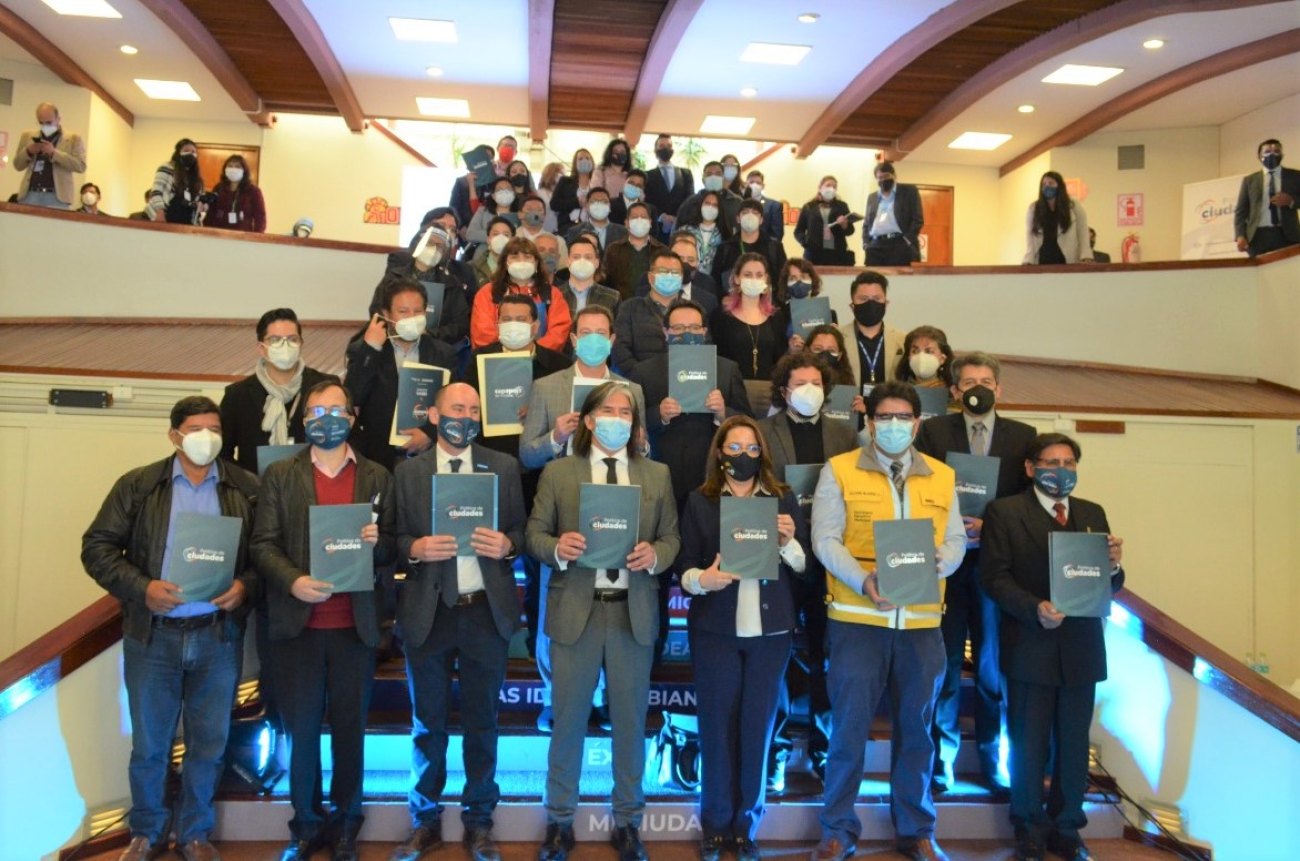
During the event, the Vice Minister of Housing and Urban Planning, Vladimir Ameller, symbolically delivered the document of the Cities Policy to the President of the Association of Municipalities of Bolivia (AMB), Rocío Molina, as the municipal governments of the urban centres will lead and implement this initiative.
“This proposal is a first impulse, a dynamo that will be transferred to the real protagonists, the cities. (The City Policy) is a proposal that respects and deepens the autonomous regime; it is and should be concluded in its implementation stage with, for and from the cities, which are ultimately its reason for being,” the Vice Minister specified.
Representatives of international cooperation, groups and urban entities, as well as departmental and municipal authorities from different cities in Bolivia took part in the event.
The Cities Policy is the strategic instrument to guide urban development, which identifies and proposes public policies to address challenges and take advantage of the opportunities posed by the urbanization process to contribute to the diversification of the economy, reduce inequalities and ensure sustainability.
The policy is being deployed on three levels: intra-urban, urban-territorial and urban-national. Its objectives are to achieve inclusive, healthy cities with a good quality of life and productive, orderly, sustainable and resilient cities, in addition to the governance of the city.
The policy has a timeframe of around 15 years, or three legislative periods, coinciding with the rounds of the Comprehensive Planning System of the State, as well as with the two major milestones in international agendas: the Sustainable Development Agenda of 2030 and the IV Conference of the United Nations on Housing and Sustainable Urban Development of 2036.