New WUF13 reports highlight ideas to advance adequate housing

Description
In Nairobi, UN-Habitat, the UN entity responsible for adequate housing and sustainable urban development, has presented two new reports from the thirteenth session of the World Urban Forum (WUF13) in Baku.
Description with Image
The WUF13 Report and WUF13 Perspectives were launched during the second session of the UN-Habitat Executive Board and the third session of the Open-ended Intergovernmental Expert Working Group on Adequate Housing for All, respectively.
The two publications explore different outcomes of the Forum. The WUF13 Report documents the main achievements of the event, while WUF13 Perspectives examines the ideas and questions raised across hundreds of sessions and meetings at the Forum.
The thirteenth session of the World Urban Forum (WUF13) was held in Baku, Azerbaijan, from 17 to 22 May 2026.
It was the first Forum to be held in the Caucasus region and the largest to date. More than 58,000 people from 176 countries participated in the event under the theme “Housing the world: Safe and resilient cities and communities.”
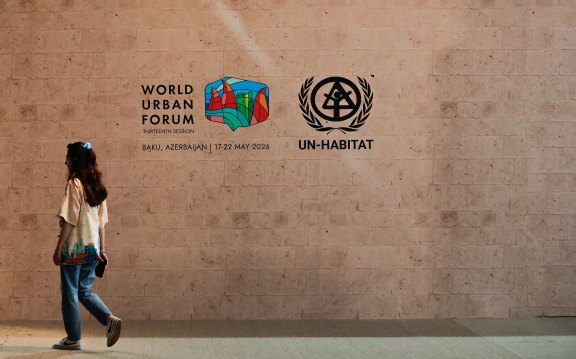
Documenting the largest World Urban Forum
The WUF13 Report follows the Forum from preparation to delivery and beyond. It covers 564 activities, from high-level meetings and main sessions to partner-led events. It also examines how regional mobilization and stakeholder engagement helped shape participation and the programme.
The report documents the outcomes of the Ministerial Meeting on the New Urban Agenda, held ten years after the Agenda’s adoption in 2016 in Quito, Ecuador.
Beyond the sessions, the report analyses the WUF Academy, Practices Hub and Business & Innovation Hub, the Urban Expo, and efforts to make WUF13 more inclusive, accessible and sustainable.
Adequate housing debates
WUF13 Perspectives draws insights from 467 event transcripts and approximately 860 hours of recorded discussions. This material was analysed to identify recurring priorities, new ideas and differing perspectives.
Much of the discussion at the Forum focused on how to move from recognizing the global housing crisis to delivering adequate housing at scale. Across dialogues on informal settlements, crisis recovery, the climate-housing nexus, the social and economic power of housing, and housing finance, three themes emerged: urban planning, data and localization.
Questions about implementation and delivery highlighted different approaches to achieving adequate housing for all. Across the themes, participants considered community-led and resident-driven approaches alongside state-led and structural responses.
The meaning of “localization” also varied, depending on whether “local” referred to local governments, communities or customary authorities. Participants discussed preventive versus curative measures, short-term relief versus long-term recovery, and upfront costs versus long-term benefits.
The debates also highlighted the need to balance affordability, sustainability and regulation, as well as to share responsibilities, resources and risks between public and private actors.

Moving forward the housing agenda
The two publications complement the Baku Call to Action, the stakeholder-led outcome document released at WUF13. It calls for housing to be addressed as part of an integrated system connecting housing with land, infrastructure, transport, public services and economic opportunities.
The Baku Call to Action is now available in all six official United Nations languages, making its priorities accessible to a wider range of governments and stakeholders working to advance adequate housing for all.
The outcomes and reports from WUF13 will help inform discussions and carry forward the Forum’s recommendations at the upcoming fourteenth session of the World Urban Forum (WUF14).
UN-Habitat has recently announced that WUF14 will take place in Mexico City, Mexico, from 31 July to 4 August 2028.