Nairobi talks to put homelessness on the global housing agenda
Description
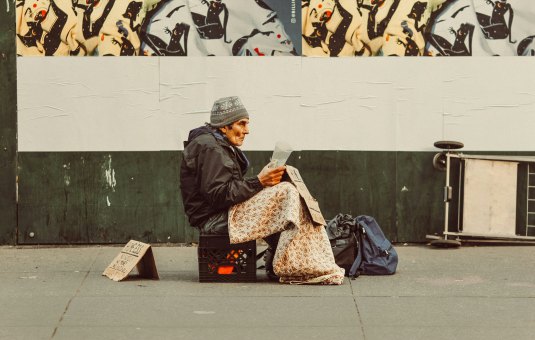
Only 78 countries have official data on homelessness, according to UN-Habitat’s World Cities Report 2026. One reason is the lack of a shared definition, which can leave many people experiencing homelessness unseen in the policies meant to support them. Next week, countries will try to agree on a shared definition.
Experts from Member States will meet at UN-Habitat headquarters in Nairobi on 26 and 27 November for the third session of the Open-ended Intergovernmental Expert Working Group on Adequate Housing for All. Alongside a proposed global definition of homelessness, they will consider two sets of draft recommendations: one on integrated national housing policies and one on housing sustainability and resilience. UN-Habitat will also launch the first version of the Housing Knowledge Platform, an online hub of housing data, policies and practices.
The session comes as pressure on housing grows. The same report estimates that up to 3.4 billion people live without a safe, secure and adequate home. More than 1.1 billion of them live in informal settlements and slums, often without secure tenure, safe water or sanitation. Even where families have a roof over their heads, rent is a heavy burden: 44 per cent of households worldwide spend more than 30 per cent of their income on it.
“The housing crisis affects every region, in different forms: affordability, homelessness, informality, climate risk,” said Anacláudia Rossbach, Executive Director of UN-Habitat. “We need inputs from all regions, and we are getting them.”
Three priorities for global housing policy
The proposals before the session build on two years of discussions among Member States and housing experts. They address three interconnected challenges: recognizing and measuring homelessness, strengthening national housing policies, and making housing more sustainable and resilient.
The proposed global definition of homelessness aims to account for people in different situations, from those without accommodation to those living in severely inadequate or insecure housing. The recommendations on national housing policies, meanwhile, encourage governments to better connect housing with land, finance, infrastructure and social protection.
The third area focuses on the sustainability and resilience of housing. With housing accounting for an estimated 17 to 21 per cent of global emissions, and informal settlement residents particularly exposed to climate risks, the recommendations look at how homes and communities can become more resilient while remaining affordable.
These priorities also featured at COP31 in Antalya, Türkiye, where a high-level dialogue co-convened by the COP31 Presidency and UN-Habitat identified adequate housing and informal settlement upgrading as important measures for protecting people from climate change.
A platform to turn knowledge into action
The Housing Knowledge Platform, launching during the session, aims to bring together housing information currently scattered across institutions and countries. Its first version will include data, a policy library, learning resources, a repository of national housing policies and examples of housing practices, beginning with 171 initiatives from 84 countries presented at the World Urban Forum in Baku in May.
“The Platform is not simply a repository of information. It is designed as a dynamic knowledge ecosystem,” Ms. Rossbach said. A separate Global Housing Hub, due to launch in Paris in the coming weeks, will support countries in putting the Working Group’s recommendations into practice.
The proposed definition and recommendations will be further refined through the Nairobi discussions, with revised versions expected to be published online in January 2027. Together with the Housing Knowledge Platform, they will provide Member States with a shared evidence base and policy guidance to inform their national housing approaches.
About the Working Group
Established by the United Nations Habitat Assembly in 2023 through resolution 2/7, the Working Group is the first intergovernmental platform mandated by the United Nations to focus specifically on adequate housing. Open to all Member States, it develops policy recommendations for the Assembly to accelerate progress towards adequate housing.
Its membership continues to grow, with 106 Member States now having national focal points, up from 81 in September. Its role in advancing international cooperation on housing was also recognized in the political declaration adopted at the United Nations General Assembly’s midterm review of the New Urban Agenda in July 2026.