Innovate4Cities 2026 concludes in Nairobi with renewed momentum for urban climate action
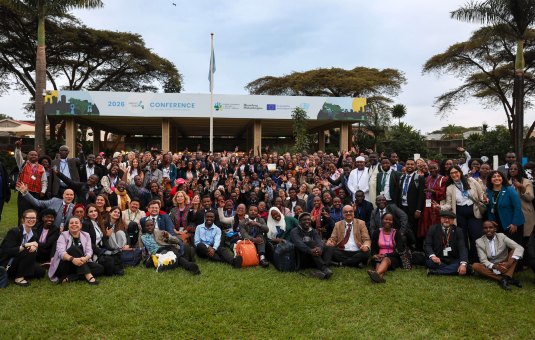
Description
Nairobi, 25 June 2026 – The 2026 Innovate4Cities Conference (I4C26) concluded in Nairobi, Kenya, after four days of exchange, collaboration and partnership-building focused on accelerating climate action in cities.
Marking a historic first as the conference landed on the African continent, I4C26 brought together city and national government leaders, researchers, practitioners, businesses, civil society, youth and community representatives at UN-Habitat’s headquarters from 21 to 24 June.
Co-hosted by the Global Covenant of Mayors for Climate & Energy (GCoM) and UN-Habitat, the conference served as a collaborative space at the crossroads of city climate science, policy and practice. Discussions focused on how to close the knowledge, data, finance and implementation gaps that continue to slow urban climate action.
Anchored in the updated Global Research and Action Agenda for Cities and Climate Change Science, the conference focused on five thematic tracks: multilevel governance and partnerships, housing and infrastructure, digitalization and artificial intelligence, justice and equity, and finance and implementation.
The conference also hosted the largest in-person organized expert review of the Second-Order Draft of the Intergovernmental Panel on Climate Change (IPCC). This process enabled policymakers, practitioners, researchers, businesses and civil society to contribute perspectives that can help ensure the report reflects urban realities and supports implementation once published.
Housing, finance and innovation
As countries move from COP30 decisions towards implementation and preparations continue for COP31, critical choices are being made in cities on housing, infrastructure, finance, resilience, governance, justice and digital innovation. Participants emphasized that scientific knowledge must reach the people and institutions responsible for making decisions, shaping policy and delivering climate solutions on the ground.
Housing and infrastructure emerged as central challenges, with participants highlighting that adequate, affordable and climate-resilient housing is essential to both mitigation and adaptation, particularly in rapidly urbanizing contexts and informal settlements. Participants stressed that housing, land, infrastructure and basic services must be embedded in climate planning and implementation.
Finance and implementation also featured prominently throughout the conference. Participants emphasized that ambitious climate goals must be matched by the tools, partnerships and resources needed for implementation.
Innovation was translated into action through the AI x City Climate Action Hackathon, where participants developed practical solutions to urban climate challenges. The winning concept, FloodFact AI, will advance to the Hackathon finale in Cambridge, hosted by the University of Cambridge’s Centre for Human-Inspired Artificial Intelligence.
From the margins to the centre
The conference also reinforced the importance of youth leadership, with more than 80 young people contributing across the programme through technical discussions, innovation activities and cross-sector dialogue. Their participation highlighted the value of engaging the next generation of urban climate leaders in shaping more resilient and equitable cities.
The conference elevated African, Indigenous and community-led perspectives, recognizing that urban climate knowledge must reflect the diversity of the cities and communities it serves. Nairobi provided a powerful setting for these discussions, reflecting the pressures and opportunities facing fast-growing cities across the world.
Participants also visited Korogocho informal settlement in Nairobi, where youth delegates worked alongside members of a local community centre to implement a road safety project, demonstrating how collaboration can translate dialogue into tangible action.
Turning evidence into action
As I4C26 concluded, participants looked ahead to concrete outputs, including the development of shared knowledge resources to connect local practice with global climate processes.
I4C26 demonstrated that when science, policy, finance, business and communities work with cities, climate knowledge can move faster into the decisions, investments and partnerships needed to deliver real change. Accelerating urban climate action will require stronger multilevel partnerships, better use of evidence, greater access to finance and sustained collaboration between those who generate knowledge and those responsible for acting on it.
I4C26 closed with a clear message from Nairobi: the evidence exists, the urgency is clear and the next phase of climate action must be delivered with and in cities.